Industrial inkjet printing continues to expand in production lines where high-speed marking, reliable operation, and easy system integration are critical. To meet the growing demand for compact and efficient coding solutions, Ricoh has introduced the MH3820 industrial piezoelectric inkjet printhead, designed specifically for industrial marking and coding applications.
Unlike high-resolution graphic printing heads, the MH3820 focuses on stable production-line printing, including batch codes, barcodes, QR codes, product identification, and packaging marking.
This article provides a detailed analysis of the Ricoh MH3820’s hardware structure, printing performance, ink compatibility, system integration advantages, application scenarios, and limitations based on its official technical specifications.
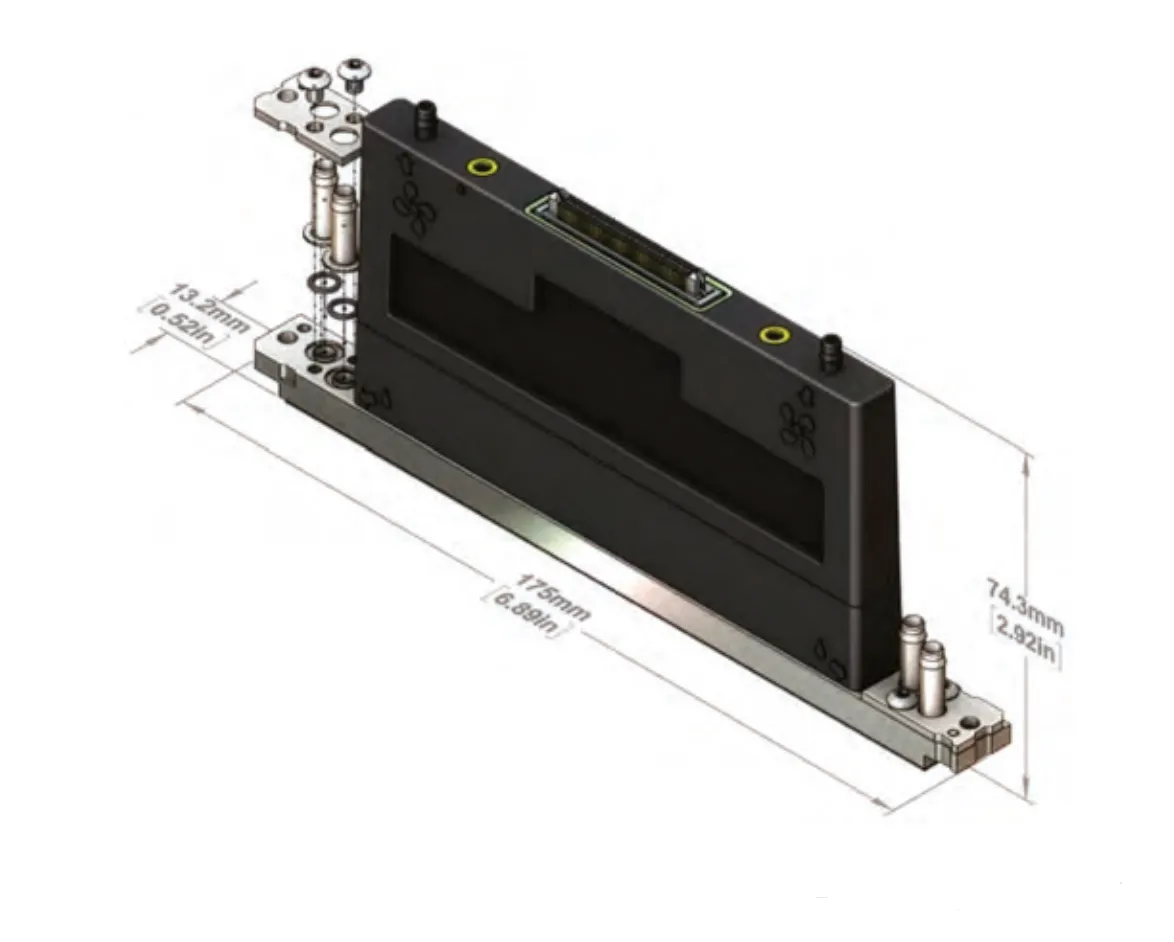
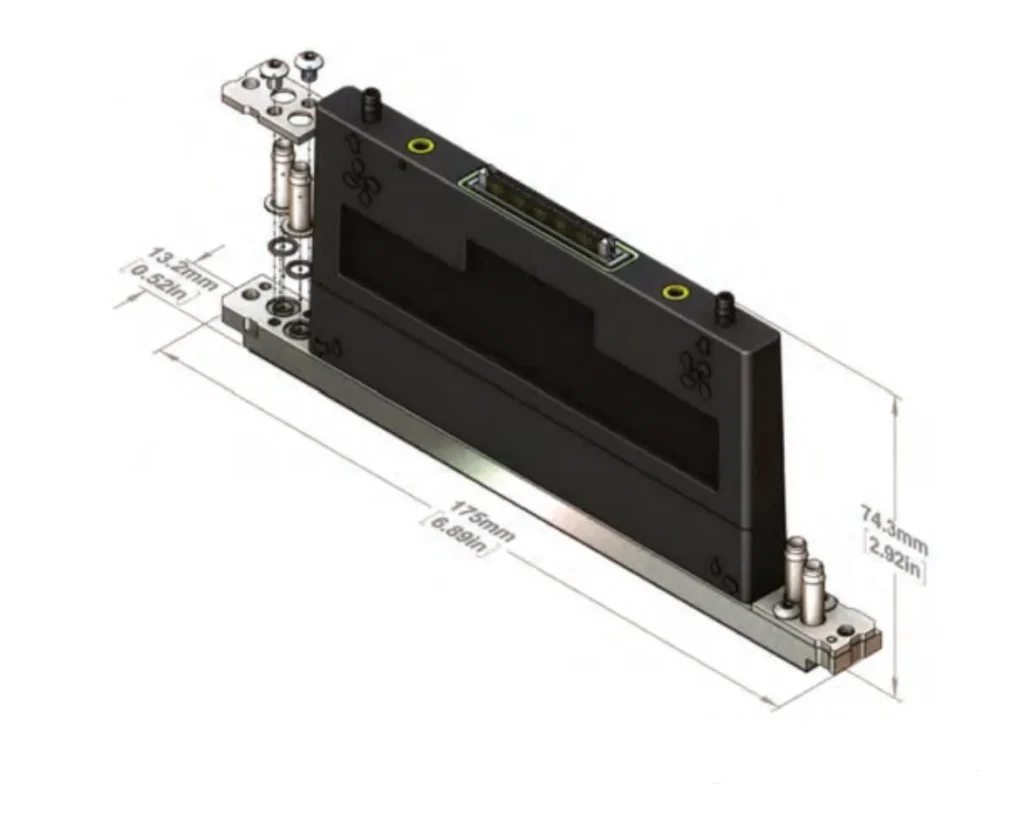
Compact Design with 108.2mm Printing Width for Easier Integration
One of the most notable features of the Ricoh MH3820 is its compact and slim industrial design.
The printhead features:
- Printing width: 108.2 mm (4.26 inches)
- Nozzle configuration: 640 nozzles
- Nozzle pitch: 0.339 mm (1/75 inch)
- Dimensions: Approx. 13 mm depth × 74 mm height
- Weight: Approx. 185 g (excluding fluid connectors)
The ultra-thin structure helps equipment manufacturers develop more compact marking systems, especially for production lines with limited installation space.
Compared with traditional multi-head stitching solutions, the MH3820 can achieve a full 108.2mm print width with a single printhead, reducing mechanical complexity and minimizing issues such as:
- Printhead alignment errors
- Stitching calibration
- Visible gaps or overlapping areas
In single-color printing mode, the nozzle arrangement provides continuous printing without stitching zones, improving consistency for industrial coding applications.
Industrial-Grade Structure for Long-Term Production Stability
The MH3820 is built with industrial environments in mind.
Its key structural advantages include:
Stainless Steel Nozzle Plate
The stainless steel nozzle plate provides improved resistance against:
- Solvent-based inks
- UV inks
- Industrial dust environments
- Daily mechanical impact
This design helps reduce downtime caused by nozzle plate damage and supports continuous factory operation.
Four-Zone Integrated Heater System
The built-in four-zone heater system helps maintain stable temperature distribution across the entire 108.2mm printing area.
Compared with single heating structures, multi-zone temperature control helps:
- Reduce temperature differences between nozzle areas
- Maintain consistent ink performance during long operation
- Improve printing stability in continuous production
For high-volume applications, an optional ink circulation system can help reduce ink sedimentation and lower the risk of nozzle clogging.
Printing Performance: Designed for Industrial Coding Applications
The Ricoh MH3820 delivers performance optimized for production-line marking.
Main Printing Specifications
| Parameter | Specification |
|---|---|
| Printing technology | Piezoelectric inkjet |
| Nozzle count | 640 |
| Maximum printing width | 108.2 mm |
| Maximum print speed | Up to 60 m/min at 300 dpi |
| Ink drop velocity | Over 10 m/s |
| Printing distance | Over 10 mm |
| Native resolution | 150 × 600 dpi |
| Gray levels | 3 levels |
The printhead supports a printing gap of more than 10mm, making it suitable for products with uneven surfaces, such as:
- Corrugated boxes
- Plastic containers
- Pipes
- Irregular industrial components
The vertical resolution of 600 dpi improves the readability of:
- Small characters
- Barcodes
- QR codes
while the 150 dpi horizontal resolution balances printing efficiency for industrial marking tasks.
Dual-Color Printing Capability with Practical Trade-Offs
The MH3820 supports two-color printing, allowing manufacturers to combine two different inks in one printhead.
In dual-color mode:
- 640 nozzles are divided into two ink channels
- Each ink uses 320 nozzles
This enables compact equipment designs without the need to install two separate printheads.
However, this configuration also creates certain performance limitations:
- Single-color mode provides the highest printing performance
- Dual-color mode reduces available nozzle quantity per ink channel
- Extremely small text and high-density codes may achieve better quality in single-color mode
Therefore, users should select the printing mode according to production requirements.
Ink Compatibility and Electrical Integration Advantages
Wide Industrial Ink Compatibility
The Ricoh MH3820 supports industrial inks with:
- Viscosity range: 10–14 mPa·s
Compatible ink categories include:
- Oil-based inks
- UV inks
- Solvent inks
Typical applications include:
- Paper and cardboard packaging
- Plastic products
- Metal surfaces
- Coated materials
However, special inks outside the recommended viscosity range require additional testing before production use.
For example:
- High-viscosity white inks
- Customized industrial fluids
- Special functional inks
should be evaluated through compatibility testing before integration.
Compatibility with Existing Ricoh Printhead Systems
A major advantage of the MH3820 is its electrical compatibility with previous Ricoh industrial printhead platforms, including:
- Ricoh MH52
- Ricoh MH53
- Ricoh MH54
Equipment manufacturers using these platforms may reuse existing hardware designs, reducing development costs.
However, while electrical pin compatibility is maintained, the MH3820’s four-zone heater control requires independent software and system adjustment.
It is not a direct plug-and-play replacement without modification.
Main Application Areas of Ricoh MH3820
Based on its specifications, the MH3820 is mainly designed for industrial marking and coding applications.
1) Food and Pharmaceutical Production Line Coding
The MH3820 is suitable for:
- Batch number printing
- Production date marking
- Traceability codes
- QR code printing
Advantages include:
- 108.2mm single-head coverage
- Stable long-term operation
- Resistance to industrial environments
- Support for two-color marking
For factories operating below 60m/min production speeds, it provides a practical solution for continuous coding applications.
2) Corrugated Box and Packaging Printing
Traditional carton marking systems often require multiple narrow printheads combined together.
The MH3820 reduces complexity by providing:
- Wider single-head coverage
- No stitching adjustment in single-color mode
- Lower maintenance requirements
It is suitable for printing:
- Logistics information
- Product identification
- Packaging marks
on corrugated cardboard and paper-based materials.
3) Compact Dual-Color Label Printing Equipment
With its slim 13mm depth design, the MH3820 is suitable for compact industrial printers.
Applications include:
- Small-batch label production
- Chemical product labels
- Electronic component marking
- Consumer product identification
The integrated dual-color capability allows equipment manufacturers to reduce machine size.
4) Printing on Uneven or High-Gap Surfaces
With more than 10mm printing distance capability, the MH3820 can handle products with uneven surfaces, including:
- Pipes
- Plastic containers
- Industrial parts
This expands its application range compared with conventional printheads designed for short-distance printing.
Performance Limitations to Consider
Although the Ricoh MH3820 provides strong advantages for industrial coding, it is not designed for every inkjet printing application.
Users should consider the following limitations:
Limited Gray-Level Performance
With three gray levels, the MH3820 is optimized for:
- Text
- Numbers
- Barcodes
- Simple graphics
It is not intended for:
- High-end decorative printing
- Large-area gradient images
- Fine photographic reproduction
Resolution Reduction in Dual-Color Mode
When using two colors, each ink channel uses half of the nozzles.
For applications requiring extremely high-density small characters or precision codes, single-color mode may provide better results.
Ink Viscosity Restrictions
The recommended viscosity range is 10–14 mPa·s.
Special fluids outside this range require additional testing, which may increase system development time.
Speed Limitations
The maximum speed is 60m/min at 300 dpi.
For faster production lines, users may need to reduce printing resolution to maintain stable operation.
Ricoh MH3820 Market Position and Future Potential
The Ricoh MH3820 fills a specific market gap:
A compact industrial printhead combining wide print coverage, dual-color capability, and easy system integration.
Its strongest advantages include:
- Single-head 108.2mm printing width
- Slim industrial design
- Stainless steel nozzle structure
- Four-zone heating control
- Compatibility with existing Ricoh industrial systems
For equipment manufacturers, it can shorten machine development cycles and simplify mechanical design.
For end users, it can reduce maintenance requirements compared with multi-head stitching systems.
However, its positioning remains focused on industrial coding and marking, rather than high-end graphic printing.
Conclusion: Is Ricoh MH3820 the Right Printhead for Your Application?
The Ricoh MH3820 is a specialized industrial piezo printhead designed for reliable production-line marking.
It is particularly suitable for:
- Food and pharmaceutical coding
- Packaging and carton marking
- Industrial product identification
- Compact dual-color printing systems
- High-gap printing applications
However, it is not the ideal choice for:
- High-resolution decorative printing
- Large-format graphic production
- Applications requiring advanced grayscale imaging
- Special inks outside the recommended viscosity range
For printer manufacturers and industrial users, the best choice depends on matching the printhead specifications with actual production requirements, including printing speed, ink type, substrate, resolution demand, and maintenance expectations.
With its balance of compact design, industrial durability, and integration flexibility, the Ricoh MH3820 represents a practical solution for the next generation of industrial inkjet coding equipment.