In digital printing, printhead clogging is one of the most frustrating problems operators face.
You start the machine in the morning and find missing nozzles. After cleaning for half an hour, the printhead finally recovers—only to produce inaccurate colors or unstable ink output. Production slows down, ink and cleaning solution are wasted, and in severe cases, the printhead may need to be replaced.
It is easy to blame the ink, the printhead, or the operator.
But in reality, printhead clogging rarely has a single cause. It is usually the result of multiple factors involving ink properties, environmental conditions, ink supply systems, printhead control, and maintenance procedures.
This article looks at the problem from both the production and R&D perspectives and explains why printheads clog—and what can be done to reduce the risk.
Why Do Printheads Clog?
To solve clogging effectively, we first need to understand what is happening inside and around the printhead.
Ink Drying or Curing
During printing, ink is ejected through extremely small nozzles. When ink remains exposed to air on the nozzle surface, its solvent can gradually evaporate, increasing the ink concentration and leaving residue.
For water-based and some eco-solvent inks, low humidity can accelerate evaporation. If the printer remains idle for an extended period without proper capping or moisturizing, the ink around the nozzles may dry and cause missing nozzles.
UV inks present a different challenge.
UV ink does not simply dry through solvent evaporation. Instead, it cures when exposed to ultraviolet light. Strong UV light sources or stray light around the printhead can cause small amounts of residual ink near the nozzles to gradually cure.
Different ink systems therefore require different anti-clogging and maintenance strategies.
Pigment Sedimentation
White ink and metallic ink are particularly prone to sedimentation because they contain relatively high concentrations of pigment particles.
When ink remains stationary for a long time, heavier particles can gradually settle. If the ink tank, ink bag, or supply line does not provide sufficient circulation, the ink may become unevenly concentrated.
White ink is especially challenging because its high pigment content makes stable dispersion more difficult.
A well-designed white ink system may therefore require:
- Automatic agitation
- Continuous or periodic ink circulation
- Proper filtration
- Stable ink supply pressure
If a printer is left idle for an extended period and then started directly, sedimentation can lead to unstable ink output, missing nozzles, or even clogging.
Contaminants in the Ink Path
A common question is:
“If the ink has already been filtered during production, why does the printer still need a filter?”
Because factory filtration does not guarantee that the ink will remain completely free of particles throughout transportation, storage, and printing.
Temperature changes, chemical reactions, pigment aggregation, aging components, and particles generated inside the ink system can all introduce contaminants.
Aged ink tubes, seals, or other components may also release small particles into the ink path.
These contaminants may eventually be captured by the ink filter—or continue downstream and reach the printhead.
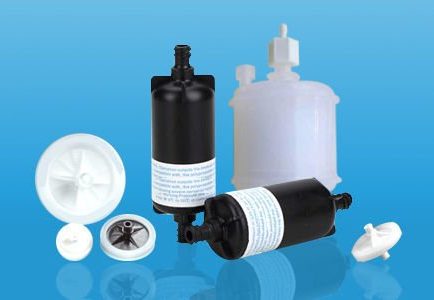
That is why proper filtration within the ink supply system is an important layer of protection for the printhead.
Air Bubbles: The “False Clog”
Not every missing nozzle is caused by a physical blockage.
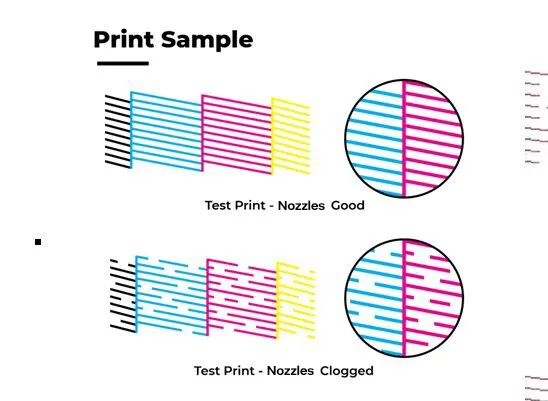
Air bubbles inside the ink path can interrupt ink supply and cause unstable nozzle firing.
Typical symptoms include:
- Missing nozzle lines
- Intermittent ink output
- Nozzles that work normally and then fail again
- Temporary recovery after cleaning followed by recurring problems
If repeated cleaning does not permanently solve the issue, check the ink pressure, tubing connections, dampers or ink bags, filters, and other components of the ink supply system.
Environmental Conditions Matter
A printhead does not operate in isolation.
Temperature, humidity, and airflow can all affect ink viscosity, evaporation, and jetting performance.
For many industrial inkjet production environments, 20–25°C and 55–65% RH can be used as a general reference range. Actual requirements should always follow the specifications of the printer, printhead, and ink manufacturer.
Low humidity is particularly problematic in dry seasons because it can accelerate ink evaporation around the nozzles.
A simple temperature and humidity monitor can therefore be a worthwhile investment.
Preventing unstable environmental conditions is much cheaper than repeatedly cleaning or replacing printheads.
Daily Maintenance: What Should Operators Do?
Printhead maintenance does not have to be complicated. The key is consistency.
In many printing shops, moisturizing, cleaning, and shutdown procedures depend heavily on operator experience. The problem is that experience is difficult to standardize.
A clear maintenance routine can significantly reduce this risk.
Check Before Printing
Before starting production, check:
- Nozzle test results
- Ink circulation
- White ink agitation
- Air bubbles in the ink path
- Filter condition
- Damper or ink bag condition
If an abnormality is detected, solve it before starting high-speed production.
Keep White Ink Circulating
White ink is generally more prone to sedimentation than standard CMYK inks.
If the printer has an automatic agitation or circulation system, make sure it is operating correctly.
If there is no automatic circulation system, follow the ink manufacturer’s recommended agitation procedure and avoid leaving white ink stationary for long periods.
Moisturize the Printhead During Shutdown
For short periods of inactivity, follow the printer manufacturer’s recommended capping and moisturizing procedure.
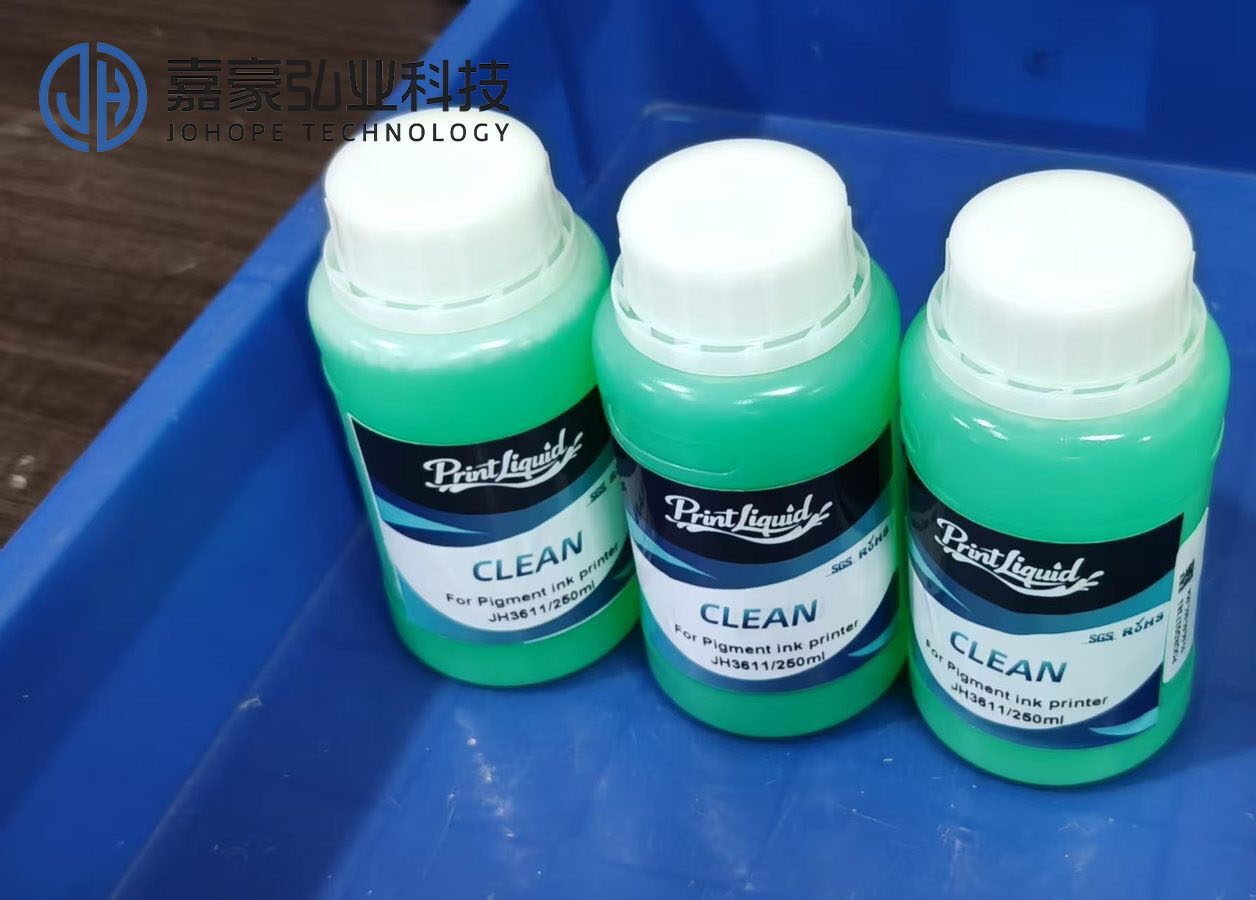
Use compatible moisturizing or maintenance fluid and lint-free materials where required, and make sure the cap properly seals the nozzle surface.
For extended shutdowns lasting several days or longer, follow the appropriate cleaning, flushing, and storage procedure for the specific printhead and ink system.
Saving a small amount of cleaning solution is not worth the cost of replacing a printhead.
Why “More Cleaning” Is Not Always the Solution
When a nozzle test shows missing lines, many operators immediately think:
Clean it. Clean it again. And clean it one more time.
But repeated cleaning does not necessarily solve the root cause.
The real problem may be:
- Air bubbles in the ink path
- Unstable ink pressure
- Pigment sedimentation
- A clogged filter
- Incompatible printhead waveforms
- Low environmental humidity
In these cases, cleaning the printhead may only provide temporary relief.
Frequent cleaning can also increase ink and cleaning-fluid consumption and contribute to unnecessary printhead wear.
The better approach is:
Identify the cause first, then apply the right solution.
From the R&D Perspective: How Can We Reduce Clogging?
Operators are responsible for daily maintenance, but equipment and ink developers need to address a deeper question:
Why is this printer more prone to clogging in the first place?
Smarter Moisturizing Systems
Traditional capping systems mainly protect the printhead by sealing the nozzle surface. For long-term production stability, however, simply covering the printhead may not be enough.
A more advanced maintenance system can combine:
- Automatic moisturizing-fluid supply
- Automatic printhead sealing
- Temperature and humidity monitoring
- Idle-time detection
- Automatic cleaning procedures
For example, when the printer detects extended downtime, it can automatically enter a moisturizing mode. When printing resumes, the system can determine the appropriate recovery procedure based on the downtime duration.
This is more reliable than relying entirely on manual operation.
Printhead Waveform and Ink Matching
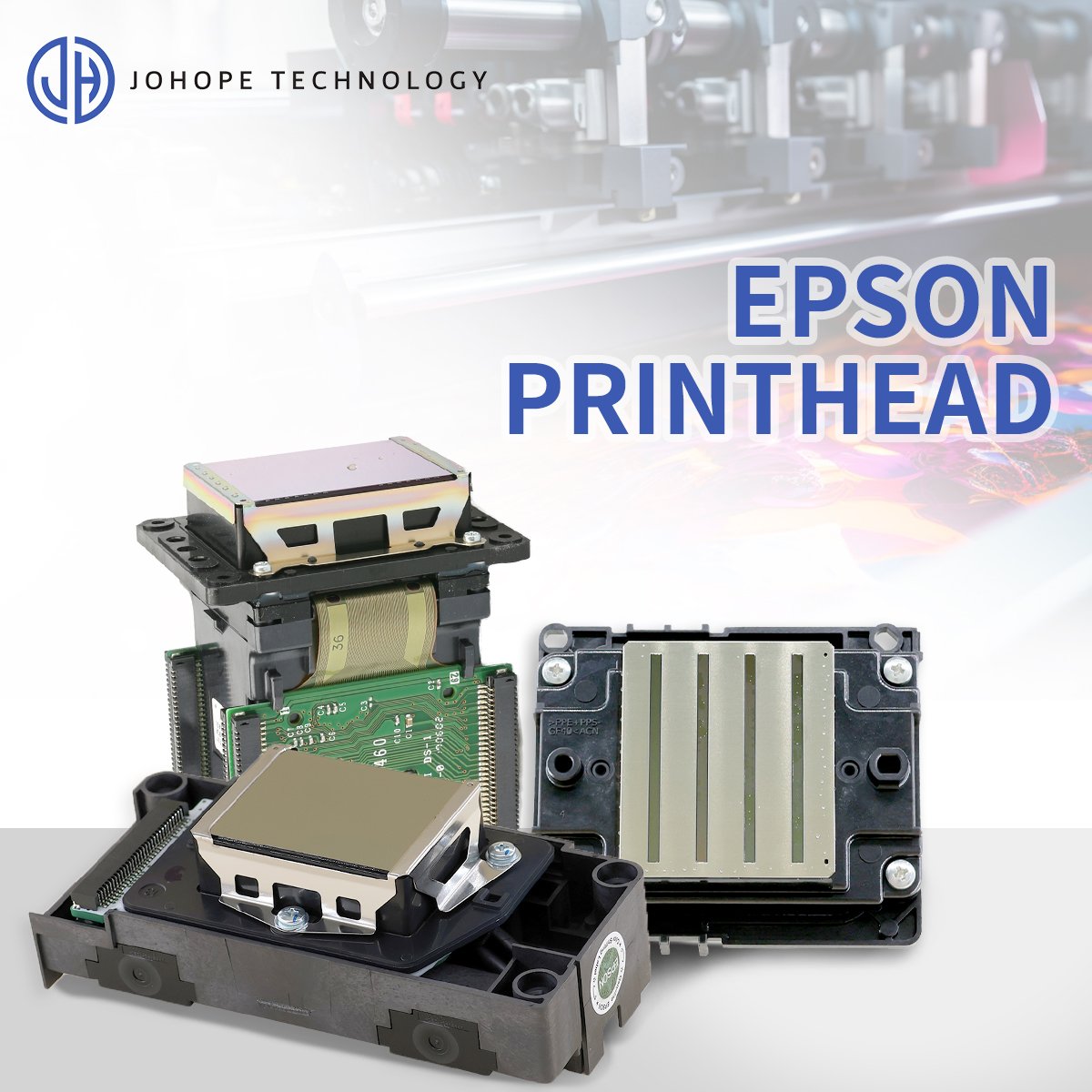
Piezoelectric printhead jetting is not simply a matter of “apply voltage and eject ink.”
The drive waveform affects:
- Droplet formation
- Droplet velocity
- Droplet volume
- Meniscus recovery
- Satellite droplets
- Bubble removal
At the same time, these parameters are closely related to the ink’s:
- Viscosity
- Surface tension
- Temperature
- Density
Therefore, printhead and ink compatibility should not be judged only by whether the printer can produce an image.
R&D teams need to test different waveform, viscosity, and surface-tension combinations to identify a stable operating window.
This is also why the same printhead can perform very differently after switching to a different ink.
Ink Path Filtration
A filter is an important protective component installed upstream of the printhead.
A properly designed filtration system helps prevent particles and contaminants from reaching the printhead and reduces the risk of nozzle blockage.
However, finer filtration is not always better.
An excessively fine filter can increase flow resistance, while an undersized filter may clog quickly and affect ink delivery.
Filter selection should therefore consider:
Ink type + printhead nozzle size + flow rate + system pressure + filtration rating
A suitable replacement schedule should also be established based on actual operating conditions.
Predictive Maintenance: Detect Problems Before the Printhead Clogs
Traditional maintenance follows a reactive model:
Printhead clogs → nozzle test → cleaning → test again
A smarter approach is:
Detect abnormal trends → assess the risk → perform maintenance in advance
Modern printers can monitor data such as:
- Nozzle test results
- Number of missing nozzles
- Changes in nozzle performance
- Cleaning frequency
- Printhead operating time
- Ink pressure
- Temperature and humidity
If the system detects that nozzle failures are gradually increasing in a specific area, it can identify a potential clogging risk and trigger targeted cleaning or maintenance before the problem becomes severe.
This is the idea behind predictive maintenance.
The goal is not to clean more often.
The goal is to clean at the right time.
Build a Complete Anti-Clogging System
An effective anti-clogging strategy should never depend on a single cleaning solution or one maintenance action.
It should be a complete system:
- InkStable formulation, good pigment dispersion, and appropriate filtration.
- Ink Supply SystemStable pressure, optimized tubing, reliable pumps, filters, dampers, and ink bags.
- PrintheadAppropriate waveform parameters, stable operating conditions, and proper drive control.
- EnvironmentStable temperature, humidity, and suitable light conditions.
- MaintenanceStandardized cleaning, moisturizing, shutdown, and startup procedures.
- Intelligent ControlNozzle monitoring, operating data analysis, and predictive maintenance.
Only when these elements work together can a printing operation significantly reduce printhead clogging.
Conclusion: Printhead Clogging Is a System Problem
For digital printing shops, printhead clogging may appear to be a simple nozzle problem. In reality, it can involve the entire printing system—including ink formulation, environmental conditions, ink supply, printhead technology, equipment design, and maintenance procedures.
So when a printhead repeatedly clogs, don’t focus only on the printhead.
Instead, check:
- Is the ink settling?
- Are there contaminants in the ink path?
- Is the filter working properly?
- Is ink pressure stable?
- Are there air bubbles in the system?
- Are temperature and humidity within the recommended range?
- Is the printhead waveform properly matched to the ink?
- Are shutdown and moisturizing procedures being followed correctly?
The key to solving clogging is not simply learning how to rescue a blocked printhead.
The real goal is to build a printing system that prevents the printhead from clogging in the first place.