A cleaning cloth that looks soft and feels smooth is not necessarily suitable for industrial printhead maintenance.
Consider this: an old pair of glasses-cleaning cloths may feel softer, denser and more durable than some cleaning wipes sold as industrial lint-free wipes. Yet both may be marketed as suitable for delicate surface cleaning.
So what actually makes a cleaning wipe suitable for an industrial printhead? Is any lint-free wipe good enough? What materials are used, how are the edges finished, and which performance properties should buyers check?
These questions matter because printhead maintenance involves more than removing visible ink stains. A poorly selected wipe can release fibers, leave chemical residues, spread contaminants or damage sensitive surfaces.
In this guide, we look at the materials, manufacturing processes, relevant standards and practical selection criteria for an industrial printhead cleaning wipe.
1. Why Does Printhead Cleaning Require a Specialized Wipe?
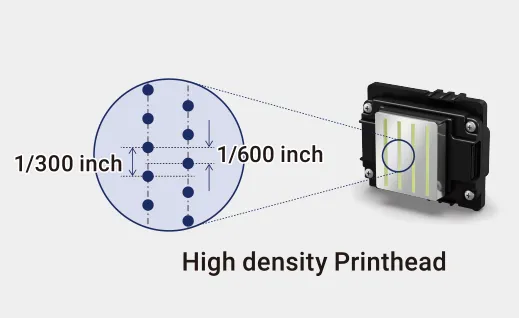
Industrial inkjet printheads contain precision components, including nozzle plates, ink channels and electrical connections. During routine maintenance, operators may need to remove ink residue, clean surrounding surfaces or absorb excess cleaning solution.
The cleaning material must therefore do two things well:
- Remove ink and contaminants without introducing new contamination.
- Protect sensitive printhead surfaces from unnecessary friction, fibers and chemical residues.
Ordinary paper towels, household tissues and low-quality fabrics are not ideal for this work. Paper products can release fibers and particles. Conventional cotton fabrics may shed lint, contain finishing residues or have inconsistent surface structures. Rough or contaminated materials may also scratch sensitive surfaces.
A purpose-made industrial wipe offers more controlled cleanliness, absorbency and material consistency.
A wipe being labeled “lint-free” does not automatically mean it is suitable for direct contact with a printhead nozzle plate.
2. Materials and Manufacturing Processes: What Should You Look For?
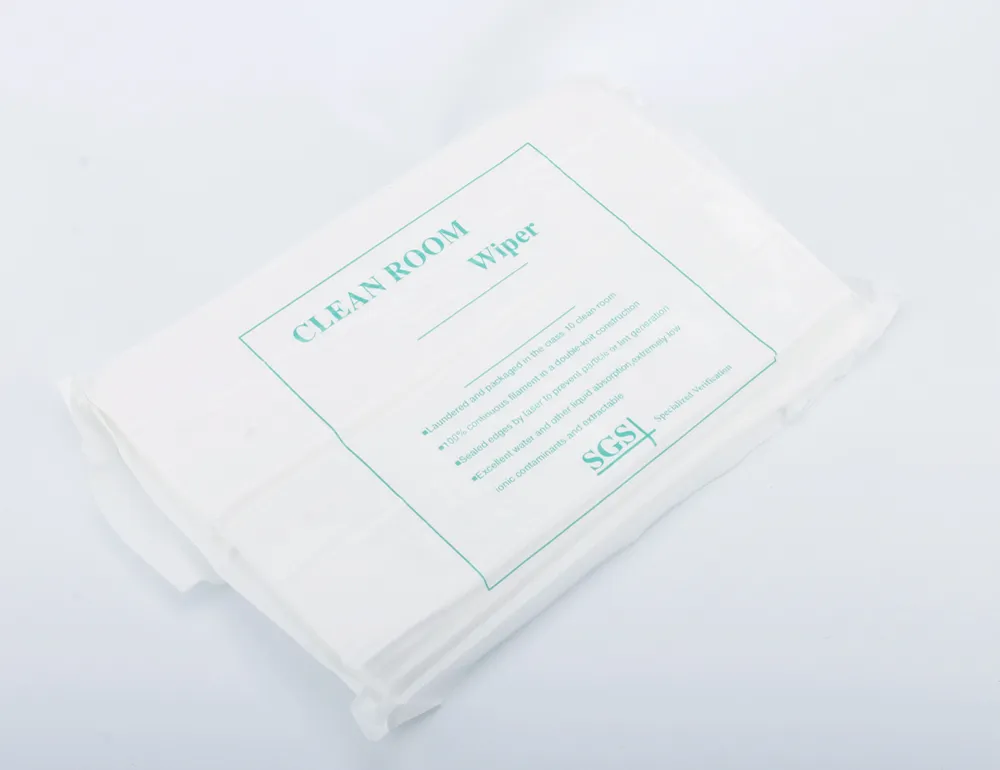
The performance of an industrial printhead cleaning wipe depends on its fiber material, fabric structure and edge treatment.
2.1 Fiber Material
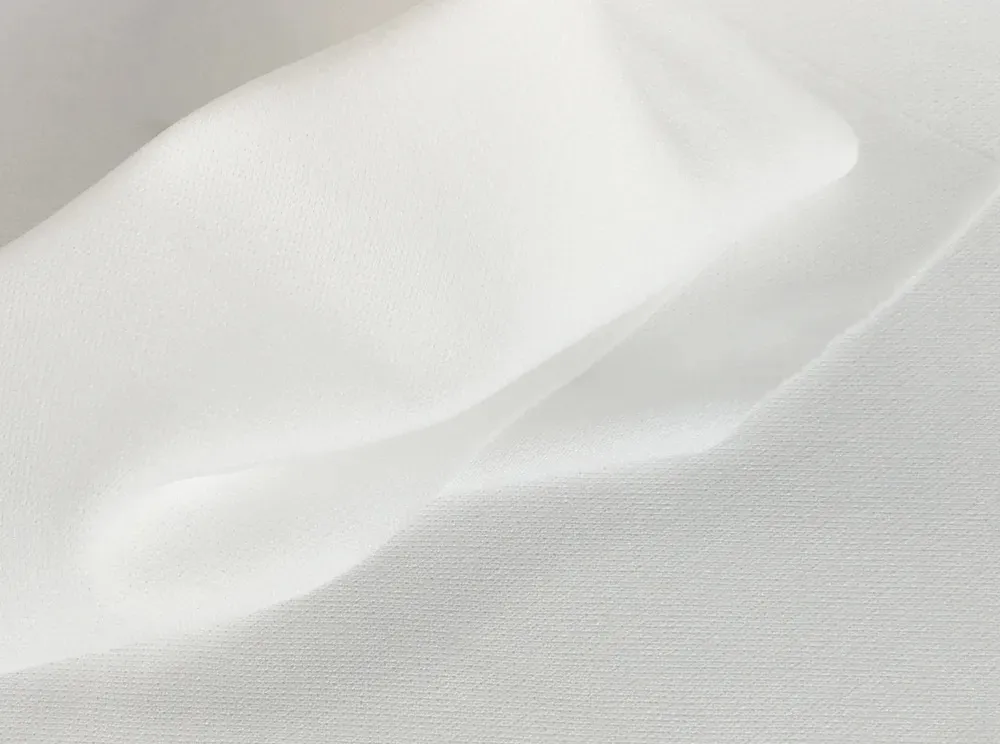
100% continuous-filament polyester
Polyester is widely used in cleanroom wiping materials because continuous-filament fibers generally shed fewer loose fibers than fabrics made from short staple fibers.
- Low lint generation when properly manufactured.
- Good dimensional stability.
- Compatibility with many commonly used cleaning solvents.
- Consistent fabric construction.
- Suitable performance for routine cleaning and wiping applications.
However, solvent resistance depends on the complete product construction, including dyes, finishes, binders and edge treatments. Polyester alone does not guarantee compatibility with every cleaning solution.
Polyester and nylon blends
Some microfiber wipes combine polyester and polyamide (nylon). These materials can provide a softer feel, good surface contact and effective liquid pickup. They may be useful for removing ink residue from external surfaces and equipment components. Their suitability for nozzle-plate contact should be confirmed through product specifications and compatibility testing.
2.2 Edge-Sealing Technology
The edges of a wipe are an important source of potential fiber release. Common finishing methods include:
- Laser sealing: Uses heat to seal the cut edges and reduce loose fibers.
- Ultrasonic sealing: Uses high-frequency vibration to bond the material along the edges.
- Heat sealing: Applies controlled heat to reduce fraying, depending on the fabric construction.
A properly sealed edge can help reduce particle and fiber release. However, edge sealing alone does not determine the cleanliness of the entire wipe. The fabric itself, manufacturing environment and packaging process also matter.
2.3 Fabric Structure
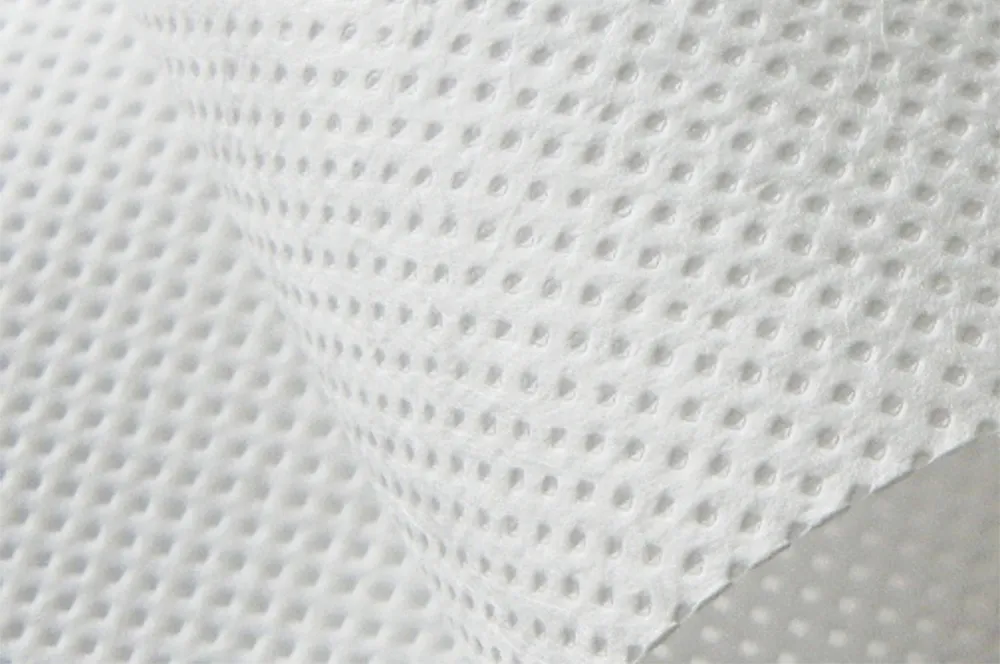
Industrial wipes commonly use knitted, woven or nonwoven constructions.
| Structure | Typical characteristics | Common applications |
|---|---|---|
| Knitted polyester | Soft, flexible and conformable | Precision surface wiping |
| Woven polyester | Stable structure and controlled texture | General equipment cleaning |
| Polyester microfiber | Fine fibers and good liquid pickup | Removing surface residue |
| Nonwoven material | Performance varies with fiber composition and bonding method | General wiping and liquid absorption |
For delicate printhead surfaces, the goal is not simply to choose the softest material. The wipe should also have low particle release, a consistent surface and suitable chemical compatibility.
2.4 Wipe Size and Handling
Common sizes include 4-inch, 6-inch and 9-inch wipes, although actual dimensions vary by supplier.
- 4-inch wipes: Convenient for small components and controlled cleaning.
- 6-inch wipes: A practical size for many routine maintenance tasks.
- 9-inch wipes: Useful for larger equipment surfaces and general cleaning.
Choose a size that allows the operator to use a clean section of the wipe without repeatedly touching contaminated areas.
3. Are There Industry Standards for Industrial Cleaning Wipes?
There is no single universal standard specifically defining the requirements for every industrial inkjet printhead cleaning wipe. However, several standards and recommended practices provide useful references for evaluating cleaning materials.
3.1 China’s FZ/T 44008-2023
FZ/T 44008-2023, Chemical Filament Cleaning Wipes, is a relevant Chinese textile industry standard for cleaning fabrics made from chemical filament fibers. It covers requirements, test methods, inspection, packaging, labeling, transportation and storage for wipes used in cleanrooms and other controlled environments. It is a recommended industry standard, rather than a printhead-specific mandatory specification.
3.2 IEST-RP-CC004
The Institute of Environmental Sciences and Technology (IEST) publishes recommended practices for evaluating wiping materials used in cleanrooms and other controlled environments. IEST-RP-CC004.4 provides test methods for evaluating wiper cleanliness and functional characteristics, including properties relevant to particle release, fiber release, absorbency and extractable contamination.
For buyers, this is a useful reference when requesting technical data from a wiper manufacturer.
3.3 ISO 14644
The ISO 14644 series addresses cleanrooms and associated controlled environments. For example, ISO 14644-1 classifies air cleanliness by airborne particle concentration.
ISO 14644 cleanroom classification is not, by itself, a certification standard for an individual cleaning wipe.
Instead of asking only whether a wipe meets an ISO cleanroom standard, ask the supplier for measurable product data, such as particle release, fiber release, absorbency, ionic contamination and non-volatile residue (NVR).
4. Key Performance Properties for Printhead Cleaning Wipes
Not every printhead maintenance task requires the same level of cleanliness. However, several performance properties deserve attention.
4.1 Low Particle and Fiber Release
A cleaning wipe should not introduce fibers or particles onto the surface being cleaned. Loose fibers may remain around the nozzle plate, cap top or other ink-contact areas. Depending on their location, they can interfere with cleaning or contaminate the ink path. For sensitive applications, ask suppliers for particle-release and fiber-release test results rather than relying only on the term “lint-free.”
4.2 Softness and Surface Protection
The wipe should have a smooth, consistent surface without hard particles or rough edges. This is particularly important when cleaning sensitive nozzle-plate surfaces. Excessive pressure, repeated rubbing or unsuitable materials may damage delicate coatings or surface treatments. A soft wipe does not make aggressive wiping safe. Always follow the printhead manufacturer’s maintenance instructions.
4.3 Static-Control Properties
Static electricity can attract airborne dust and other particles to a cleaning material. For cleaning tasks around sensitive electronic components, an appropriate antistatic wipe may help reduce electrostatic charge accumulation. Antistatic requirements depend on the application and equipment; a particular surface-resistance range should not be treated as a universal requirement for all printhead cleaning wipes.
4.4 Low Ionic Contamination and Non-Volatile Residue
Cleaning materials can contain extractable substances, including ionic contaminants and chemical residues. Ionic contamination may include chloride, sodium and potassium ions. Non-volatile residue (NVR) refers to material left behind after the extraction liquid evaporates. Excessive residues may contaminate sensitive surfaces or interfere with cleaning processes. For high-cleanliness applications, request test results and confirm that the testing method and extraction solvent are clearly stated.
4.5 Absorbency and Solvent Compatibility
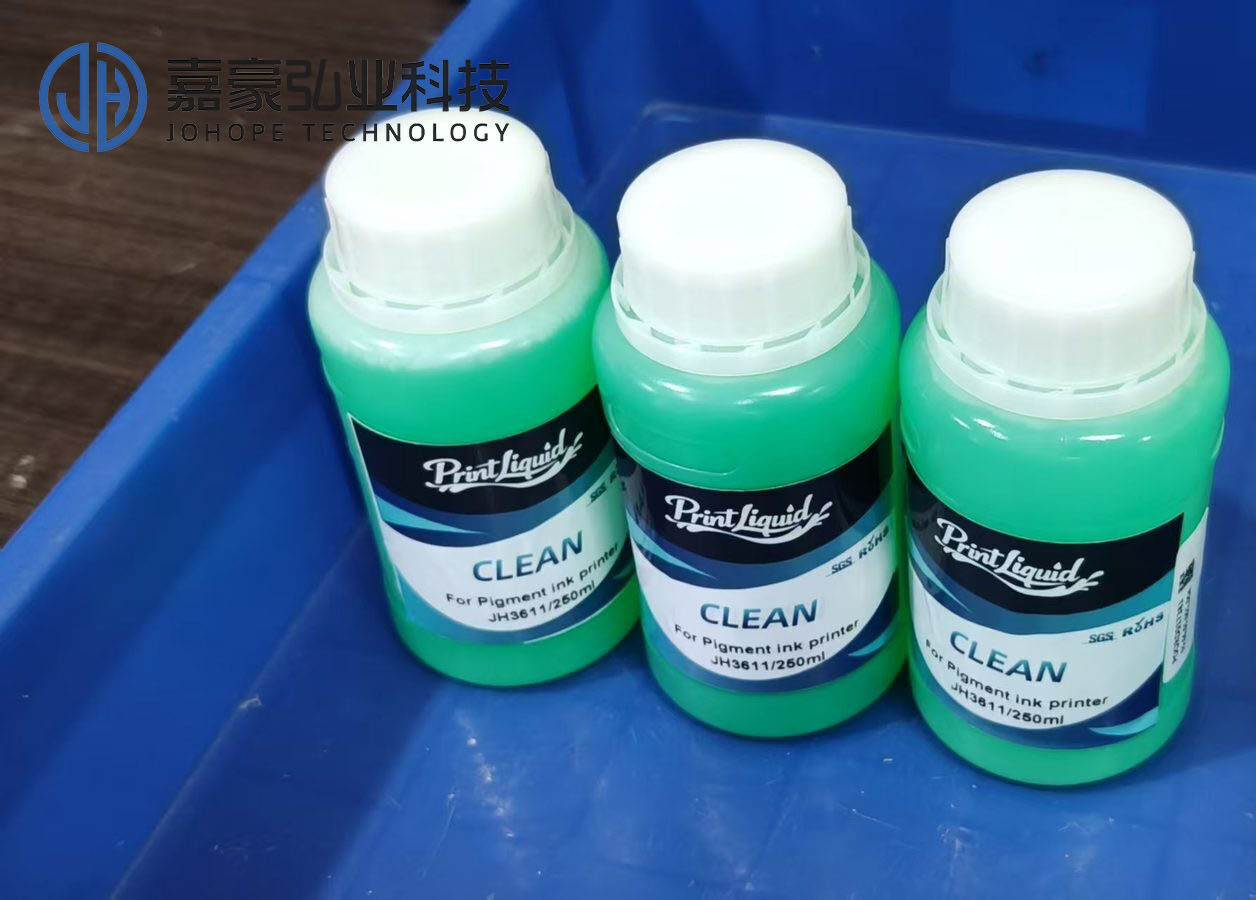
A good maintenance wipe should absorb excess ink or cleaning liquid effectively without breaking down during use. Check compatibility with the actual cleaning solution, such as water-based printhead cleaning solutions, UV ink cleaning solutions, mild-solvent cleaning solutions and IPA-based cleaning agents where approved. Do not assume that a wipe compatible with IPA is automatically compatible with every UV or solvent-based cleaning formulation.
For more information about cleaning formulations and their applications, read our Printhead Cleaning Solution Guide: Types, Uses & Best Practices.
5. How to Choose the Right Wipe for Different Maintenance Tasks
The best choice depends on where the wipe will be used and what needs to be removed.
| Maintenance task | Suggested material | Selection considerations |
|---|---|---|
| Nozzle plate and sensitive printhead surfaces | Low-lint polyester cleanroom wipe | Smooth surface, sealed edges, verified low particle release |
| General printhead exterior cleaning | Polyester or polyester microfiber | Good absorbency and low lint generation |
| Dried ink or UV ink residue on external surfaces | Compatible polyester microfiber | Solvent compatibility and effective liquid pickup |
| Solvent or mild-solvent printer maintenance | High-density polyester or suitable polyester microfiber | Chemical compatibility and low fiber release |
| Printhead surroundings and electronic components | Suitable antistatic polyester wipe | Static-control performance and low contamination |
| Printer housing and general ink-path cleanup | Absorbent polyester wipe or suitable nonwoven wipe | Absorbency and cost-effectiveness |
A few additional points are worth remembering:
- Product labels such as 3009 and 4008 are commonly used as commercial product designations. They do not, by themselves, prove a particular cleanliness grade or performance level.
- A wipe with a higher weight per square meter is not necessarily cleaner or safer for nozzle-plate contact.
- Wood-pulp-based cleanroom paper may be useful for general liquid absorption, but it should not automatically be treated as suitable for direct nozzle-plate wiping.
6. Practical Tips for Using Printhead Cleaning Wipes
- Follow the recommended cleaning method. Use the cleaning solution and procedure specified by the printhead or printer manufacturer. Do not assume that water, IPA or a general-purpose solvent is suitable for every printhead.
- Avoid excessive pressure. When the manufacturer permits manual wiping, use gentle, controlled movements. Avoid repeatedly rubbing the same area.
- Use a clean section for each cleaning task. Do not reuse a section that has already absorbed ink or collected contaminants. Replace the wipe when it becomes visibly dirty or saturated.
- Do not scrape off dried ink. If ink has dried on an external surface, use an approved cleaning solution to soften the residue before gently removing it. Avoid forcing softened ink toward the nozzle openings.
- Store wipes properly. Keep unused wipes sealed in their original packaging. Protect them from dust, moisture and direct contamination.
- Avoid cutting sealed wipes yourself. Cutting a finished wipe can expose unsealed fibers and increase the risk of particle release.
7. Is a More Expensive Cleaning Wipe Always Better?
Not necessarily. A high-priced cleanroom wipe may offer excellent particle control and cleanliness, but it may be unnecessary for every maintenance task. Conversely, a low-cost wipe with no technical specifications may introduce avoidable contamination risks.
The right selection should be based on:
- Fiber material and fabric construction.
- Edge-sealing method.
- Particle and fiber release data.
- Absorbency.
- Chemical compatibility.
- Ionic contamination and NVR, where relevant.
- Intended cleaning surface and application.
For routine printer maintenance, a suitable low-lint polyester wipe may be sufficient. For direct contact with sensitive printhead surfaces or use in high-cleanliness environments, more stringent material specifications and test data are advisable.
The best cleaning wipe is not necessarily the most expensive one. It is the one that meets the actual cleanliness, material compatibility and maintenance requirements of the application.
8. Frequently Asked Questions
Q1. Can ordinary tissue paper be used to clean an industrial printhead?
It is not recommended for direct printhead cleaning. Tissue paper can release fibers and particles, and its surface may not be suitable for sensitive nozzle-plate surfaces. Use a cleaning material approved for the intended maintenance task.
Q2. Is 100% polyester always the best material for printhead cleaning?
100% continuous-filament polyester is a widely used option because it can offer low lint generation and good chemical resistance. However, overall performance also depends on fabric construction, edge treatment, cleanliness and solvent compatibility.
Q3. Can I use IPA with a polyester cleaning wipe?
Some polyester wipes are compatible with IPA, but compatibility depends on the wipe’s complete construction and the specific formulation. Check the supplier’s chemical compatibility data and the printhead manufacturer’s cleaning instructions before use.
Q4. What is the difference between a cleanroom wipe and an ordinary lint-free cloth?
A cleanroom wipe is evaluated against more controlled cleanliness and performance requirements. Depending on its grade, testing may cover particle release, fiber release, absorbency and extractable residues. An ordinary cloth labeled “lint-free” may not provide the same level of verified performance.
Q5. How should printhead cleaning wipes be stored?
Keep them in their original sealed packaging in a clean, dry environment. Avoid exposure to dust, moisture and chemicals, and do not reuse contaminated wipes.
Conclusion
Industrial printhead cleaning wipes may look like simple consumables, but their material, construction and cleanliness can directly affect maintenance quality.
For printhead maintenance, focus on low particle release, soft and consistent surfaces, secure edge finishing, suitable absorbency and verified compatibility with the cleaning solution.
A well-selected cleaning wipe helps reduce avoidable contamination during maintenance. More importantly, it helps operators follow a consistent and controlled cleaning process.