In industrial inkjet printing, print quality depends on several factors, including printhead performance, ink properties, and the control system. However, even a high-precision printhead cannot deliver consistent results if the ink supply system fails to provide a stable and clean ink flow.
This means that printing stability depends not only on the printhead itself but also on how ink is stored, filtered, transported, and delivered throughout the system.
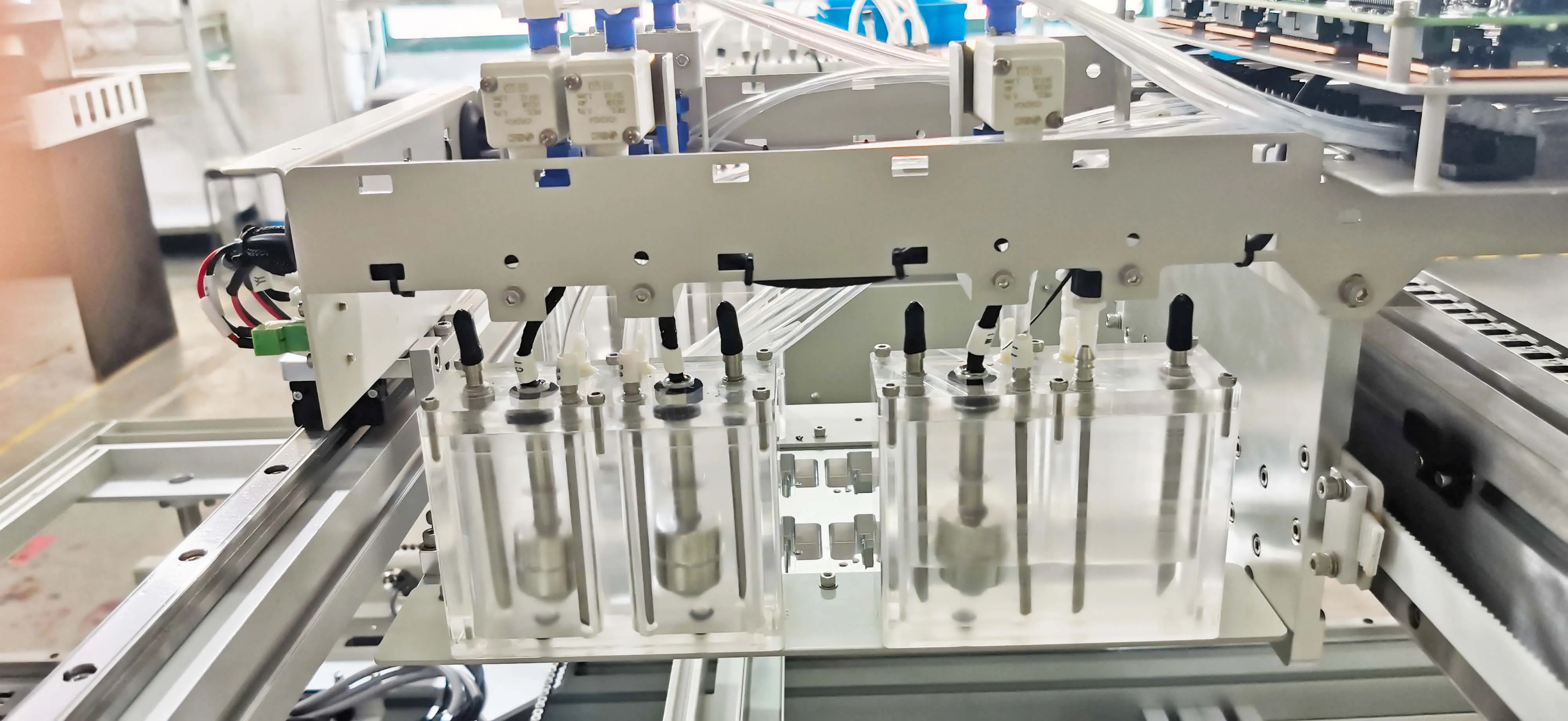
A secondary ink cartridge, also known as an intermediate ink tank or sub-tank, typically sits between the main ink tank and the printhead. It serves as an important connection point between the upstream ink supply and the downstream printing unit. Depending on the system design, it may also support filtration, ink level monitoring, temperature control, or ink circulation.
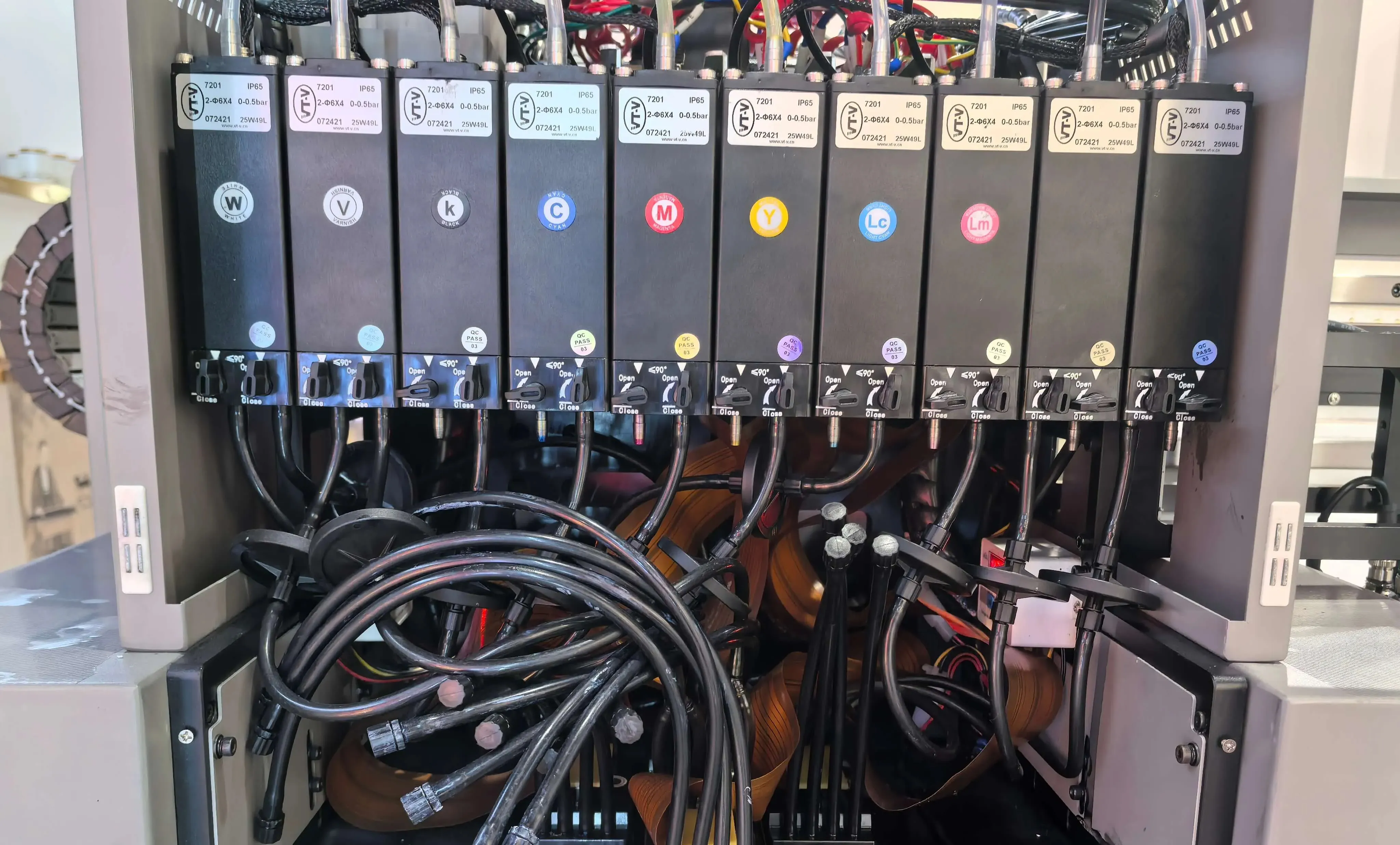
Therefore, the value of a secondary ink cartridge should not be measured by its capacity alone. Its real significance lies in how it contributes to the overall performance of the ink delivery system.
1. Where Does Ink Supply Stability Come From?
During printing, the ink supply system must continuously meet the printhead’s flow and pressure requirements. In actual operation, however, ink flow is affected by several changing conditions.
Variations in the main tank’s ink level, pump operation, tubing resistance, ink viscosity, and printhead demand can all influence supply conditions. If these changes are not properly managed, they may eventually lead to nozzle dropout, inconsistent printing, unwanted ink leakage, or interrupted ink delivery.
A secondary ink cartridge can provide an additional stage of ink management between the main reservoir and the printhead.
1.1 Helping Manage Pressure Fluctuations
Printheads are sensitive to pressure conditions at their ink inlets. Excessive pressure may increase the risk of dripping or leakage, while insufficient pressure can restrict ink delivery and interfere with consistent nozzle operation.
Depending on its structure and installation, a secondary ink cartridge can provide an intermediate ink supply volume and help reduce the direct impact of certain upstream fluctuations on the printhead.
For example, in a pump-fed system, pump startup and shutdown, changes in delivery flow, or variations in the main tank’s ink level may affect the pressure conditions within the ink path. A properly designed combination of secondary tank, tubing, valves, and pressure control components can help the system respond more consistently to changing printing demands.
It is important to note that a secondary ink tank is not automatically a constant-pressure regulator. Its actual effect on pressure stability depends on the tank design, installation height, sealing structure, valve arrangement, and the pressure control strategy used throughout the system.
1.2 Providing Space for Filtration and Ink Management
Particles, residual contaminants, and debris introduced during system operation can increase the risk of printhead blockage.
Depending on the design, a secondary ink cartridge may incorporate a filtration element or serve as a connection point between filters, valves, and other ink delivery components.
Some designs use divided chambers to guide ink along a defined path before it reaches the downstream ink circuit. This arrangement can help organize ink flow and reduce the possibility of contaminants reaching the printhead.
However, filtration performance does not depend solely on whether a filter is installed inside the tank. Filter rating, effective filtration area, flow rate, pressure drop, and material compatibility with the ink must also be considered.
For high-precision inkjet applications, filtration should be matched to the printhead requirements, ink characteristics, and system flow rate rather than selected simply by choosing the finest available filter.
2. From Ink Storage to Dynamic Flow: Understanding Ink Circulation
Different ink formulations have different physical and chemical properties. In some pigment-based inks, inadequate storage or handling may contribute to particle settling, local concentration variations, or increased loading on filtration components.
For certain industrial inkjet applications, circulation can help improve ink management. However, circulation is not a standard feature of every secondary ink tank.
2.1 Why Do Some Inkjet Systems Require Ink Circulation?
In a conventional one-way supply system, ink generally travels from the main reservoir through the ink lines to the printhead.
In a circulation-based system, ink follows a defined path that allows some of it to return to the reservoir or circulate through designated sections of the ink circuit.
When properly designed, ink circulation may offer several benefits:
-
Reduced settling risk: Appropriate ink movement can help limit sedimentation in certain pigment-based inks.
-
Improved ink consistency: Controlled circulation may reduce differences in ink conditions between different parts of the system.
-
Support for temperature management: When combined with suitable temperature control, circulation can help improve temperature distribution.
-
Reduced prolonged stagnation: Properly managed flow can limit stagnant areas in compatible ink systems.
Nevertheless, circulation does not eliminate sedimentation or printhead clogging entirely. Ink formulation, circulation rate, tubing layout, filtration, and maintenance practices remain important factors.
The circulation pump must also operate within the pressure limits of the system. Poorly controlled circulation can create pressure disturbances that negatively affect printhead performance.
2.2 How Does a Secondary Ink Tank Fit into a Circulation System?
In some industrial inkjet systems, the secondary ink cartridge works together with the main reservoir, circulation pump, filters, and printhead to form an integrated ink management system.
A typical arrangement may include:
-
Main ink tank: Stores the bulk ink supply.
-
Circulation pump: Drives ink through the designated circulation path.
-
Filter: Helps control particulate contamination.
-
Secondary ink cartridge: Provides intermediate storage, supply connection, or other functions defined by its design.
-
Pressure control components: Help maintain the operating conditions required by the printhead.
The actual circulation route varies between machines. Some systems circulate ink close to the printhead, while others circulate it primarily through the reservoir and supply lines.
Before selecting or replacing a secondary ink tank, it is therefore important to understand the machine’s actual ink circuit rather than relying on the tank’s appearance alone.
3. Ink Level Monitoring and Automatic Replenishment
For industrial printers designed for extended operation, ink level management affects both maintenance efficiency and production continuity.
If ink levels can only be checked manually, operators must inspect the system regularly. Delayed replenishment may interrupt ink delivery and disrupt an ongoing printing job.
A secondary ink tank equipped with a suitable level detection device can provide feedback to the printer’s control system. This information can support automatic replenishment, low-ink warnings, and other protective functions.
3.1 Common Ink Level Detection Methods
Depending on the tank design and application, ink level detection may use mechanical floats, optical sensors, capacitive sensors, ultrasonic sensors, or other suitable technologies.
Each method has its own operating conditions and limitations.
-
Float-based detection: Uses the movement of a float or similar mechanical component to detect a specified ink level.
-
Optical detection: Uses changes in optical signals to identify the presence or level of liquid, depending on the sensor design.
-
Capacitive detection: Detects changes in capacitance associated with the liquid level and the surrounding materials.
-
Other non-contact methods: May reduce the need for direct contact between sensing components and ink when the application allows.
Non-contact detection does not automatically eliminate contamination risks or maintenance requirements. Sensor positioning, external contamination, liquid properties, and detection accuracy must still be evaluated.
3.2 Turning Level Signals into Automatic Ink Supply Control
A level sensor alone cannot guarantee stable ink delivery. Its effectiveness depends on how it works with the control board, pump, and replenishment logic.
For example, when the ink level falls below a preset threshold, the controller may activate the replenishment pump. Once the target level is reached, the pump can stop. If the system detects an abnormal level, an extended replenishment cycle, or inconsistent sensor signals, it may trigger an alarm or protective response.
With this integrated approach, the secondary ink tank becomes an important monitoring point within an automated ink supply system.
4. Temperature Management: Ink Condition Matters
Temperature changes can affect the viscosity and flow characteristics of many ink formulations, influencing tubing resistance and printhead operating conditions.
At lower temperatures, some inks become more viscous, potentially increasing resistance during transport. Excessive temperatures may affect ink stability or accelerate solvent evaporation in certain formulations.
For industrial printing applications with specific temperature requirements, temperature management can therefore be an important part of ink supply system design.
Depending on the equipment requirements, a secondary ink cartridge may incorporate a temperature sensor and work with a heating element or the printer’s overall temperature control system.
What Should Be Considered in Temperature Control Design?
First, the target temperature should be determined according to the ink manufacturer’s specified operating range. Higher temperatures are not necessarily better.
Second, heater placement, heating power, sensor position, and control response can all affect temperature distribution within the ink.
Third, the tank material, seals, and internal components must withstand the expected operating temperatures. For inks with specific chemical compatibility requirements, long-term material performance should also be verified.
Temperature control should therefore be treated as part of the overall system design rather than simply adding a heating element to the outside of a tank.
5. Different Printing Applications Have Different Requirements
There is no single secondary ink tank configuration suitable for every printer. Printing technology, ink chemistry, printhead type, supply architecture, and production requirements all influence the necessary tank structure and functions.
The same principle applies to ink cartridges used in UV printing systems. Understanding the differences between cartridge types and avoiding common misconceptions can help printer operators make better decisions about ink storage and supply. For a closer look, read our guide to UV printer ink cartridge types and common misconceptions.
5.1 Solvent and Eco-Solvent Printing
For solvent and eco-solvent printers, material compatibility is a key consideration. The tank body, seals, and other wetted components must withstand the intended ink formulation.
Filtration, ink level monitoring, and long-term operating reliability may also be important.
If the selected materials are incompatible with the ink, seals may swell, deteriorate, or leak over time. Therefore, tank selection should involve checking material compatibility as well as dimensions and connection specifications.
5.2 UV Inkjet Printing
UV ink formulations may have specific viscosity, flow, and material compatibility requirements.
For machines using ink circulation or specialized pressure control, the secondary ink tank must work properly with the pump, valves, filters, and printhead.
In negative-pressure ink supply systems, particular attention should be paid to whether the tank structure and installation affect the required negative pressure or its stability.
5.3 Water-Based and Pigment Ink Printing
For certain water-based pigment applications, sedimentation management, filtration, and maintenance during downtime are particularly important.
A suitable circulation design may help manage ink conditions, but whether circulation is necessary should be determined by the ink formulation and printer architecture.
For machines that remain idle for extended periods, operators should also follow the maintenance procedures recommended by the ink supplier and printer manufacturer. Ink circulation should not be considered a replacement for printhead capping, moisture control, or routine maintenance.
6. What Should You Check When Selecting a Secondary Ink Cartridge?
For printer manufacturers, service providers, and spare parts distributors, selecting a secondary ink tank involves more than confirming that it fits the machine.
The following factors deserve particular attention.
-
Ink compatibility: Confirm that the tank body, seals, filter media, and other wetted components are compatible with the intended ink, especially UV, solvent-based, and other formulations with specific material requirements.
-
Ink supply method and pressure requirements: Determine whether the printer uses gravity-fed, pump-fed, negative-pressure, or circulation-based ink delivery. The selected tank must be suitable for the corresponding operating conditions.
-
Filtration requirements: Check filter rating, flow capacity, pressure drop, and replacement requirements. Filtration should meet the system’s needs without introducing excessive flow resistance.
-
Ink level monitoring and control interfaces: For systems requiring automatic replenishment, verify the sensor type, signal format, installation position, and compatibility with the existing control system.
-
Temperature control and circulation functions: Include these features in the selection criteria only when the application requires them. Also confirm whether they are integrated into the tank or provided by external pumps, sensors, and control devices.
-
Dimensions and maintenance accessibility: Check inlet and outlet positions, connection specifications, installation space, sealing design, and ease of maintenance. These details help reduce the risk of leakage, connection mismatches, and servicing difficulties.
For spare parts procurement, confirming these technical requirements is often more useful than comparing tank capacity or appearance alone.
Conclusion: Stable Printing Starts with Proper Ink Supply Design
The real value of a secondary ink tank lies not simply in how much ink it can hold, but in the role it plays within the ink delivery system.
Depending on its design, it may provide an intermediate supply point or support filtration, ink level monitoring, circulation, and temperature management. However, these functions are not available in every tank, nor can they operate independently of the pumps, valves, tubing, sensors, and control systems around them.
For industrial inkjet printing, stable ink delivery is a system-level engineering task. By matching the secondary ink tank and related components to the ink properties, printhead requirements, and machine architecture, manufacturers and operators can better manage ink supply risks, improve operating reliability, and support more consistent production.
Looking for secondary ink tanks, ink filters, ink pumps, or other ink supply system components for industrial inkjet printers? Contact JOHOPE to discuss spare parts options for your application.