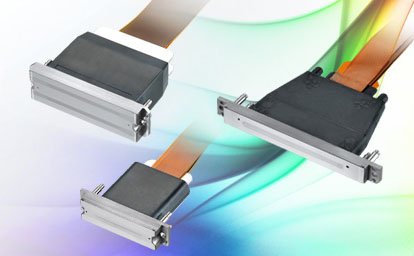
In the industrial inkjet printing industry, printheads are the core components that determine printing quality, production efficiency, and equipment reliability.
Among global industrial inkjet technologies, Ricoh printheads have gained wide adoption in UV flatbed printing, textile printing, ceramic decoration, packaging, and other industrial applications due to their stable performance, wide ink compatibility, and continuous technological improvements.
From the early Ricoh Gen3 (G3) series to today’s widely used Ricoh G6 printheads, each generation represents a step forward in:
- Ink droplet control
- Printing speed
- Reliability
- Ink compatibility
- System integration
This article reviews the evolution of Ricoh printheads, explains the key improvements from each generation, and explores what future Ricoh printhead technology may look like.
Ricoh G3: The Foundation of Industrial Inkjet Printing
The Ricoh G3 series represents one of the earliest stages of Ricoh’s industrial printhead development.
Before becoming part of Ricoh’s product portfolio, the technology originated from Hitachi’s industrial inkjet business. After Ricoh acquired the related business, these printheads became part of the Ricoh Gen3 product family.
Typical models included:
- E1 (92 nozzles)
- E3 (192 nozzles)
At that time, G3 played an important role in helping industrial inkjet printing move from experimental applications toward practical production use.
Key Advantages of Ricoh G3
Simple and Durable Structure
The G3 adopted a single-channel structure:
- One printhead for one ink color
- Simple internal design
- Easy maintenance
This made it suitable for early industrial environments where reliability and cost control were priorities.
Wide Basic Ink Compatibility
The G3 could support common industrial inks, including:
- Solvent inks
- Water-based inks
It was widely used in early applications such as:
- Advertising printing
- Textile printing
- Basic industrial marking
Limitations of G3
However, compared with modern printheads, G3 had obvious performance limitations:
Larger Ink Droplets
Large droplet sizes resulted in:
- Rougher image quality
- Limited color transition
- Poor fine-detail reproduction
It was mainly suitable for:
- Large text
- Simple graphics
- Solid-color printing
Lower Printing Efficiency
With:
- Lower firing frequency
- Narrow printing width
G3 was unable to meet the requirements of modern high-speed production.
Today, G3 printheads have largely disappeared from new equipment and are mainly found in older machines.
Ricoh G4: Improving the Balance Between Quality and Speed
The Ricoh G4 series was introduced as a transitional generation between early industrial printheads and modern high-performance models.
A representative model is:
Ricoh MH2420
Main specifications:
- 384 nozzles
- 600 dpi resolution
- 25.4mm print width
- Single-channel structure
Improvements Over G3
Smaller Droplets and Better Image Quality
The G4 reduced minimum droplet size significantly compared with G3.
Benefits included:
- Improved text clarity
- Better graphic reproduction
- More stable image quality
It expanded industrial inkjet applications into areas such as:
- Labels
- Small-format advertising
- Entry-level UV printing
Improved Stability
The G4 optimized:
- Ink flow structure
- Sealing design
- Internal reliability
Compared with G3, it offered better long-term operation stability.
Remaining Challenges
Despite improvements, G4 still had limitations:
Single-Color Structure
Because each printhead handled only one color:
- Multiple heads were required for color printing
- Machine design became more complicated
- Calibration workload increased
Limited High-End Production Capability
Although compatible with UV ink, G4 was not designed for demanding applications requiring:
- High-speed continuous production
- Extremely fine image quality
- Long-term heavy-duty operation
Today, G4 is mainly found in older or cost-sensitive equipment.
Ricoh G5: The Industry Standard Generation
The Ricoh G5 series represents a major milestone in Ricoh’s industrial printhead development.
Released after 2010, the G5 became one of the most widely adopted industrial printheads worldwide.
Representative model:
Ricoh MH5420
Key specifications:
- 1280 nozzles
- 600 dpi resolution
- 54.1mm print width
- Dual-channel structure
Why Ricoh G5 Became Popular
Better Balance Between Quality and Productivity
The G5 introduced improved droplet control:
- Smaller droplets
- Variable droplet technology
- More stable ink placement
This enabled:
- Higher image quality
- Better gradients
- More detailed graphics
while maintaining industrial production efficiency.
Dual-Channel Design Reduced System Costs
Compared with previous single-channel designs:
A single G5 printhead can support two ink channels.
Advantages:
- Fewer printheads required
- Lower equipment cost
- Easier color configuration
- Simplified calibration
This made G5 suitable for many industrial applications:
- UV flatbed printing
- Textile printing
- Ceramic printing
- Advertising production
Strong Reliability and Ink Compatibility
The G5 supports a wide range of industrial inks:
- UV ink
- Solvent ink
- Water-based ink
- Textile ink
Its balance of:
- Performance
- Cost
- Availability
helped it become one of the most commonly used industrial printheads.
Limitations of G5
Although highly successful, G5 still has some limitations:
High-Speed Mode Requires Better System Design
When operating at higher firing frequencies, G5 requires:
- Stable ink supply
- Accurate negative pressure control
- Proper waveform adjustment
Poorly matched systems may experience:
- Ink starvation
- Droplet instability
Ultra-Fine Printing Has Limits
For extremely small text or ultra-high-detail applications, newer generations provide better performance.
Ricoh G6: The High-End Industrial Printhead Generation
The Ricoh G6 series represents Ricoh’s latest mainstream high-performance industrial printhead platform.
Introduced around 2019, G6 targets applications requiring:
- Higher precision
- Faster production
- Longer service life
Main models include:
- MH5320 (two-color configuration)
- MH5340 (four-color configuration)
Major Improvements of Ricoh G6
Improved Droplet Control
G6 provides more precise droplet management.
Advantages:
- Smoother gradients
- Cleaner fine lines
- Better detail reproduction
It is suitable for:
- Premium advertising graphics
- High-quality textile printing
- Ceramic decoration
Higher Production Efficiency
Compared with G5, G6 improves high-speed operation capability.
Benefits include:
- More stable continuous printing
- Higher productivity
- Better performance in industrial environments
Longer Lifetime and Easier Maintenance
One major structural improvement is the separation of:
- Printhead
- Data cable
This design allows easier maintenance and reduces replacement costs.
Compared with previous generations, G6 provides improved durability and service life.
Wider Industrial Adaptability
G6 supports various industrial printing environments:
- UV printing
- Solvent printing
- Water-based printing
- Special industrial inks
It is designed for demanding production conditions.
Limitations of G6
Despite being a high-end printhead, G6 also requires proper system matching.
Higher System Requirements
High-speed operation requires:
- Stable ink delivery
- Accurate negative pressure control
- Proper thermal management
Older equipment may require upgrades before using G6.
Higher Initial Investment
As a premium industrial printhead, G6 has a higher purchase cost compared with G5.
It is more suitable for:
- High-value products
- Continuous production
- Premium printing applications
The Evolution Trend from G3 to G6
Looking at Ricoh’s development path, several clear trends can be identified.
Smaller and More Controlled Ink Droplets
Evolution trend:
G3 → G4 → G5 → G6
The focus has shifted from simply reducing droplet size to achieving a better balance between:
- Fine details
- Smooth gradients
- Stable ink coverage
Modern printheads no longer only pursue the smallest droplet size, but optimize overall image performance.
Higher Speed with Better Stability
Industrial printing requires not only faster firing frequency but also reliable operation.
The evolution direction has been:
- Higher frequency
- Better waveform control
- More stable ink supply
- Improved continuous printing capability
Higher Integration and Longer Service Life
Structural improvements include:
- Single channel → dual channel → multi-channel options
- Better ink compatibility
- Improved maintenance design
- Longer operating lifetime
These changes reduce equipment downtime and operating costs.
What Could Future Ricoh G7 Printhead Technology Look Like?
Currently, Ricoh has not officially released a G7 printhead specification.
However, based on industrial inkjet development trends, future generations may focus on:
Higher Resolution and More Precise Droplet Control
Potential improvements may include:
- Smaller controlled droplets
- More grayscale levels
- Better gradient performance
Faster Industrial Production
Future printheads may continue improving:
- Firing frequency
- High-speed stability
- Continuous production capability
Longer Lifetime and Easier Maintenance
Possible developments:
- More durable nozzle materials
- Improved anti-clogging technology
- Smarter monitoring systems
Broader Application Range
Future industrial printheads may expand beyond traditional printing into:
- Functional printing
- Electronics manufacturing
- Advanced manufacturing applications
(The above represents industry-based predictions, not official Ricoh specifications.)
Conclusion: Ricoh Printheads Evolution Reflects the Growth of Industrial Inkjet Printing
The evolution from G3 to G6 shows a clear development path:
- G3: Made industrial inkjet printing practical
- G4: Improved quality and reliability
- G5: Became the mainstream industrial solution
- G6: Delivered higher performance for premium applications
Today:
- The Ricoh G5 remains a cost-effective choice for many standard industrial printing applications.
- The Ricoh G6 is better suited for high-value, high-precision, continuous production environments.
As industrial printing continues to demand higher quality, faster production, and greater reliability, Ricoh’s printhead technology will continue evolving toward more efficient and intelligent solutions.