Kyocera has introduced the KJ4A-EX600RC-HX, a new industrial inkjet printhead designed for the growing demands of label and packaging printing. Announced on September 29, 2026, the printhead is scheduled to become available in November 2026.
Developed with high-viscosity UV inks in mind, the KJ4A-EX600RC-HX supports applications involving opaque white ink, clear varnish, and foil decoration. Its key improvements include a wider operating ink-viscosity range, near-nozzle ink recirculation, and a maximum drive frequency of 40 kHz.
For label and packaging equipment manufacturers, these improvements offer new possibilities for combining decorative printing effects with industrial production speeds.
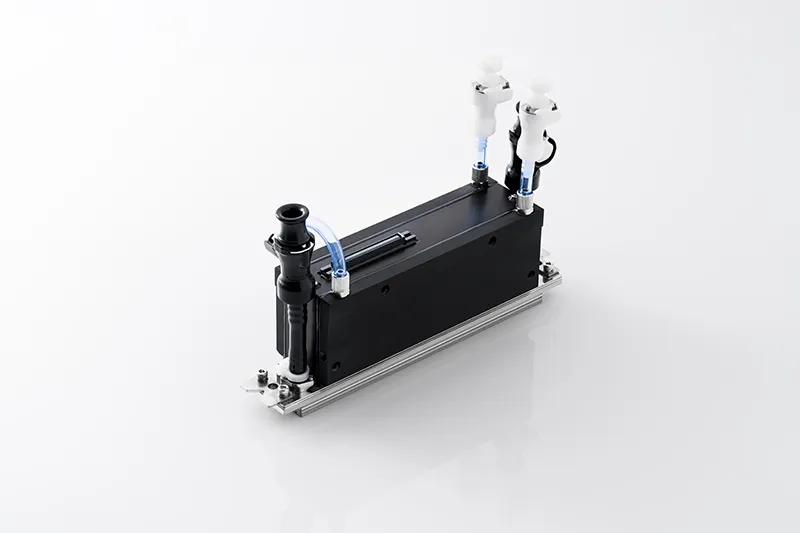
1. Key Specifications of the Kyocera KJ4A-EX600RC-HX
The KJ4A-EX600RC-HX combines 600 dpi resolution with variable droplet volumes and high-speed printing capabilities.
| Specification | KJ4A-EX600RC-HX |
|---|---|
| Manufacturer | Kyocera |
| Printhead Model | KJ4A-EX600RC-HX |
| Printing Technology | Industrial Inkjet |
| Resolution | 600 dpi |
| Effective Print Width | 108.33 mm |
| Maximum Drive Frequency | 40 kHz |
| Droplet Volume | 7–21 pL |
| Maximum Printing Speed | 100 m/min |
| Supported Ink | UV-curable Ink |
| Supported Ink Viscosity | 8–11 mPa·s |
| Ink Recirculation | Near-nozzle Recirculation |
| Dimensions (W × D × H) | 200 × 42 × 68 mm |
| Production Location | Kirishima Plant, Japan |
| Planned Availability | November 2026 |
Specifications are based on Kyocera’s September 2026 announcement. Actual printing performance depends on the ink formulation, driving conditions, and printer configuration.
2. Higher Ink Viscosity Support Expands Printing Applications
One of the most significant improvements in the KJ4A-EX600RC-HX is its expanded ink-viscosity compatibility.
Compared with the previous KJ4A-AL generation, which supported ink viscosities of approximately 6–7 mPa·s, the new printhead is designed for a range of 8–11 mPa·s.
This improvement is particularly important for specialty UV printing applications.
2.1 Opaque White Ink Printing
White UV ink is commonly used on transparent films, colored substrates, and other packaging materials where a high-opacity base layer is required.
The KJ4A-EX600RC-HX supports droplet volumes of up to 21 pL, approximately 23% higher than the previous KJ4A-AL model.
Larger droplets can increase ink deposition, helping improve the opacity of white ink layers and reduce substrate show-through.
2.2 Clear Varnish and Raised Texture Printing
Clear UV varnish is increasingly used in premium packaging to create visual and tactile effects.
With support for higher-viscosity fluids and larger ink droplets, the new printhead is suited to applications such as:
-
Spot UV varnishing
-
Glossy decorative finishes
-
Raised surface textures
-
Tactile packaging effects
-
Premium label embellishment
These applications allow packaging manufacturers to add value beyond conventional CMYK printing.
2.3 Foil Decoration Applications
Metallic foil effects are another important application in premium label production.
The KJ4A-EX600RC-HX can support the controlled deposition of compatible adhesives used in digital foil decoration processes.
This enables selective foil application for metallic logos, decorative patterns, and other premium packaging features.
The printhead deposits the required fluid; the foil-transfer process itself is performed by the associated finishing equipment.
3. Near-Nozzle Ink Recirculation Improves Printing Stability
High-viscosity and pigment-containing inks present challenges for industrial inkjet systems.
When ink remains stagnant inside a printhead, pigment settling, temperature variations, and material accumulation can affect jetting consistency.
To address these challenges, Kyocera has incorporated its proprietary near-nozzle ink recirculation technology into the KJ4A-EX600RC-HX.
The recirculation system continuously moves ink close to the nozzle area, helping to:
-
Reduce pigment sedimentation
-
Minimize ink drying near the nozzles
-
Maintain more uniform ink temperature
-
Support consistent droplet ejection
-
Reduce maintenance requirements during production restarts
These benefits are particularly relevant to white UV inks containing suspended pigments.
However, ink recirculation does not eliminate the need for proper filtration, ink handling, or routine maintenance.
The internal ink channels and supply system remain critical to overall printhead performance.
For a closer look at these principles, read our technical guide on the disassembly and ink supply principle of Kyocera printheads.
4. 40 kHz Drive Frequency Enables Faster Printing
Production speed is essential in modern single-pass label and packaging printing systems.
The KJ4A-EX600RC-HX increases the maximum drive frequency from 20 kHz in the previous KJ4A-AL model to 40 kHz, effectively doubling the specified firing frequency.
This improvement enables a maximum printing speed of up to 100 meters per minute.
For industrial printing applications, the higher firing frequency provides several potential advantages:
-
Greater compatibility with high-speed single-pass printing lines
-
Improved productivity for industrial label manufacturing
-
More flexibility when integrating white ink and varnish stations
-
Better alignment with the throughput requirements of modern digital presses
The 600 dpi resolution is also well suited to many white ink, coating, and decorative printing applications.
In systems combining high-resolution CMYK printheads with dedicated white or varnish channels, the KJ4A-EX600RC-HX can serve as a specialized deposition printhead, subject to integration requirements.
It is important to note that 100 m/min represents the manufacturer’s specified maximum speed, rather than a guaranteed production speed under every printing condition.
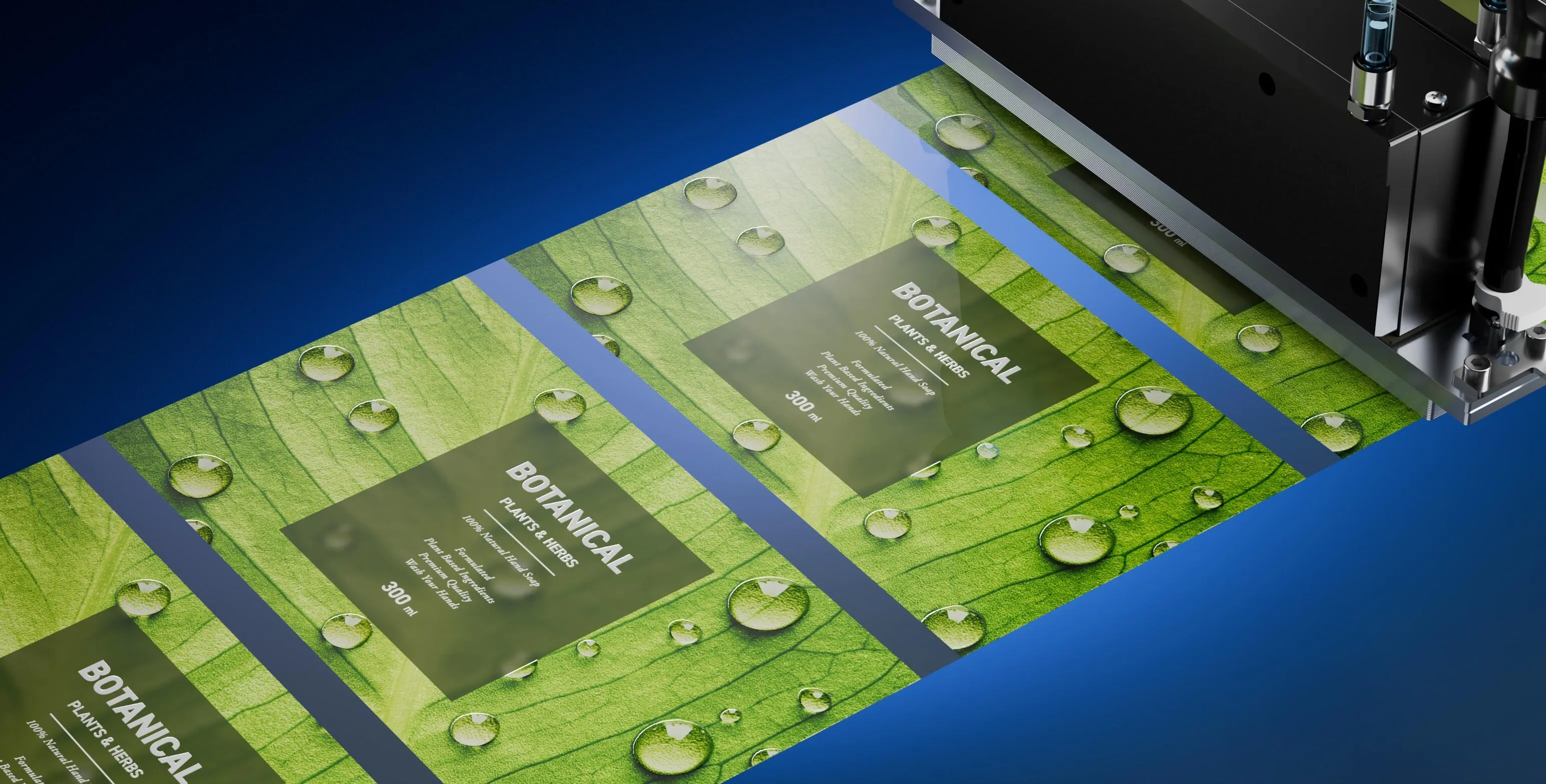
5. KJ4A-EX600RC-HX vs. KJ4A-AL: What Has Changed?
Kyocera’s latest model builds on the previous KJ4A-AL generation with several notable improvements.
| Feature | Previous KJ4A-AL | New KJ4A-EX600RC-HX |
|---|---|---|
| Ink Viscosity | 6–7 mPa·s | 8–11 mPa·s |
| Maximum Drive Frequency | 20 kHz | 40 kHz |
| Maximum Droplet Volume | Previous baseline | 21 pL (23% increase) |
| Ink Recirculation | — | Near-nozzle recirculation |
| Main Application Focus | UV industrial printing | White UV, varnish, foil decoration |
| Maximum Printing Speed | — | Up to 100 m/min |
Comparison values are based on Kyocera’s published product announcement. A dash indicates that no directly comparable specification is provided here.
The main improvement is not simply higher printing speed.
The combination of increased droplet volume, expanded viscosity compatibility, and ink recirculation makes the new model better suited to demanding decorative printing applications.
Nevertheless, the KJ4A-EX600RC-HX should not automatically be considered a drop-in replacement for existing KJ4A-AL installations. Mechanical mounting, electronics, waveform settings, and ink-system compatibility must be verified before replacement.
6. What Should Printer Manufacturers Consider Before Integration?
Although the new Kyocera printhead offers improved capabilities, successful implementation depends on the complete printing system.
6.1 Ink Compatibility and Viscosity Control
The ink formulation must be compatible with the printhead’s recommended operating conditions. Ink viscosity changes with temperature, so precise temperature control and formulation testing are essential.
6.2 Ink Supply and Recirculation Design
The supporting ink delivery system must provide stable pressure, appropriate filtration, and properly controlled circulation.
6.3 Printhead Driving Parameters
Waveform settings, drive electronics, and droplet behavior must be optimized for the selected ink and intended printing speed.
6.4 UV Protection and Maintenance
UV-curable inks require careful handling to prevent premature curing around the nozzle surface and ink delivery components.
Even with an advanced recirculation system, proper maintenance remains important for long-term reliability.
For additional maintenance guidance, explore our article on three key maintenance tips to prevent UV printer printhead damage.
7. What Does This Mean for the Label and Packaging Industry?
The introduction of the KJ4A-EX600RC-HX reflects a broader development in industrial digital printing.
Label and packaging manufacturers increasingly require more than conventional color reproduction. They also need distinctive finishing effects, shorter production runs, and flexible customization.
High-opacity white ink can improve printing results on transparent or colored materials. Clear varnish can create premium surface finishes, while digital foil decoration adds metallic effects without relying exclusively on conventional embellishment processes.
By improving ink compatibility and printhead productivity, Kyocera is addressing the technical requirements behind these applications.
For equipment manufacturers, the KJ4A-EX600RC-HX represents another option when developing high-speed UV printing and digital embellishment systems.
8. Availability and Future Outlook
According to Kyocera, the KJ4A-EX600RC-HX will be manufactured at its Kirishima Plant in Kagoshima, Japan, with commercial sales planned to begin in November 2026.
As manufacturers continue developing more capable digital label and packaging equipment, printheads that combine high-viscosity fluid handling, stable jetting, and industrial printing speeds are likely to play an increasingly important role.
The Kyocera KJ4A-EX600RC-HX is a notable development in this direction, particularly for white ink, varnish, and foil-decoration applications.
For companies evaluating industrial inkjet printheads, understanding printhead specifications is only the first step. Ink compatibility, recirculation system design, maintenance requirements, and complete printer integration ultimately determine production performance.
At JOHOPE, we focus on industrial inkjet printheads, ink supply components, and printer maintenance solutions. If you need assistance identifying compatible printheads or supporting components for your printing equipment, contact our team to discuss your application requirements.
Frequently Asked Questions
1. What applications is the Kyocera KJ4A-EX600RC-HX designed for?
The Kyocera KJ4A-EX600RC-HX is designed for UV label and packaging printing, particularly applications involving opaque white ink, clear varnish, and compatible adhesives for digital foil decoration. These fluids enable white underlayers, selective gloss finishes, tactile effects, and metallic embellishments. For foil decoration, the printhead deposits the adhesive; separate finishing equipment transfers the foil.
2. How does the KJ4A-EX600RC-HX differ from the KJ4A-AL?
The main improvements are higher ink-viscosity support and a higher maximum drive frequency. The KJ4A-EX600RC-HX supports 8–11 mPa·s, compared with approximately 6–7 mPa·s for the KJ4A-AL, while its maximum drive frequency increases from 20 kHz to 40 kHz. The new model also features near-nozzle ink recirculation to support stable jetting. Actual performance depends on ink formulation, operating temperature, waveform settings, and printer configuration.
3. Can the KJ4A-EX600RC-HX directly replace a KJ4A-AL in an existing printer?
It should not be assumed to be a drop-in replacement. Before upgrading, confirm mechanical mounting, electrical interfaces, drive electronics, waveform compatibility, and ink supply requirements with the printer manufacturer or system integrator. The selected UV ink must also be validated for the new printhead. Being positioned as a successor does not guarantee compatibility with every existing KJ4A-AL installation.
Source: Kyocera Official Announcement — September 29, 2026
Product specifications and availability are subject to the manufacturer’s latest confirmation