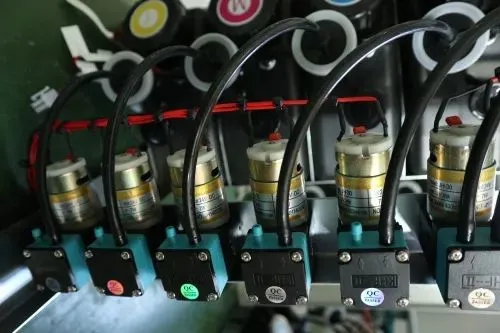
A small ink pump may look like a simple component in a wide-format printer. Some models operate with only a 7W motor, yet choosing the wrong pump can lead to ink leakage, corrosion, pump blockage, and even potential safety hazards.
Why can't one ordinary ink pump handle water-based, solvent, and UV inks?
The answer lies in ink chemistry.
Different ink types have different chemical compositions, viscosity characteristics, drying or curing mechanisms, and compatibility requirements. These differences directly affect the materials used in the pump body, diaphragm, valves, seals, and other wetted components.
A pump that works reliably with water-based ink may deteriorate quickly when exposed to certain strong solvents. Similarly, a pump without adequate light protection may be unsuitable for certain UV ink circulation applications.
For printer manufacturers, distributors, and maintenance technicians, understanding these differences is essential when selecting replacement ink pumps.
In this guide, JOHOPE explains why water-based, solvent, and UV ink pumps require different designs, what can happen when the wrong pump is installed, and how to choose a suitable ink pump for your printing system.
Part 1. Why Do Different Ink Types Require Different Ink Pumps?
An ink pump does more than move ink from one location to another. It must maintain reliable fluid delivery while remaining chemically compatible with the ink throughout its service life.
The three major categories have different requirements.
1. Water-Based Ink Pumps: Corrosion Resistance and Easy Cleaning
Water-based inks primarily use water as their carrier and may contain humectants, alcohols, glycols, surfactants, and other additives.
Their main pump requirements include corrosion resistance, stable sealing, and resistance to ink residue accumulation.
Why does material compatibility matter?
- Corrosion: Prolonged exposure to water and certain ink additives can cause corrosion in unsuitable metal components. Rust or metal contamination may enter the ink system.
- Residue accumulation: When water evaporates, remaining ink components may form deposits around valves, chambers, and other internal passages.
- Sealing performance: Seals and diaphragms must remain compatible with the complete ink formulation to prevent leakage and performance deterioration.
What should a suitable water-based ink pump provide?
- Corrosion-resistant wetted materials.
- Compatible rubber seals and diaphragms.
- Stable pumping performance.
- An internal structure that minimizes residue accumulation and facilitates cleaning.
Material selection should be based on the actual ink formulation rather than assuming that every water-based ink has the same pH or chemical properties.
2. Solvent Ink Pumps: Solvent Resistance and Safety
Solvent and eco-solvent inks may contain ketones, esters, alcohols, glycol ethers, aromatic hydrocarbons, or other organic solvents, depending on the formulation.
These chemicals can be aggressive toward certain plastics and elastomers.
Why does solvent compatibility matter?
- Seal swelling: Incompatible rubber seals may swell, soften, lose elasticity, or deteriorate after prolonged solvent exposure.
- Pump body damage: Certain plastics may become brittle, deform, or crack when exposed to incompatible solvents.
- Ink leakage: Once seals or pump components deteriorate, ink may leak into the printer or surrounding equipment.
Safety is another important consideration.
Some solvent inks contain flammable components. If leaked solvent evaporates and forms a flammable vapor-air mixture, ignition sources such as electrical sparks or static discharge may create a fire or explosion hazard.
This does not mean every solvent ink pump automatically requires an explosion-proof motor. The appropriate electrical and explosion-protection requirements depend on the solvent formulation, vapor concentration, installation environment, and applicable hazardous-area classification.
What should a suitable solvent ink pump provide?
- Solvent-compatible pump body and wetted components.
- Chemical-resistant seals and diaphragms, selected according to the actual solvent composition.
- Reliable leak prevention.
- Appropriate electrical protection and grounding arrangements.
- Explosion protection where required by the assessed installation conditions.
Materials such as PTFE, selected fluororubbers, stainless steel, and solvent-resistant engineering plastics may be used depending on the pump design and chemical compatibility.
3. UV Ink Pumps: Light Protection, Chemical Compatibility, and Thermal Stability
UV inks are different from conventional water-based and solvent inks because they typically contain reactive components such as acrylate monomers and photoinitiators.
These components allow the ink to cure when exposed to suitable ultraviolet radiation.
However, the same curing mechanism creates special requirements for the ink delivery system.
Why does UV ink require special pump considerations?
- Light exposure: If UV ink is exposed to curing wavelengths, premature polymerization may occur. Pump chambers and tubing should therefore provide suitable protection from UV light.
- Chemical compatibility: Acrylate monomers and other reactive ingredients may affect incompatible seals, plastics, or other wetted materials.
- Temperature rise: Excessive heat may accelerate unwanted chemical reactions and affect ink stability.
- Ink residue: If UV ink partially cures inside the pump, filters, valves, or tubing, hardened deposits can restrict flow or damage components.
Certain metal ions and material interactions may also affect ink stability, depending on the specific formulation. However, it is not accurate to assume that every copper or brass component will automatically trigger UV ink polymerization.
What should a suitable UV ink pump provide?
- UV-resistant and light-protected fluid pathways.
- Wetted materials compatible with the UV ink formulation.
- Seals resistant to the relevant acrylate components.
- Low heat generation during operation.
- Stable fluid delivery with suitable flow and pressure characteristics.
For UV printing applications, material compatibility and light protection should be evaluated together rather than considering either factor alone.
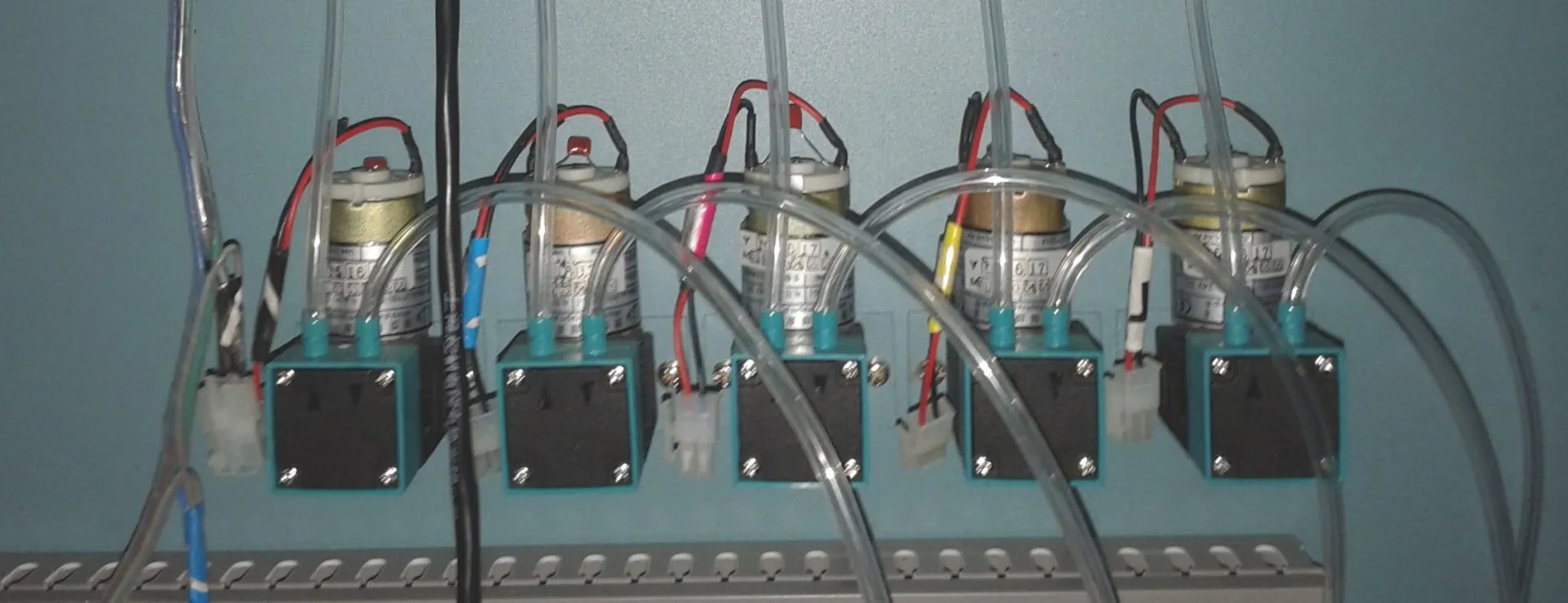
Part 2. What Happens When You Choose the Wrong Ink Pump?
Selecting a pump based only on its appearance, voltage, or power rating can create problems that are much more expensive than the pump itself.
Here are six common risks.
1. Seal Swelling and Ink Leakage
A pump designed for water-based ink may use seals that are not compatible with strong organic solvents.
When exposed to incompatible chemicals, the seals may swell, soften, or lose their elasticity.
The result can include:
- Ink leakage around pump connections.
- Reduced pumping efficiency.
- Unstable ink delivery.
- Premature pump failure.
The same issue can occur with UV ink if the selected seal material is incompatible with its reactive components.
2. Pump Corrosion and Ink Contamination
If the wetted parts are made from unsuitable metals or plastics, prolonged contact with certain ink formulations may cause corrosion or material degradation.
Contaminants can then enter the ink supply system.
Potential consequences include:
- Particulate contamination.
- Filter blockage.
- Changes in ink properties.
- Increased risk of printhead nozzle problems.
For high-precision inkjet printing, even small amounts of contamination can affect production stability.
3. Pump Blockage and Mechanical Failure
Different ink types leave different residues when they dry or react.
For example:
- Water-based ink may leave deposits when water evaporates.
- Solvent ink may leave concentrated resin and pigment residues after solvent evaporation.
- UV ink may partially polymerize or cure when exposed to unsuitable conditions.
If these residues accumulate inside pump chambers, valves, or other narrow passages, they can restrict fluid movement.
In severe cases, the pump may lose its ability to operate normally or become permanently damaged.
4. UV Ink Polymerization and System Contamination
UV ink requires particularly careful handling during circulation.
If UV ink is exposed to unsuitable light or operating conditions, partial polymerization may occur inside the pump.
Once gel or hardened particles form, they may spread into other parts of the ink supply system.
Potentially affected components include:
- Ink filters.
- Ink tubes.
- Valves and connectors.
- Sub tanks.
- Printhead ink channels.
This type of contamination can result in extensive cleaning work and expensive component replacement.
5. Safety Hazards: Fire, Explosion, and Chemical Exposure
Certain solvent inks contain flammable organic solvents.
If an unsuitable pump leaks, solvent vapors may accumulate around the equipment. Where a flammable atmosphere exists, an ignition source can create a serious safety risk.
Other potential hazards include:
- Chemical exposure through direct contact.
- Damage to nearby cables and equipment.
- Electrical faults caused by liquid leakage.
- Fire risks in inadequately controlled environments.
Important: Never assume that a standard 7W pump is suitable for hazardous solvent environments. Verify the pump's electrical protection, applicable explosion-protection certification, installation requirements, and chemical compatibility before use.
6. Ink Cross-Contamination and Financial Loss
Using the same pump for different ink types without proper cleaning and compatibility verification may introduce residual ink into a new ink system.
This can affect ink stability and printing performance.
For example, introducing incompatible solvent residues into a water-based ink system may cause instability or precipitation. Similarly, water or other incompatible contaminants in a UV ink system may affect curing behavior and print quality.
The resulting losses may include wasted ink, damaged filters, clogged printheads, production downtime, and replacement costs.
A suitable dedicated pump is often a much more economical choice than dealing with contamination throughout the entire ink delivery system.
Part 3. How to Choose the Right Ink Pump for Your Printer?
Choosing an ink pump involves more than matching its power rating or physical dimensions.
Before purchasing a replacement pump, consider the following five factors.
1. Confirm the Ink Type
First, identify the ink used in your printer:
- Water-based ink
- Solvent or eco-solvent ink
- UV-curable ink
- Pigment or dye-based ink
- Other specialized industrial inks
Do not assume that two inks belong to the same category and therefore have identical material compatibility requirements.
2. Check the Wetted Materials
The wetted parts are all components that come into direct contact with ink.
These may include:
- Pump chambers.
- Diaphragms.
- Valves.
- Seals and O-rings.
- Inlet and outlet connections.
Confirm that all these materials are compatible with the actual ink formulation.
3. Match Voltage and Power
Check the electrical specifications of the original pump.
Common configurations include:
- 12V DC
- 24V DC
- 3W, 4.4W, or 7W
A pump with the same power rating is not necessarily a suitable replacement. Voltage, current, control method, and operating conditions must also match.
4. Check Flow Rate and Pressure
Different printers have different ink delivery requirements.
For example, a small-format printer may require a relatively low flow rate, while a high-production wide-format printer may need a higher-capacity pump.
Check:
- Rated flow rate.
- Operating pressure or vacuum.
- Required ink delivery volume.
- Compatibility with the printer's positive-pressure or negative-pressure system.
A pump with excessive or insufficient output may affect the stability of the ink supply system.
5. Consider the Working Environment
For solvent and UV applications, also evaluate:
- Chemical exposure.
- Ambient temperature.
- Ventilation requirements.
- Electrical protection.
- Light exposure for UV ink systems.
Never select a pump based on its external appearance alone.
Part 4. JOHOPE Ink Pumps for Different Printing Applications
As a manufacturer and supplier of wide-format inkjet printer parts, JOHOPE provides different ink pump models for water-based, solvent, UV, and other inkjet printing applications.
Our ink pump range includes different structures, voltages, power ratings, and flow capacities to meet various printer configurations.
KHF Ink Pump Series
The KHF series includes different models designed for specific ink applications and ink delivery requirements.
| Model | Voltage | Power | Typical Flow Rate | Application |
|---|---|---|---|---|
| KHF-10 | 24V | 3W | 100–200 ml/min | Solvent / Eco-solvent |
| KHF-30 | 12V | 7W | 300–400 ml/min | Solvent / Eco-solvent |
| KHF-30 | 24V | 7W | 300–400 ml/min | Solvent / Eco-solvent |
| KHF-30 | 24V | 7W | 600 ml/min | Solvent / Eco-solvent |
| KHF-10 UV | 24V | 3W | 100–200 ml/min | UV-compatible application |
| KHF-30 UV | 24V | 7W | 300–400 ml/min | UV-compatible application |
Specifications and ink compatibility depend on the specific model. Confirm the pump configuration and wetted-material compatibility before ordering.
For more options, explore JOHOPE's ink pumps for wide-format and industrial printers.
What Makes JOHOPE Ink Pumps Worth Considering?
- Application-specific options: Different models are available for solvent, UV, and other ink supply applications.
- Multiple specifications: Options include different voltage, power, and flow-rate configurations.
- Stable ink delivery: Designed for ink supply and circulation requirements in wide-format and industrial printing equipment.
- Replacement solutions: Suitable options for various printer configurations, subject to model and specification verification.
For example, the KHF-30 UV Ink Pump (7W, 24V) is listed with a flow rate of 300–400 ml/min for compatible UV printing applications.
If you are unsure which model matches your printer, provide JOHOPE with your printer model, original pump part number, voltage, and ink type. Our team can help you identify a suitable replacement option.
Conclusion: The Right Ink Pump Protects Your Entire Ink Supply System
Why do water-based, solvent, and UV ink pumps need different designs?
Because ink chemistry determines the requirements for pump materials, sealing performance, operating conditions, and safety.
Remember these three key points:
- Water-based ink pumps: Focus on corrosion resistance, reliable sealing, and easy cleaning.
- Solvent ink pumps: Focus on solvent compatibility, leak prevention, and appropriate electrical safety.
- UV ink pumps: Focus on light protection, chemical compatibility, and thermal stability.
A 7W motor does not automatically make two ink pumps interchangeable.
Before purchasing a replacement, always verify the ink type, wetted materials, voltage, flow rate, pressure requirements, and installation conditions.
At JOHOPE, we provide ink pumps and ink supply system components for wide-format and industrial inkjet printers.
Looking for a reliable replacement ink pump? Contact JOHOPE with your printer model and ink specifications to find a suitable solution.
Frequently Asked Questions (FAQ)
1. Can I use a water-based ink pump for solvent ink?
Not necessarily. Solvent ink may contain chemicals that cause incompatible pump seals, diaphragms, or plastic components to swell, soften, or deteriorate. Always verify chemical compatibility before using a pump with a different ink type.
2. What is the difference between a solvent ink pump and a UV ink pump?
A solvent ink pump needs materials that resist the solvents in the ink and appropriate protection against leakage and electrical hazards. A UV ink pump additionally needs suitable protection against UV light exposure and compatibility with reactive ink components to reduce the risk of premature curing.
3. Does a 7W ink pump have enough power for every printer?
No. Power rating alone does not determine whether a pump is suitable. You also need to consider voltage, flow rate, pressure, ink viscosity, and the requirements of the printer's ink supply system.
4. What happens if UV ink cures inside an ink pump?
Partially cured UV ink can form gel or hardened deposits inside the pump, restricting ink flow and potentially damaging valves, filters, tubing, and other components. Proper light protection and material compatibility are important for UV ink circulation systems.
5. How do I choose the correct replacement ink pump?
Check the original pump model, voltage, power, flow rate, inlet and outlet dimensions, connector type, and ink compatibility. It is also important to confirm whether your printer uses a positive-pressure or negative-pressure ink supply system. Providing the original pump label and printer model can help identify a suitable replacement.