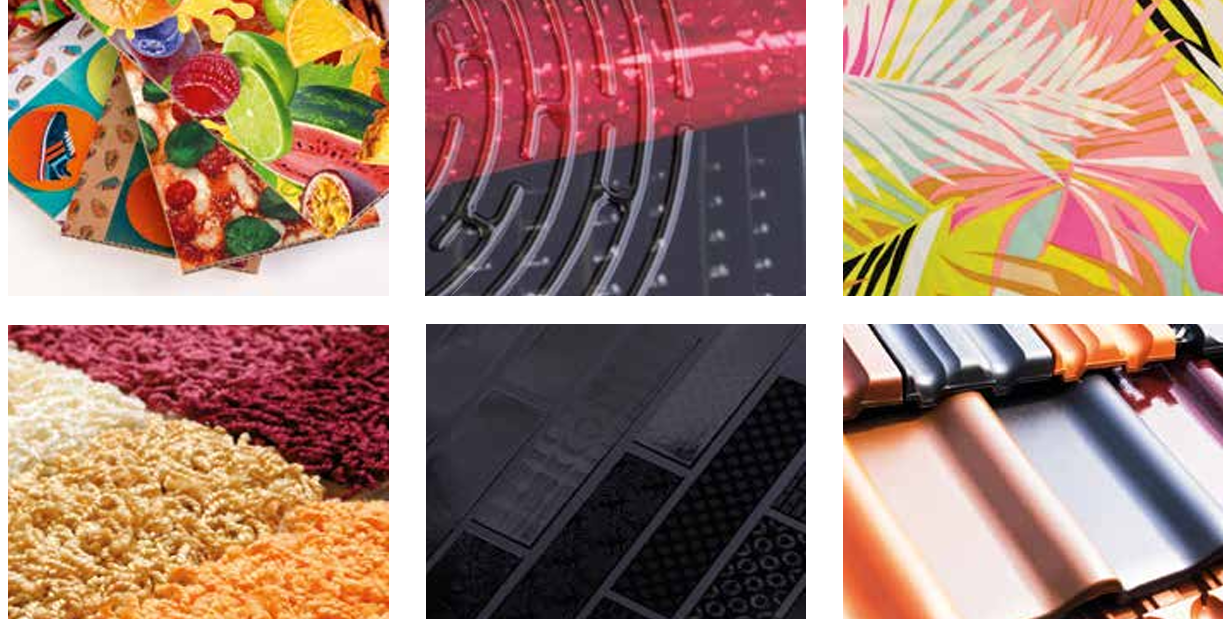
As inkjet technology continues to evolve, UV printing is no longer limited to flat materials. High-gap UV printing has enabled the direct printing of objects with uneven surfaces, curves, and three-dimensional features. This includes toys, promotional gifts, small irregular parts, cylinders, spheres, and decorative electronic housings.
With the help of vision positioning and automation, high-gap printing has unlocked new production possibilities and strong market returns.
However, many users quickly face the same problems once they move to high-gap printing:
- Shorter printhead lifespan
- More ink mist and contamination
- Frequent stringing or trailing
These issues are not accidents. They are natural results of operating under high-gap conditions without proper system matching.
This article provides a practical explanation of high-gap UV printing, focusing on printheads, waveforms, ink behavior, UV curing, and system control.
1. What Is High-Gap UV Printing?
High-gap UV printing means printing at a distance of 5–15 mm, or even more, between the printhead and the substrate, while still maintaining stable jetting, accurate dot placement, and proper curing.
This capability is especially important for:
- Uneven or textured surfaces
- Embossed and multi-layer printing
- High-speed inline UV inkjet lines
- High-viscosity or high-solid UV inks
High-gap printing is not simply “raising the printhead.”
It places higher demands on the entire system, including jetting power, waveform design, ink flow behavior, UV curing timing, and machine control accuracy.
2. How Different Industrial Printheads Perform in High-Gap UV Printing
At longer jetting distances, printhead differences become much more obvious. Jetting speed, drive energy, droplet size, and nozzle design directly affect droplet stability during flight.
Below is a practical comparison of four commonly used industrial printheads.
Ricoh G6: A Popular Choice for High-Gap UV Printing
Ricoh G6 is widely used in high-gap UV flatbed and texture printing systems. Its main strength is strong drive energy combined with high jetting speed.
Thanks to its high-energy piezo drive and short nozzle channels, ink droplets leave the nozzle with high initial speed. This helps droplets resist air interference during flight.
In real production, the Ricoh G6 performs well at jetting distances of about 5–15 mm. Its grayscale droplet options (7 pl, 14 pl, and 21 pl) offer good flexibility for textured and high-coverage printing.
The trade-off is that G6 is more sensitive to ink quality and viscosity stability. Poor ink control can lead to tailing or light ink mist, and system tuning requirements are relatively high.
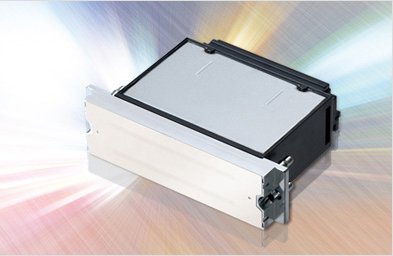
Ricoh G5i: Stable, Reliable, and Cost-Effective
The Ricoh G5i uses a similar piezo structure to the G6 but with slightly lower drive strength. Its optimized nozzle design provides good jet straightness and long-term stability.
In high-gap printing, G5i typically works reliably at 4–10 mm. While it cannot reach the same maximum gap as G6, it remains a solid and widely used option in UV flatbed, roll-to-roll, and corrugated printing.
At high speed and high ink load, G5i is more sensitive to temperature changes, and its waveform tuning range is narrower. This makes proper parameter control especially important.
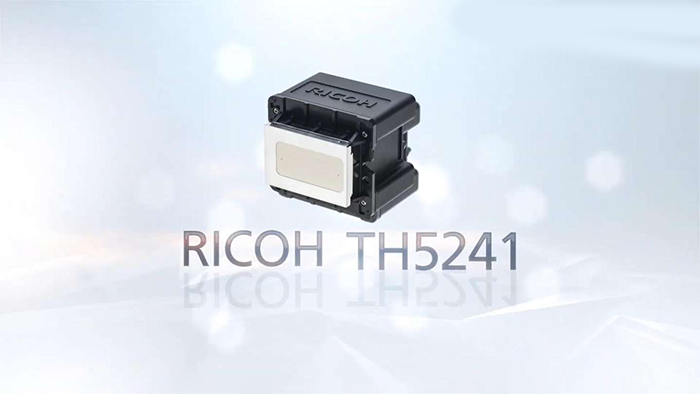
Toshiba CF3: Designed for Large Droplets and Strong Penetration
Toshiba CF3 is built around a different concept. Its biggest advantage is a very wide droplet size range, from about 6 pl up to 80 pl.
With larger nozzles and higher droplet energy, CF3 is well-suited for high-viscosity and high-solid UV inks. In high-gap printing, it usually performs well at 8–15 mm, especially on uneven materials.
CF3 focuses more on coverage and stability than fine detail. It also requires stronger UV curing power to avoid incomplete curing or edge dragging.
Seiko 1536: Built for Durability and Extreme Gaps
Seiko 1536 is designed for heavy industrial use. Its metal nozzle plate and robust structure make it extremely durable.
With droplet sizes ranging from 12 pl to 84 pl, it supports long, continuous operation. In high-gap UV printing, it can reliably reach 10–20 mm, making it ideal for inline UV marking, board printing, and high-speed production lines.
Compared with Ricoh heads, Seiko 1536 delivers slightly lower line sharpness and color detail but excels in stability, coverage, and durability.
3. Why Printhead Life Shortens in High-Gap Printing
In high-gap printing, ink droplets must travel a longer distance through the air. To keep droplets stable, systems often increase firing frequency, drive voltage, or droplet size.
This constant high-energy operation increases mechanical stress and piezo fatigue at the nozzle level. If ink viscosity, temperature control, or negative pressure is unstable, printhead aging accelerates even faster.
In short, shorter printhead life is not caused by one component but by long-term high-load operation combined with system instability.
4. The Real Reason Behind Ink Mist
Ink mist happens when droplet trajectories become unstable. At higher gaps, air resistance and small airflows have a much stronger effect on droplet flight.
Ink mist becomes worse when:
- The waveform lacks enough forward energy or a clean pull-back
- Ink rheology is not suitable for high-gap jetting
- Negative pressure control is inaccurate
- Ink flow resistance or filtration is unstable
This problem is especially noticeable with white ink and large droplets, leading to fuzzy edges and more frequent cleaning.
5. Stringing Is a Curing Timing Problem, Not “Thin Ink.”
Stringing often appears in high-coverage or white ink printing. At higher gaps, droplet landing becomes less concentrated. If UV curing is too weak or poorly timed, droplets can connect before curing, creating strings or trails.
Many machines upgraded for high-gap printing still use UV settings designed for low-gap printing. This mismatch is one of the main reasons stringing occurs.
For high-gap printing, UV curing must be coordinated with waveform energy and droplet size, not adjusted in isolation.
6. Key Points for Stable High-Gap UV Printing
Stable high-gap UV printing depends on proper system matching:
- Well-designed high-energy waveforms
- UV inks with suitable flow behavior
- Sufficient and controllable UV curing power
- Precise negative pressure and temperature control
- Printhead selection matched to the application
In practice, more than 70% of high-gap problems come from waveform and system mismatches—not from the printhead itself.
Final Thoughts
High-gap UV printing is not inherently difficult. It simply requires a better understanding of how jetting, ink behavior, curing, and system control work together.
Printhead wear, ink mist, and stringing are only surface symptoms. The real solution lies in system-level optimization. When properly designed and tuned, high-gap UV printing can deliver long-term, reliable value in industrial applications.