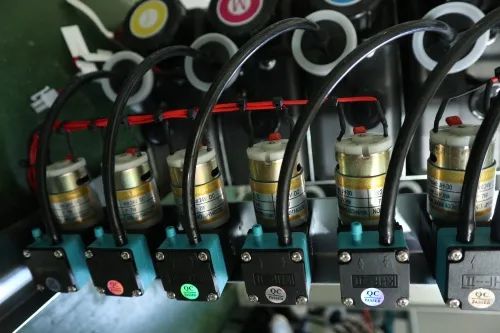
In UV printers, eco-solvent printers, and large-format inkjet printers, the ink pump plays a critical role in maintaining a stable ink supply and effective printhead cleaning. Whether it is ink delivery, ink return, printhead cleaning, or negative pressure control, the performance of the ink pump directly affects print quality, printhead lifespan, and overall machine stability.
One of the key factors determining ink pump performance and service life is the type of motor driving the pump.
At present, ink pump motors are mainly divided into two categories: brushed motor ink pumps and brushless motor ink pumps.
This article provides a systematic comparison of these two types from the perspectives of working principles, performance characteristics, lifespan, and real-world application scenarios, helping users make informed selection decisions.
1. Why Is the Ink Pump Motor So Important?
In inkjet printing systems, the ink pump is far more than a simple “ink suction” device. It performs several critical functions:
- Maintaining stable negative pressure in the ink system
- Assisting with printhead cleaning and waste ink discharge
- Ensuring a continuous and consistent ink supply
- Reducing the risk of nozzle clogging and ink starvation
Once the ink pump operates unstably, minor issues such as missing lines and color inconsistency may occur. In more serious cases, printhead damage or complete machine downtime can result.
2. Brushed Motor Ink Pumps: A Mature and Cost-Effective Solution
Working Principle
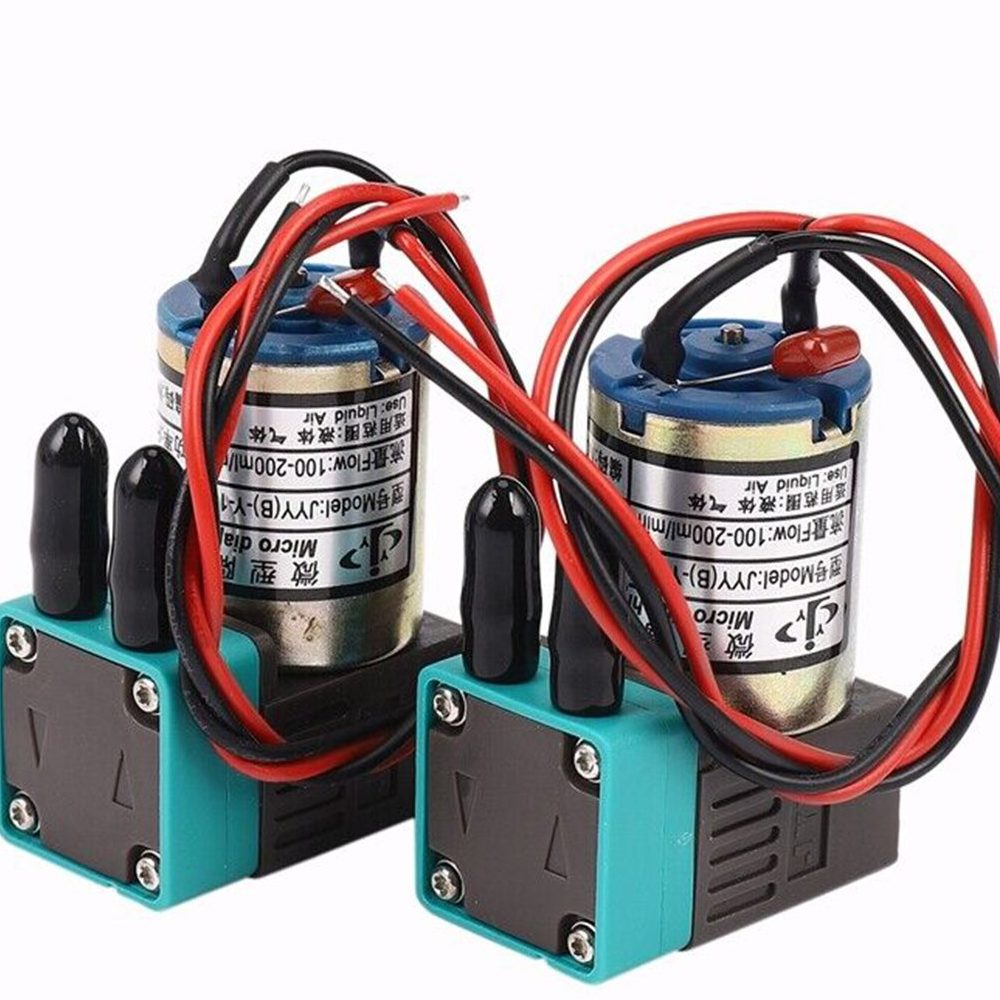
A brushed motor consists of carbon brushes, a commutator, a stator, and a rotor. When current passes through the brushes and commutator, mechanical commutation changes the current direction, driving the rotor to rotate continuously.
The motor then drives the internal diaphragm or rotor of the ink pump, completing the ink suction and discharge process.
Advantages
- Simple structure, mature technology: Stable manufacturing process and high component compatibility
- Low cost: Economical choice for budget-sensitive equipment
- Relatively easy maintenance: Most failures are related to brush or commutator wear
- High starting torque: Suitable for applications requiring instant suction or cleaning action
Limitations
- Mechanical wear: Continuous friction between brushes and commutator limits lifespan to approximately 1,000–3,000 hours
- Higher noise and electrical sparks: Less suitable for noise-sensitive environments
- Higher heat generation: Long-term operation may affect ink stability
- Moderate speed stability: Ink supply pulsation is more noticeable
Typical Applications
- Entry-level and mid-range inkjet printers
- Small UV printers
- Equipment with low printing load and limited operating hours
3. Brushless Motor Ink Pumps: A High-Stability Industrial Solution
Working Principle
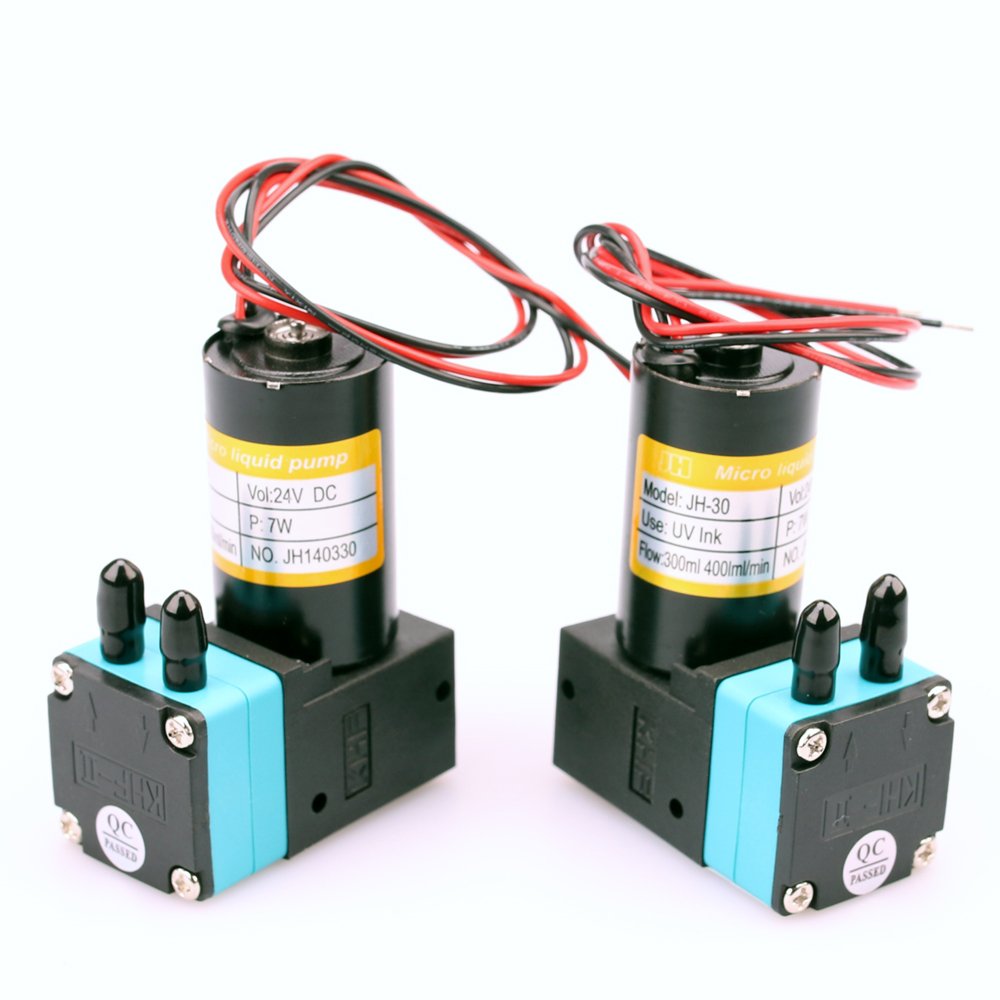
Brushless motors eliminate mechanical brushes and commutators, using an electronic driver and Hall sensors to control current commutation.
Under electronic control, the stator windings generate a rotating magnetic field that drives the permanent-magnet rotor, which in turn drives the ink pump to perform precise and stable ink suction and discharge.
Advantages
- Long service life: No mechanical wear; lifespan often exceeds 10,000 hours
- Stable operation: High commutation accuracy ensures consistent ink flow
- Low noise and low heat generation: Ideal for continuous operation
- Low maintenance requirements: Fewer consumable parts reduce downtime
- Excellent controllability: Speed control adapts to different operating modes
Limitations
- Higher initial cost: Typically 30%–50% more expensive than brushed ink pumps
- More complex maintenance: Electronic control systems often require module replacement
- Sensitive to power quality: Unstable voltage may affect performance
Typical Applications
- Mid-to-high-end UV flatbed printers
- Industrial large-format printers
- High-load, continuous production environments
- Systems using high-value industrial printheads
4. Brushed vs. Brushless Ink Pump Comparison
| Comparison Item | Brushed Motor Ink Pump | Brushless Motor Ink Pump |
|---|---|---|
| Motor structure | Brushes, mechanical commutation | Brushless, electronic commutation |
| Service life | 1,000–3,000 hours | 10,000+ hours |
| Operating noise | Higher | Low |
| Heat generation | Noticeable | Low |
| Ink supply stability | Moderate | High |
| Maintenance frequency | Higher | Low |
| Initial cost | Low | Higher |
5. How to Choose the Right Ink Pump Motor
Brushed Ink Pump Is Recommended If:
The budget is limited
- The printing load is relatively low
- Equipment is used intermittently
- The printer is entry-level or mid-range
Brushless Ink Pump Is Recommended If:
- Long, continuous printing is required
- High ink supply stability is critical
- Industrial-grade printheads are used
- Long-term maintenance cost reduction is a priority
In real-world applications, many equipment manufacturers offer both brushed and brushless ink pump configurations for the same printer model, allowing users to choose based on budget and operating requirements.
6. The Importance of a Reliable Ink Pump to Overall Machine Stability
In practice, ink pump stability depends not only on motor type but also on pump structure, sealing materials, tubing compatibility, and long-term ink resistance.
Even with the correct motor choice, poor pump design or manufacturing quality may still lead to unstable ink supply, leakage, or shortened service life.
To address different printer types and application requirements, we provide a wide range of ink pump solutions, including:
- Both brushed and brushless motor ink pumps
- Compatibility with UV, solvent, and water-based ink systems
- Stable negative pressure output for printhead cleaning and continuous ink supply
- Multiple configurations balancing cost control and long-term reliability
From economical replacement needs for mid-range equipment to high-stability requirements for industrial systems, ink pumps can be selected to match actual operating conditions.
7. Conclusion
Brushed and brushless ink pump motors are not simply a matter of “better or worse,” but rather solutions designed for different equipment positioning and usage scenarios.
- Brushed ink pumps offer cost efficiency and simple structure, making them suitable for small to mid-sized printers or intermittent operation
- Brushless ink pumps provide longer lifespan, higher stability, and lower noise, making them ideal for high-load and continuous production environments
When selecting an ink pump, users should consider not only motor type but also overall pump design, ink compatibility, and long-term maintenance costs.
Choosing a well-matched, proven ink pump solution helps improve machine stability and effectively extend the service life of printheads and ink systems.
Pump Selection & Technical Support
Different printers vary in width, workload, ink type, and continuous operation, so choosing a pump involves more than just “brushed vs. brushless.”
If you are:
- Unsure whether your machine suits a brushed or brushless pump
- Looking to replace the original pump while balancing cost and lifespan
- Experiencing unstable ink supply or reduced cleaning efficiency
- Planning a new machine or retrofit, and need the right pump solution
Our technical team can provide tailored pump selection and matching recommendations based on your printer model, ink system, and operating conditions—ensuring stable performance and optimized long-term cost.