During the daily operation of digital textile printers, printing misalignment, image shifting, or ghosting are common issues that directly affect print quality and production efficiency. One of the most frequent mechanical causes behind these problems is belt loosening.
As a key transmission component responsible for driving the printhead or carriage movement, the belt plays a critical role in positioning accuracy. Once belt tension becomes unstable, precise motion control can no longer be guaranteed. This article explains why belt loosening causes printing misalignment and outlines effective preventive and maintenance measures.
1. Why Does Belt Loosening Cause Printing Misalignment?
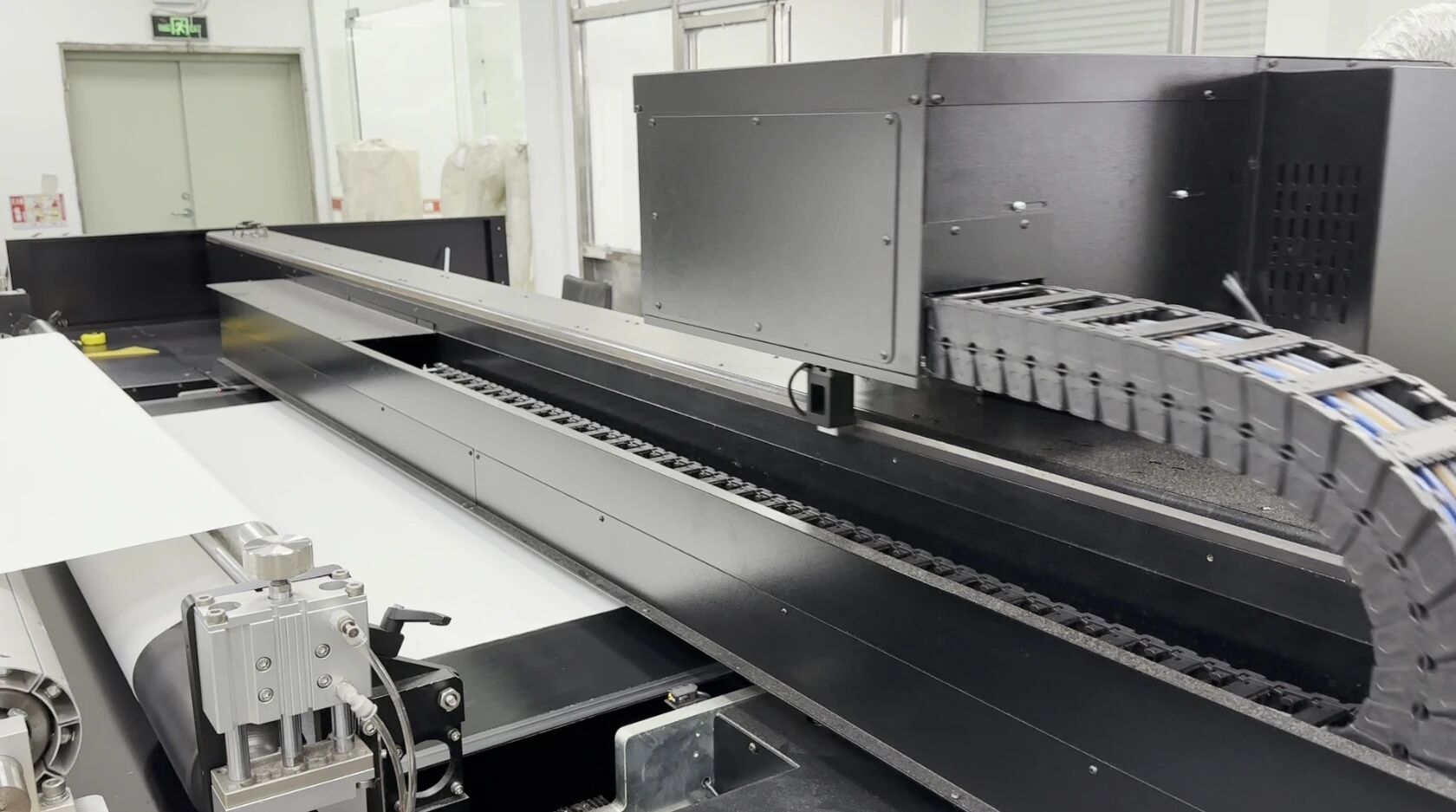
Digital textile printers rely on high-speed, repetitive, and precise motion of the printhead or printing platform. When the belt becomes loose, several issues may occur:
- Positioning deviation: Belt slippage or backlash causes the actual printhead position to differ from control commands
- Reduced repeat accuracy: Misalignment between multiple passes or layered prints
- Lower system stability: Vibration, noise, and inconsistent movement at high speeds
Maintaining proper belt tension and transmission stability is therefore essential for consistent print accuracy.
2. Effective Ways to Prevent Belt Loosening and Misalignment
1) Regularly Check Belt Tension
Belt tension directly affects motion precision. It is recommended to establish a routine inspection plan:
- Check for visible sagging, elongation, or abnormal noise
- Ensure belt tension remains within the manufacturer’s recommended range
- An overly loose belt may slip, while excessive tension increases motor and bearing load
2) Adjust Belt Tension in Time
If belt loosening is detected, tension should be adjusted promptly:
- Most printers allow tension adjustment via tension screws or adjustment knobs
- The correct setting should prevent slipping without over-tightening
- After adjustment, manually move the carriage to confirm smooth motion
3) Keep the Belt and Transmission System Clean
Contamination reduces friction and shortens belt life:
- Regularly remove dust, ink residue, and debris from the belt surface
- Clean with a soft brush or lint-free cloth
- Avoid oil contamination on synchronous belt teeth (lubrication should only be applied to bearings if required)
4) Inspect and Replace Worn Belts Regularly
Belts are consumable components and will gradually degrade over time:
- Elastic fatigue, surface wear, or permanent elongation may occur
- Belt condition should be inspected every 3–6 months
- Replace belts immediately if tension can no longer be maintained or teeth show visible wear
Using dimensionally accurate, fatigue-resistant industrial-grade belts is crucial for maintaining long-term printing accuracy and machine stability.
5) Check Motor and Pulley Fixation
Even with a good belt, loose transmission components can cause misalignment:
- Inspect motor mounts and pulley fixing screws
- Ensure pulleys rotate concentrically without wobble
- Bearings should rotate smoothly without abnormal noise
6) Control Printing Speed Reasonably
Continuous high-speed operation accelerates belt fatigue:
- Reduce speed for jobs requiring high precision
- Avoid long-term full-load operation
- Balance productivity with mechanical stability
7) Minimize Machine Vibration
External vibration can loosen belts and destabilize printhead movement:
- Install the printer on a stable, level, vibration-free surface
- Avoid touching or moving the machine during printing
- Keep the printer away from heavy vibration sources
3. Maintenance Recommendations
- Establish belt inspection and replacement records
- Train operators to avoid incorrect tension adjustment
- Include belts, pulleys, and bearings in routine mechanical checks
Proper daily maintenance significantly reduces printing errors and unplanned downtime.
4. Component-Based Solution for Long-Term Stability
In real-world applications, belt loosening is rarely caused by a single factor. It is often related to belt material quality, tensioning structure, pulley alignment, and actual operating conditions. Selecting high-quality, well-matched transmission belts is a fundamental step toward long-term printing accuracy.
We supply a wide range of belts and transmission components for digital textile and wide-format printing equipment, suitable for different machine models, widths, and workloads. Based on machine structure and real operating conditions, we also provide belt matching and replacement recommendations to help reduce misalignment issues and maintenance frequency.
If you are experiencing printing misalignment, frequent belt loosening, or high maintenance costs, feel free to contact our technical team for component selection advice and tailored solutions—ensuring stable operation and optimized long-term operating costs.