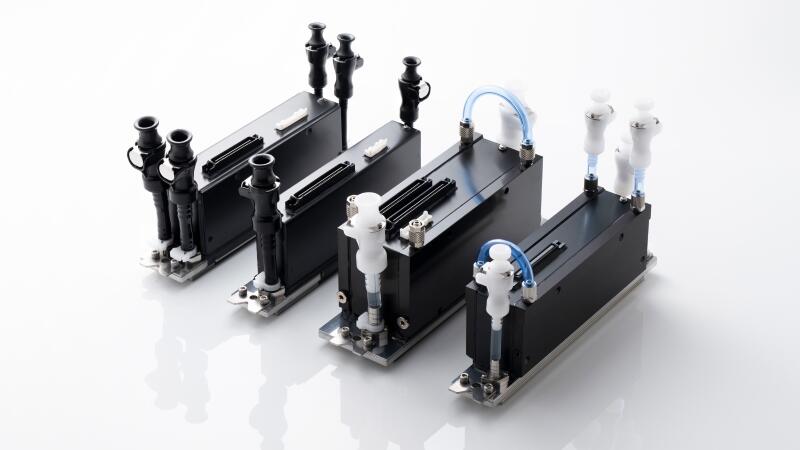
In the field of industrial printheads, Kyocera printheads are widely used in the inkjet industry as mainstream. Currently, there are two main series of Kyocera printheads on the market: KJ4A and KJ4B. The KJ4A series is designed for oil-based inks, such as UV inks, mainly used in the advertising field; while the KJ4B series is designed for water-based inks, such as reactive and disperse inks, mainly used in the field of digital printing. Today we will share with you the disassembly of Kyocera print head and the ink supply principle.
Introduction to Kyocera Print Head
1. KJ4A series (oil-based)
As shown in the figure below, the KJ4A series has four models, corresponding to curved surface printing, standard printing, small ink droplet high-precision printing, and dual-channel scanning printing. The maximum ignition frequency, maximum printing speed, and ink drop size corresponding to different printhead models are different, but the actual ink parameter (viscosity and surface tension) requirements are similar.
2. KJ4B series (water-based)
As shown in the picture below, there are six models in the KJ4B series. You can see the detailed models and parameters in the picture below. This article mainly talks about the KJ4B--0300 printhead. This is the most widely used Kyocera printhead in the inkjet industry. It is a water-based model with dual channels. The frequency and printing speed are relatively fast, and the ink drop size is also relatively small, ensuring printing accuracy. It is a printhead with a good combination of accuracy and speed.
| Compatible Ink | Model | Advantages | Driving Frequency | DropVolume[pL] | Resolution(dpi) | Applications | |
Water-based ink | KJ4B-0300 | Dual channel | One head, two colors, two channels can independently control voltage and waveform | 30kHz | 5/7/12/18 | 300dpi | Textile, Packages |
| KJ4B-QA | Standard | The maximum operating frequency is 30kHz, corresponding to a maximum printing speed of 75m/min at a resolution of 600dpi | 30kHz | 5/7/12/18 | 600dpi | Textile | |
| KJ4B-YH | High-speed | The maximum operating frequency can reach 40kHz, corresponding to a maximum printing speed of 100m/min at a resolution of 600dpi | 40kHz | 5/7/12 | 600dpi | Document, Packages | |
UV ink | KJ4A-0300 | Dual channel | One head, two colors, two channels can independently control voltage and waveform | 30kHz | 4/6/10/14 | 300dpi | Signs Graphics |
| KJ4A-AA | Small ink droplet | Small droplet volume, high resolution,good at fine printing | 20kHz | 3/6/13 | 600dpi | Labels | |
| KJ4A-RH | The maximum operating frequency is 30kHz, corresponding to a maximum printing speed of 75m/min at a resolution of 600dpi | 30kHz | 3/7/11/14 | 600dpi | Signs Graphics, Labels | ||
Disassembly of Kyocera Print Head and Its Ink Supply Principle
1. Disassembly of printhead
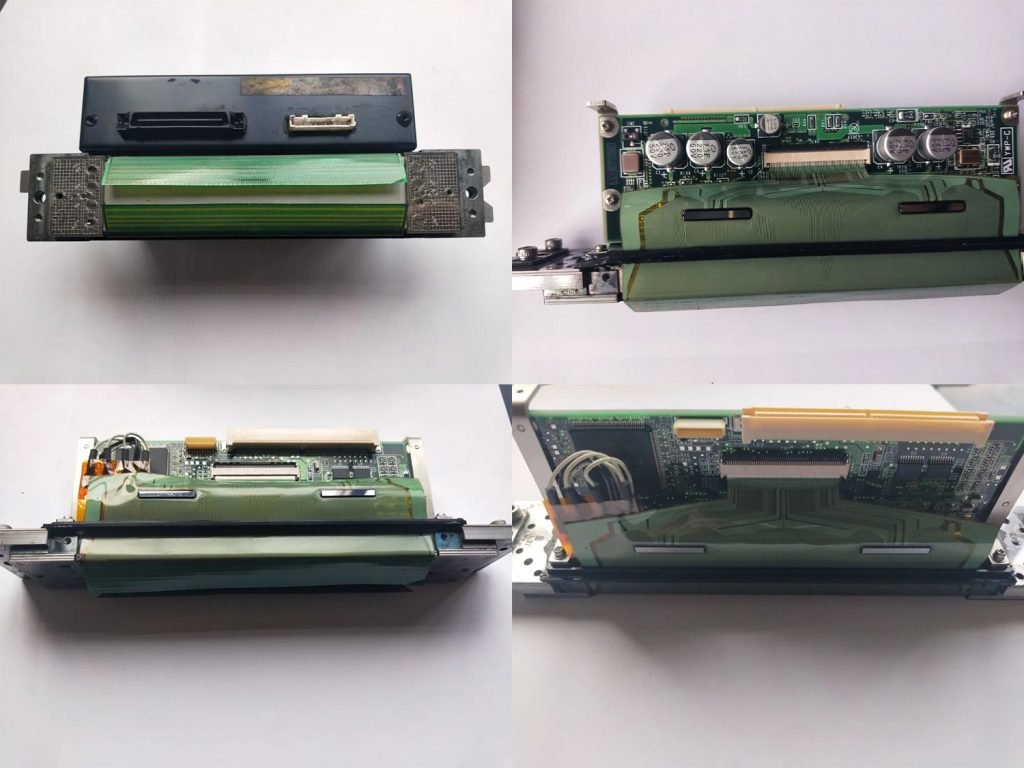
a. The internal circuit module of the printhead
b. nozzle sheets
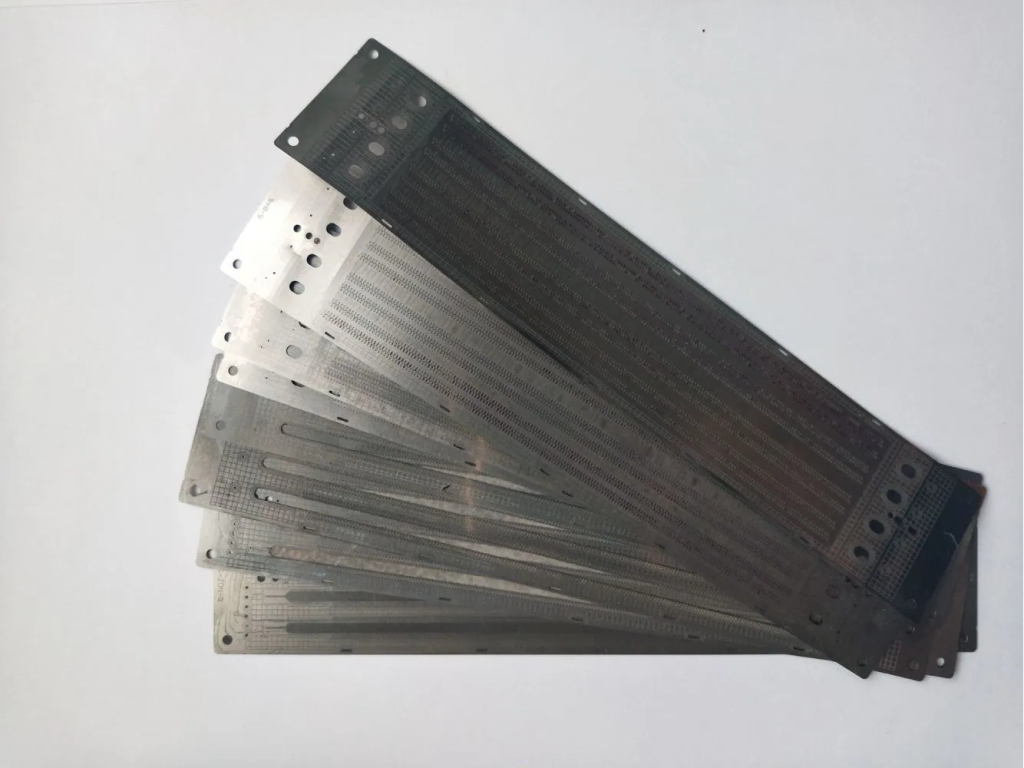
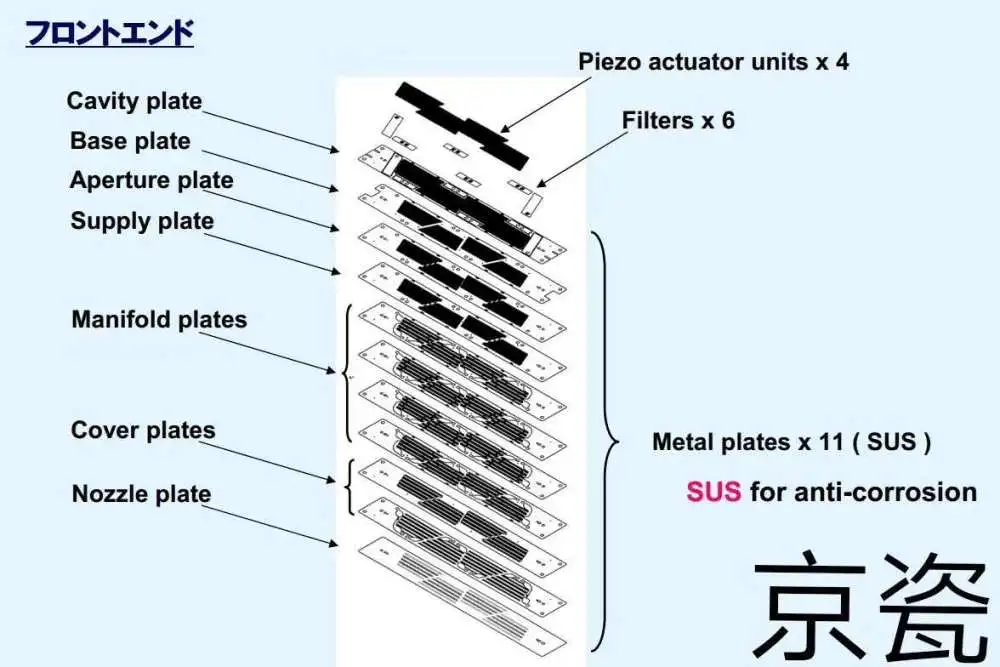
As shown in the figure, the Kyocera print head has a total of 11 layers of nozzle sheets. The printing extrusion of the ink needs to pass through these 11 layers of nozzle sheets. Therefore, higher requirements are put forward for the flow performance and particle stability performance of the ink.
Because ink must pass through such a fine internal structure, controlling contaminants before the ink enters the printhead is especially important. In industrial inkjet systems, ink filtration before the ink reaches the printhead helps remove particles and sediment that could otherwise restrict ink flow, block nozzles, or cause unstable jetting.
2. Ink Supply Principle of Kyocera Print Head
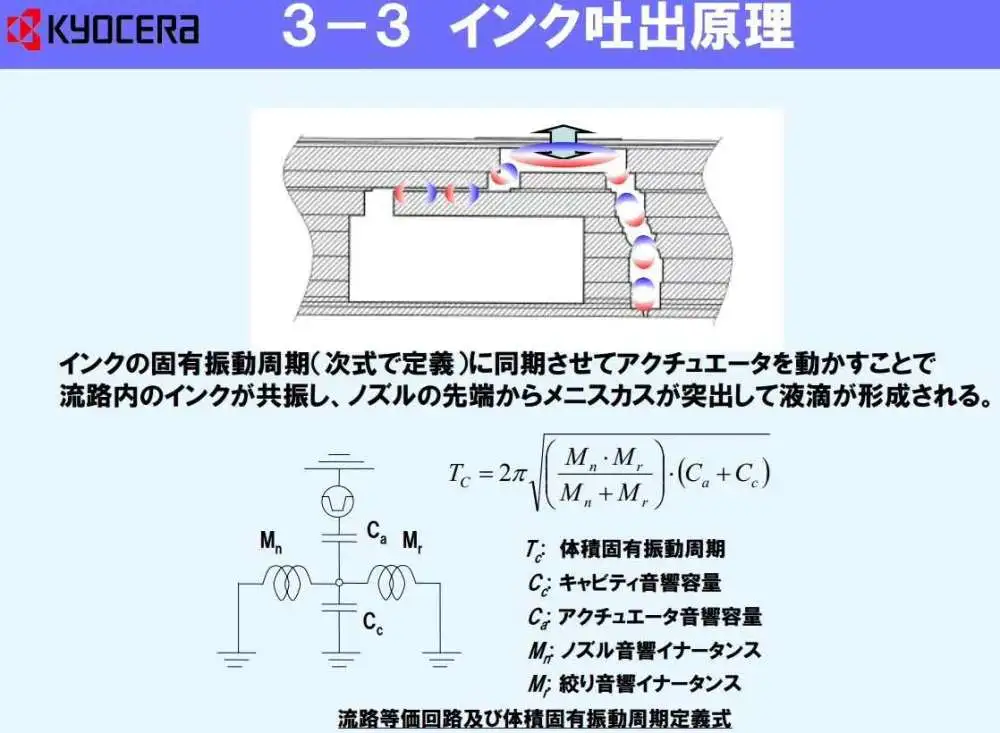
As shown in the picture, this is the jetting principle of a nozzle hole. The blank area is the groove, which is the total ink channel inside the printhead. The ink flows from one end of the groove. When there is a backflow, the ink can flow out from the other end. There is a small ink channel at the top of the groove that can flow the ink upward into the ultra-small ink storage space under the piezoelectric sheet. When the ejection signal is received, the piezoelectric sheet will bend according to the time and intensity set by the waveform, and the ink will flow from the ultra-small It is squeezed into the ink storage space and ejected through the nozzle.
As shown in the figure above, this is the squeezing, deformation, and ejection process of ink droplets driven by waveforms.
Through our introduction to Kyocera print head, disassembly of printheads, and analysis of ink supply principles, I believe everyone will have a deeper understanding and understanding of Kyocera printheads. Compared with other industrial printheads, we are very surprised by the structural design of the 11-layer nozzle sheet of the Kyocera printhead. This means that the repairability of this printhead is very difficult. It is very difficult to bond the 11 layers of nozzle sheets and find and repair which layer of nozzle sheets has abnormalities. But this is precisely the advanced nature of Kyocera printhead manufacturing technology. It can make the printhead so precise and have comparative advantages in printing speed and accuracy in the market. This is the hard power of technology.