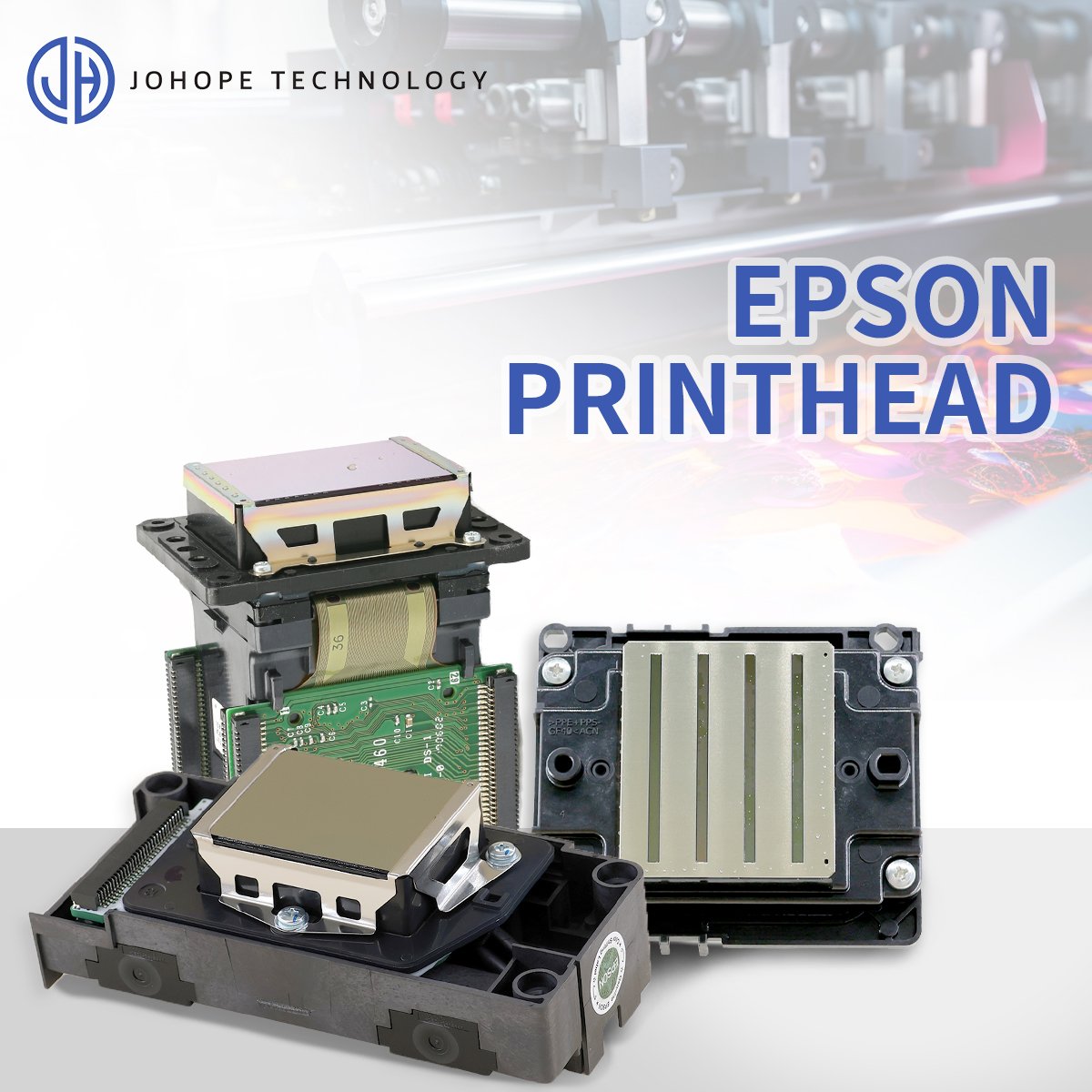
The Epson DX5 print head achieves a high reputation in the industry and great market demand, and it has become one of the most widely used mainstream products. With the continuous advancement and development of science and technology, digital printing technology has achieved unprecedented development and application. The printhead is one of the core components in digital printing and plays a crucial role in determining print quality. It has become a key driver in the advancement of the digital printing industry.
Brief Introduction
The DX5 printhead launched by Epson is a printhead featuring high speed, low noise, and high quality. It uses electrothermal waveform technology and has the characteristics of high-quality printing, rich colors, and high speed. Its printhead has 8 rows of nozzles for each color, for a total of 128 nozzles in each row. It can produce an inkjet size of less than 4 picoseconds, thereby obtaining a more delicate and natural printing effect, and the larger nozzle width can increase the number of single prints. The amount of ejected ink increases the ink output speed. At the same time, the DX5 print head adopts a reliable communication interface design and can be seamlessly connected with most devices, improving the compatibility of the printer.
Due to its high reliability, long life, good stability, and strong durability, many manufacturers use it as one of the core components of their products to meet the market's demand for high-quality, high-speed digital printing.
However, as the price of Epson DX5 printheads further increases, the new term 5113 printheads begin to enter our field of vision.
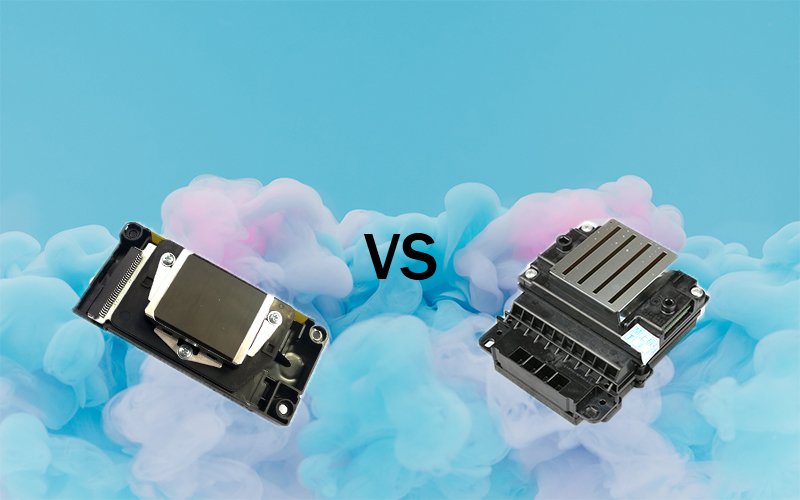
Epson DX5 Print Head VS 5113 Print Head
| Printhead | 5113 | DX5 |
| Resolution | 3200DPI | |
| Ink Type | Water-based ink, sublimation ink | Water-based ink, eco-solvent ink, sublimation ink |
| Speed/single-head | 4 pass 20m2/h | 4 pass 18m2/h |
| Nozzle Number | 400×8 | 180×8 |
The Epson 5113 print head has a precision of 3200 DPI and is suitable for indoor printing that requires high image clarity. The normal working speed of a single printhead is 20㎡/h, which is still a relatively high printing speed in the industry. The 5113 printhead has both precision and speed, making it a very good printing printhead. However, one thing that needs special attention is that the 5113 is not suitable for using eco-solvent ink (i.e., oil-based ink), and it is not suitable for outdoor printing. There are gains and losses. On the other hand, the mainstream status of 5113 nozzles in the field of indoor printing is unshakable.
Epson's DX5 printheads are suitable for a wide range of inks, including water-based inks, oil-based inks, and sublimation inks. Therefore, the Epson DX5 print head can be used indoors and outdoors. If the customer's order for inkjet printing includes both indoor and outdoor advertising, it is recommended that you consider this type of printhead.
Whether it is the Epson 5113 print head or the Epson DX5 printhead, they are the mainstream printheads in the current printhead market. Both cover indoor printing and outdoor printing. In short, the 5113 printhead has high precision, and the indoor printing effect is amazing. The DX5 print head is suitable for indoor and outdoor use, but its accuracy is slightly inferior to that of the 5113.
DX5 Printhead vs XP600 Printhead
Epson DX5 printheads are widely regarded as one of the most reliable and mature technologies in the inkjet printing industry. Their consistent performance and high print quality have made them the gold standard for years. However, limited availability and rising costs have gradually pushed many entry-level digital printer manufacturers to seek more affordable alternatives.
Enter the Epson XP600, a six-channel printhead introduced around 2018. The XP600 is designed as a cost-effective solution for water-based ink printing. It typically has a service life of 3 to 6 months. Although its color performance is slightly behind that of the DX5 and I3200, its low price and reasonable stability make it a popular option for budget printers.
Performance-wise, XP600 lags behind DX5 by approximately 10–20% in print speed. For instance, a DX5 head can produce around 12–15 m² per hour at 4-pass settings, whereas XP600 reaches about 10–12 m² per hour. With proper maintenance, XP600 can reach up to 60–80% of DX5’s usable life, all at just a fraction of the cost—roughly 25% of a DX5’s price.
DX5 vs I3200 Printhead: Performance vs Tradition
When comparing the Epson DX5 to the newer Epson I3200, it’s clear that the latter brings substantial upgrades in speed, precision, and versatility—making it an appealing replacement for DX5 in modern printing systems.
The I3200 printhead features 3,200 nozzles (8 × 400), allowing it to output at speeds of 26–33 m²/h under 4-pass printing with smooth results. In contrast, the DX5 offers only 1,440 nozzles (8 × 180), resulting in slower speeds of around 13–16 m²/h under the same mode.
In terms of print resolution, the I3200 benefits from Epson's TFP (Thin Film Piezo) technology. It supports a minimum droplet size of 2.5 picoliters and utilizes variable droplet technology to deliver sharper and more detailed output. DX5, while still offering excellent print quality, has a larger minimum droplet size of 3.5 picoliters.
Moreover, the I3200 is available in multiple variants—I3200-A1, I3200-E1, and I3200-U1—supporting a broad range of ink types such as water-based, UV, solvent, eco-solvent, sublimation, and pigment inks. This makes it an extremely versatile option for industrial and commercial printing needs.
Despite both heads having a typical service life of 1 to 3 years, the I3200-A1 is often more cost-effective than DX5, contributing to its rising popularity among both printer manufacturers and end users seeking better performance at a lower cost.
Precautions When Installing Epson 5113 Print Head
At present, Epson 5113 printheads are widely used in various piezoelectric photo machines, so let’s analyze what users should pay attention to when using 5113 printheads.
It is very critical to install the nozzle of a piezoelectric printer because, in a piezoelectric printer, the printhead is relatively expensive and a very delicate part. If the installation is incorrect, it may greatly affect the normal printing state of the piezoelectric printhead! That is, It is said that a little carelessness will cause damage to it! Therefore, during the installation and use of the 5113, please be sure to operate according to the instructions or the guidance of professional technicians to avoid unnecessary losses caused by damage to the nozzle due to improper operation.
In addition, before installing the piezoelectric printhead, first ensure that the machine is moving normally, the machine's ground wire is well connected, the voltage on the trolley board is normal, and the power supply voltage of the printhead is normal! The last point is to pay attention to the connection of the data cable. For example, there are generally no less than two data cables on the printhead. Check whether the plug wires have warped pins and whether they are flat. Insert the plug cord into the printhead, and insert it firmly without any tilt. The scale of the nozzle line is generally divided into two sides, one side is in contact with the circuit and the other side is not in contact with the circuit. The direction should not be wrong. After plugging it in, be sure to check it several times to make sure there are no problems before installing the printhead on the frame.
More info about the Epson DX5 printhead vs. the DX7 printhead.