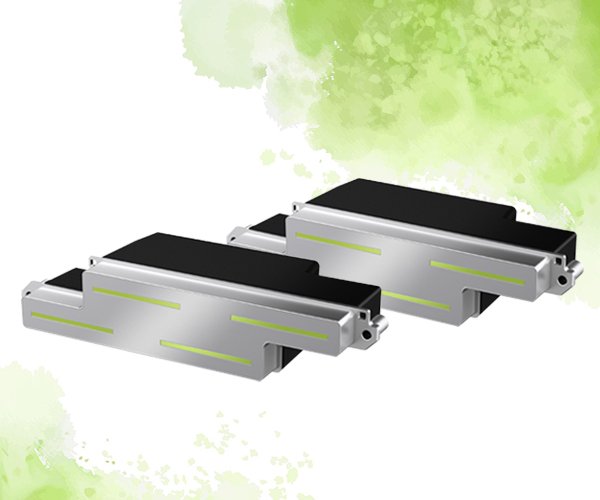
The Epson S3200 printhead currently has two specifications for some digital printing equipment manufacturers in the industry to develop corresponding equipment. One of them is without circulation. Many self-produced machines with printheads without circulation have been unveiled at several exhibitions in the industry this year. Most of the printers in the exhibitions at the beginning of the year used printheads suitable for UV inks, while some printers in the textile equipment exhibition not long ago used printheads suitable for water-based inks. Because of the application of the new printhead, some of its advantages have not yet been seen, but the early publicity has already raised it to a new high, so many people have been paying attention to its new performance.
The other is a print head with circulation. The corresponding equipment is still under development, and no prototype has been exhibited yet. With automatic circulation, the ink supply system is more complicated. Many manufacturers who have never designed and applied a circulating ink supply system will have to spend more time and energy on research and development in this area. It is estimated that the prototype may be exhibited at the exhibition in the second half of the year.
Next, we will share the content of the application of S3200 printheads that everyone has discussed.
1. Basic Performance of the Printhead
1) The nozzle spacing is 600 dpi. Its effective printing length is about 4.7 inches (the actual printing nozzles do not reach 3200). There will be some overlapping nozzles when the 800 nozzles of each small head are spliced. These nozzles are mainly eliminated to solve the problem that the edge nozzles of each small head have poor printing quality. The actual number of nozzles is about 2850. The specific number should be based on the information released by the printhead manufacturer.
2) Ignition frequency. For printheads without circulation, the high performance can reach grayscale 20pl/16k and single dot 40K. However, there are many opinions on how big the ink droplet of a single dot is. According to experience, it is more reasonable to estimate that 3~5 pl. The grayscale and ignition frequency of printheads with circulation are 3.5/7.5/14 pl/24k. But the performance of the current prototypes on the market still does not reach the 20 pl/16k printing level. Usually, it is good to reach the level of 13 pl/15k. As for whether the printhead with circulation circulates the ink around the nozzles or the ink in the ink tank, there are different opinions at present, which need to be verified. If Epson makes this printhead to circulate around the nozzles, the process of this printhead will have to be greatly changed. This improvement is still very difficult and takes a long time to develop. So everyone will have this question, but this problem will soon be known by the end of the year.
3) The circulation volume is about 80 ml/min. For the printhead with circulation, the ratio of this circulation volume to the inkjet volume is about 2:1, which is similar to the current Fuji Samba printhead ratio, but smaller than Seiko 1536 and Xaar 2001. This printhead does not have an ink damper inside. If it does, it will not meet the circulation requirements.
4) Ink viscosity: about 3-4 cp. From the actual application situation, this printhead is more suitable for using ink with a viscosity of 3.5-4.5 cp. Of course, actual testing is still required to verify and confirm.
5) Price. Everyone thinks that if it costs more than 20,000 yuan, this printhead has no advantages. Compared with Kyocera, if this printhead is fully used, it can basically reach the same output as Kyocera printheads. Kyocera printheads are widely used. If you want to replace Kyocera, this printhead must have a greater advantage.
6) Printhead heating. This printhead does not have a heating function. If you want to use it with UV ink, you must install a heating device. What kind of structure to use for heating, how to install it, and other issues related to nozzle heating will be updated later.
7) Cleaning pressure. People who have used it tell you from experience that using 20Pa has a better cleaning effect, but no test has been done on negative pressure.
8) Ink filter accuracy selection. It is recommended to use 15 microns.
9) Waveform control. The control of ink droplets of different sizes is different from the waveform control method of other printhead manufacturers. It is a two-way setting, which can control the large and small ink droplets separately and can be controlled more accurately.
2. Comparison of Several Common Printheads on the Market
Based on the cost-effectiveness analysis of the printheads that are about to be used in the current market, Table 1 is the result of the analysis. For a printhead, its maximum ink flow rate determines its output. At the same time, its price should also be considered. Since the actual price varies greatly, an estimate is used for analysis in Table 1. If the actual price is lower, the cost-effectiveness is higher; otherwise, it is lower. At the same time, Table 1 calculates the life of a printhead for two years. In actual situations, some printheads can be used for three years, so their cost-effectiveness will increase; otherwise, it will decrease.
| Printhead | Flow rate (ml/min) | Estimated price (10,000 yuan) | Two-year lifespan cost performance (yuan/ml) | illustrate: | |||||
| Theoretical | Actual | Lower limit | Upper limit | Theoretical flow rate | Actual flow rate | 1. The application of the new nozzle is still being optimized, and there is a gap between the actual flow rate value and the theoretical value. 2. The life of the 4720 nozzle is calculated as 9 months, and the two-year life coefficient is 2.67. | |||
| Low price | High price | Low price | High price | ||||||
| S3200 | 55 | 33 | 1.8 | 2.2 | 327 | 545 | 400 | 667 | |
| Brother 1680 | 57 | 48 | 1.0 | 1.2 | 175 | 208 | 210 | 250 | |
| Ricoh G6 | 57 | 46 | 1.4 | 1.6 | 245 | 304 | 280 | 347 | |
| Kyocera | 57 | 4.0 | 4.0 | 617 | 701 | ||||
| 4720 printhead | 37 | 0.25 | 0.25 | 158 | illustrate: | ||||
From the analysis results in Table 1, we can see that the cost performance of the S3200 printhead is not very prominent among the new printheads, but it still has a relatively large advantage over the traditional Kyocera printheads. At the same time, for the 4720 printhead, if the service life of other new printheads reaches three years, the cost performance will be higher than the 4720 printhead. In addition, the 4720 printhead is unstable in the future, so the advantages of the new printheads are still quite obvious.
3. Practical Epson S3200 Printhead applications
1. Printing mode. The S3200 printhead is still suitable for economical small-format scanning printing equipment. If it is used in a SINGLE-PASS machine, because its actual ink droplets are too small and the nozzle spacing is 600 dpi, if it is printed with a single-color pattern, its color block density will appear insufficient. Of course, this problem can also be solved by using a double-spelling method for some parts.
2. Different inks. There is no problem with water-based inks, but for UV inks, a good printhead heating solution must be designed. For different inks, some parts in this printhead may have poor compatibility problems. Usually, manufacturers will distinguish different printheads for different ink applications to deal with them, so don't use the wrong printhead and ink combination.
3. Ink supply system. For S3200 printheads without ink dampers, a soft bag siphon ink supply method is the best. Because some ink dampers are equipped with one-way valves, the soft bag can be placed at a certain height. If there is no one-way valve, the ink position should be placed at a height of about 25mm from the surface of the printhead. Because the soft bag is used for direct ink supply, a filter should be added to the soft bag, and the ink should be degassed to ensure long-term stable printing of the printhead.
For the S3200 printhead with circulation, the design of its circulation system and related filtration system is still very critical. Usually, the ink supply system of this type of equipment is more complicated, so this type of printhead is suitable for trial use on better digital printing machines. The pressure control, filtration, and degassing of the circulating ink circuit are all technically sophisticated, which will be shared later.