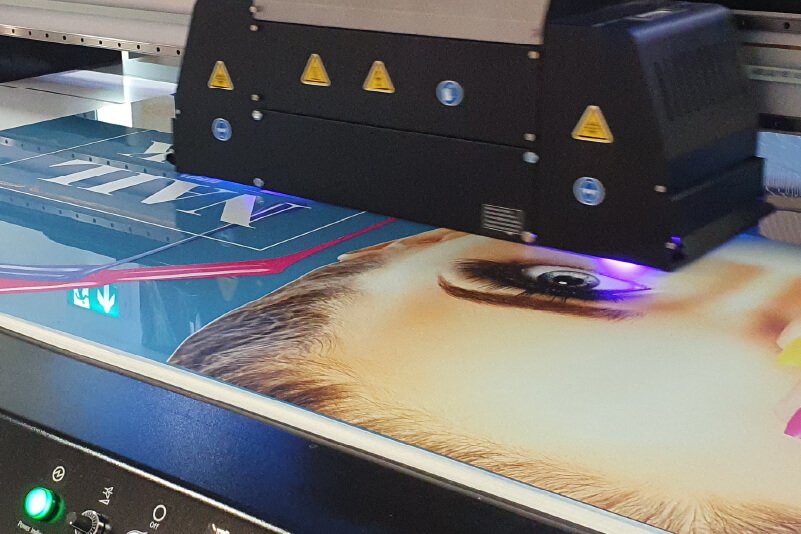
As UV printing technology gains popularity across signage, packaging, and industrial decoration industries, its precision, durability, and material versatility have made it a top choice for professional printing.
However, the performance of a UV printer depends not only on the machine itself but also on the quality and compatibility of its components and inks.
In this UV Printing Lesson, we’ll explore the UV printer parts, including core components, ink supply system, auxiliary accessories, and types of UV inks—helping users make informed choices and maintain stable, high-quality printing results.
Ⅰ. Core UV Printer Parts
1. Printhead
The printhead is the heart of a UV printer, responsible for ejecting micro-droplets of ink with high precision. Brands like Epson, Ricoh, and Kyocera are widely used.
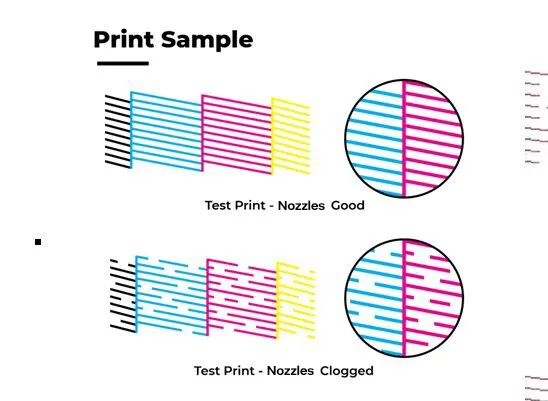
A high-quality printhead ensures sharp image details and consistent color output. Proper cleaning and ink compatibility are essential to prevent clogging and extend its lifespan.
2. Mainboard
The mainboard functions as the “brain” of the printer, coordinating printhead operation, UV curing, and motion control. High-performance mainboards improve data processing speed and jetting accuracy, ensuring smoother and more stable output.
Popular mainboard brands include Honsen and Senyang. High-performance boards enhance data transmission speed and jetting accuracy, ensuring consistent and reliable printing results.
3. Actuating Motor and Slideway
The actuating motor drives the carriage, while the guide rail ensures smooth and accurate movement.
A well-calibrated motion system reduces vibration and guarantees precise positioning for sharp, clean prints.
4. LED Curing Lamp
The UV LED lamp instantly cures the ink after printing, allowing strong adhesion to the substrate.
Modern LED systems are energy-efficient and long-lasting. A wavelength between 395–405 nm ensures optimal curing performance.
5. Printing Platform
The printing platform holds the material in place, often with vacuum suction to prevent movement or warping during printing.
A stable platform ensures flatness and consistent quality.
Ⅱ. Ink Supply System
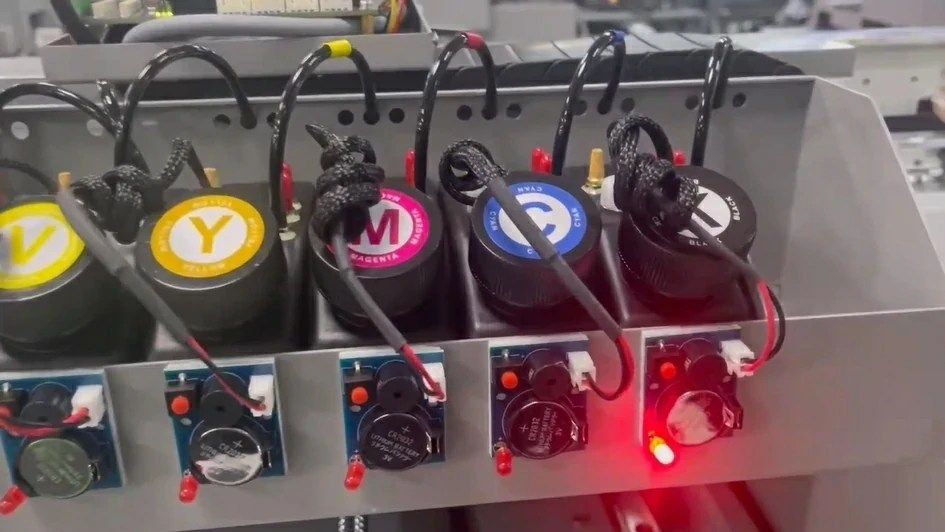
The ink supply system acts as the “circulatory system” of a UV printer, connecting the ink tank to the printhead. It maintains consistent pressure and ink delivery, preventing air bubbles, clogging, or ink interruptions. The main components include ink tanks, pumps, tubing, and filters.
1. Ink Tanks
UV ink tanks are designed to securely store light-sensitive inks. They are made from UV-resistant materials to prevent premature curing inside the tank. High-capacity tanks reduce refill frequency and support long-term, uninterrupted operation.
2. Ink Pumps and Tubing
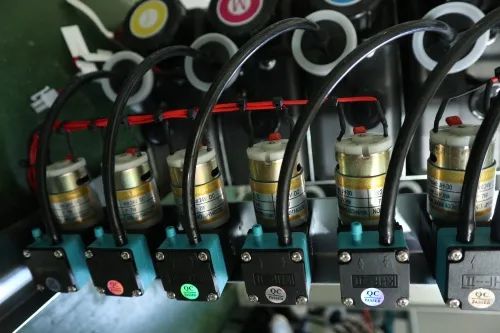
Ink pumps generate consistent pressure and flow, delivering ink evenly to the printhead. High-quality tubing and fittings prevent leaks, resist UV exposure, and maintain proper ink viscosity.
Maintenance Tip: Regular inspection and replacement of tubing and joints help prevent air intake and contamination.
3. Filters
Ink filters capture impurities or cured particles that might block nozzles. Filters with 1–5 μm precision effectively protect the printhead and extend system life.
Transparent filter housings make it easy to monitor ink flow and contamination levels.
4. Degassing and Circulation Systems
Some UV printers use degassers or circulation systems to remove trapped air and maintain ink consistency—especially important for white inks that tend to settle or separate.
By optimizing and maintaining the ink supply system, operators can significantly improve print stability and color consistency, ensuring reliable, high-quality UV printing results.
Ⅲ. Auxiliary UV Printer Parts
1. Vacuum Adsorption Platform
Used to hold materials firmly in place, ensuring precise alignment during flatbed printing.
2. Pallets and Molds
Custom molds or pallets allow accurate printing on irregular objects such as bottles or golf balls.
3. Sensors
Sensors such as height, ink level, and temperature detectors provide real-time feedback for safety and precision control.
Ⅳ. Other Consumables
1. UV Coating & Varnish
UV coatings and varnishes are applied to enhance gloss, color vibrancy, and surface durability — ideal for decorative or outdoor applications.
2. UV Ink
UV ink is the core consumable for UV printing. It instantly cures under UV light and comes in hard, soft, and neutral types to suit different substrates.
| Ink Type | Description | Suitable materials |
| Hard UV Ink | Designed for rigid substrates, featuring strong adhesion and high surface hardness after curing. Not suitable for flexible or foldable materials. | Ceramic tiles, metals, wood boards, hard plastics, acrylic, glass, etc. |
| Soft UV Ink | Formulated for flexible materials, offering excellent elasticity and bending resistance. The print won’t crack even when the substrate is folded. | PVC films, flex banners, wallpapers, car wraps, leather, fabrics, etc. |
| Neutral UV Ink | A balanced formulation between hard and soft inks, providing moderate flexibility and adhesion. Ideal for semi-rigid materials. | Acrylic sheets, PS boards, PVC foam boards, KT boards, etc. |
Ⅴ. Maintenance Tips
Proper maintenance helps extend the printer’s service life and ensures consistent output quality.
Daily Nozzle Check: Perform a nozzle test before printing to detect blockages early.
Clean the Capping Station and Wiper: Regular cleaning prevents ink residue buildup that may cause nozzle deflection or clogging.
Maintain Proper Humidity and Temperature: Keep the working environment between 20-28°C and 40–60 % humidity for stable performance.
Use Original or Compatible Consumables: Choose inks and spare parts that match your printer’s specifications to ensure compatibility and safety.
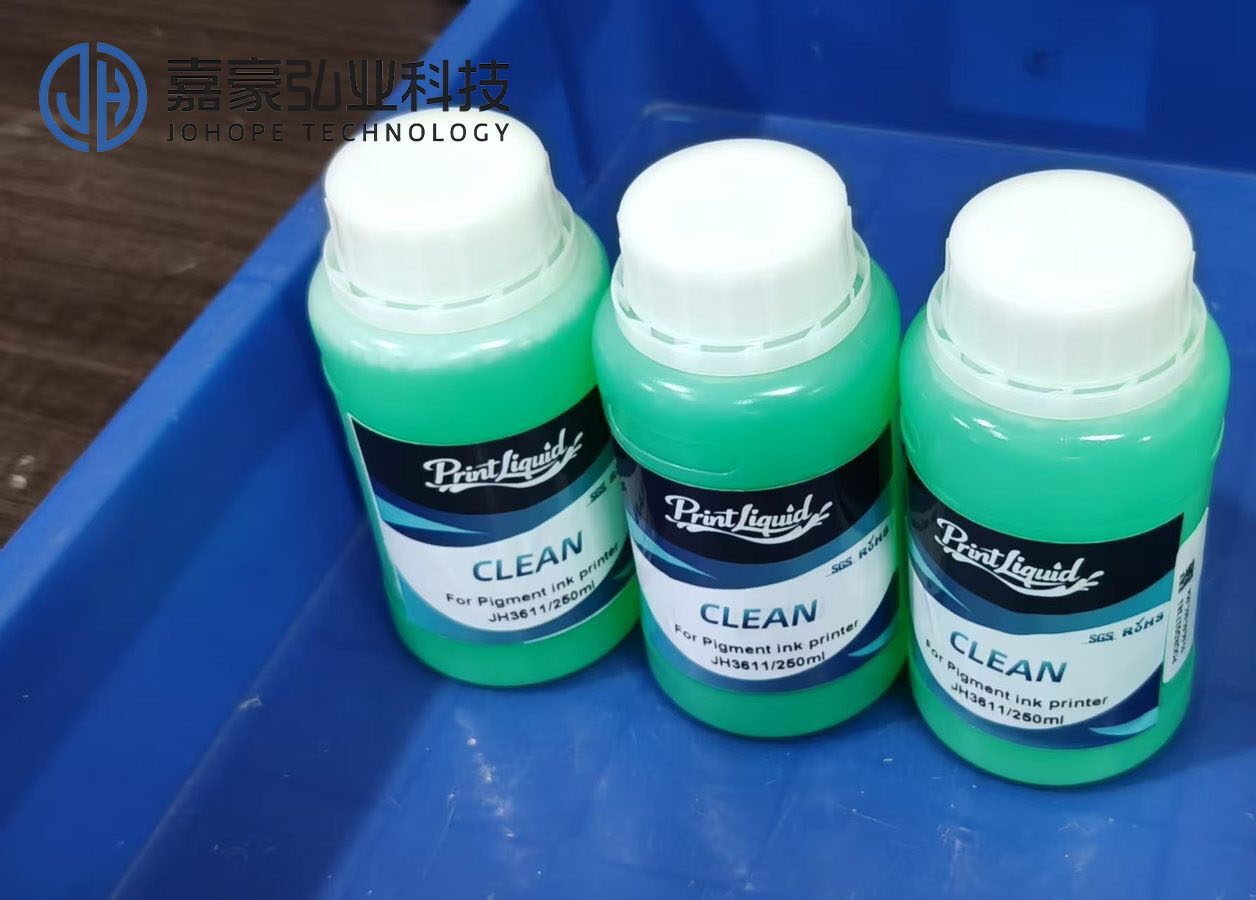
Perform Periodic Deep Cleaning: If the printer remains idle for a long period, flush the ink system with cleaning solution and store the printhead properly.