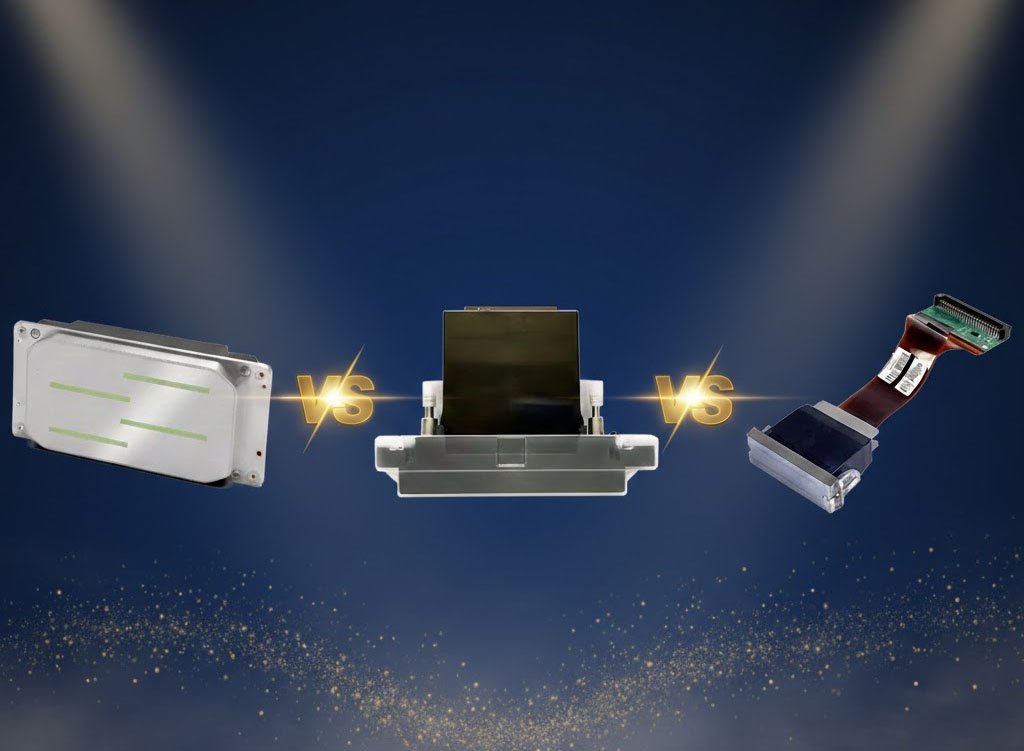
Recently, a specification comparison chart covering several mainstream industrial inkjet printheads—including Konica 9888H, Konica 1024i/1024a, Ricoh Gen6, and Epson T3200—has attracted widespread attention across the printing industry.
By systematically comparing key parameters such as nozzle count, effective print width, drop volume, and jetting frequency, the chart provides equipment manufacturers with a clear and practical reference for printhead selection and production line upgrades.
At the same time, a long-standing industry question has resurfaced with renewed clarity:
Is there any printhead today that can comprehensively outperform Ricoh Gen6 in real industrial applications?
Based on both parameter analysis and accumulated market feedback, the answer is becoming increasingly evident.
Key Specifications of Mainstream Industrial Printheads
| Printhead model | Number of Nozzles | Effective Print Width | Drop Volume | Regular jetting frequency | Grey-Scale | Number of Color inks |
| Konica 9888H | 1776 | 75 mm | Min 5 pl | Max 75 kHz | 8 Levels | Four/Two colors/printhead |
| Konica 1024a | 1024 (256 nozzles × 4 lines) | 72 mm | 6 pl (Binary) / 24 pL (4dpd) | 40 kHz (Binary) / 24 kHz (4dpd) | 8 Levels | Double color/printhead |
| Konica 1024i | 1024 (256 nozzles × 4 lines) | 72 mm | Single color/printhead | Max 56 kHz | 8 Levels | Single color/printhead |
| Epson T3200 | 3200 | 67.2 mm | 6.2, 9.5, 15.6 pl | 24 kHz | 4 Levels | Four / Two colors / printhead |
| 7.5 pl | 48 kHz | 2 Levels | ||||
| Ricoh Gen6 | 1280 | 6 pl / 13 pl / 30 pl, etc | Taking Ricoh Gen6’s MH5320 as an example, the effective print width is 54.1 mm | 50 kHz (3 levels) / 40 kHz (4 levels) | 4 Levels | MH5320 Double colors/printhead MH5340 Four colors/printhead |
| Ricoh Gen5 | 1280 | 54.1 mm | Binary mode: 7 pl / Grey-scale mode: 7-35 pl *(depending on the mode) | Binary mode: 30 kHz / Grey-scale mode: 20 kHz | 4 Levels | Single or Double color / printhead |
| Kyocera KJ4B | 2656 | 108.33 mm | 18 pl (30 kHz) / 24 pl (20 kHz) | 18 pl (30 kHz) / 24 pL (20 kHz) |
Ricoh Gen5/Gen6: A Benchmark That Remains Hard to Replace
From both technical specifications and long-term field applications, Ricoh Gen5 and Gen6 printheads continue to demonstrate unmatched overall balance, making them a widely recognized performance benchmark in industrial inkjet printing.
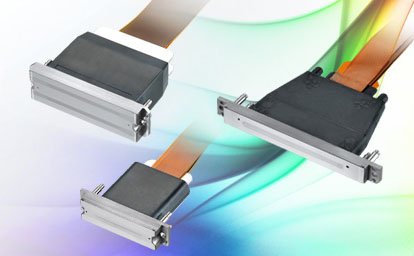
Their core strengths are reflected in three key areas:
1. Broad ink compatibility.
Ricoh Gen5/Gen6 printheads are proven to work reliably with UV, solvent, and aqueous inks, enabling their use across a wide range of applications—from signage and packaging to decorative materials and textile printing—without frequent printhead changes.
2. Outstanding long-term stability.
In continuous industrial operation, these printheads exhibit low failure rates and consistent jetting behavior, significantly reducing downtime and maintenance costs.
3. Balanced speed and print quality.
High jetting frequencies combined with stable greyscale control allow manufacturers to achieve both high productivity and reliable image quality—an essential requirement for industrial-scale production.
Industry engineers generally agree that while certain printheads may outperform Ricoh Gen5/Gen6 in isolated parameters—such as firing frequency or minimum drop size—no current alternative surpasses Ricoh Gen5/Gen6 across all critical performance dimensions.
Differentiated Strategies: Konica 9888H and Epson T3200
With Ricoh’s comprehensive advantages firmly established, other manufacturers have increasingly focused on application-specific optimization, developing printheads tailored to particular production needs. Among them, Konica 9888H and Epson T3200 stand out with clearly defined technical positioning.
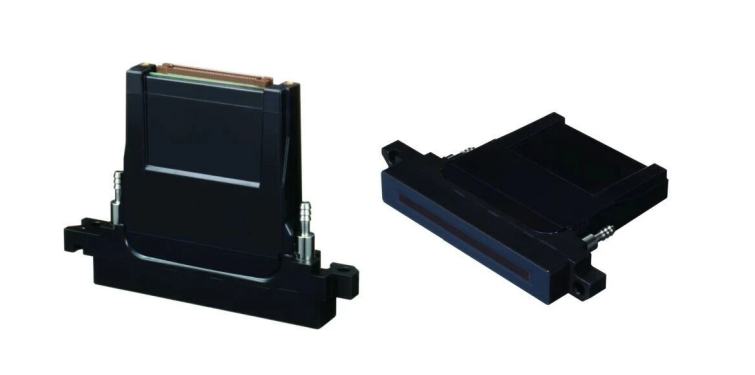
Konica 9888H: High Frequency Meets Small Drop Size
Konica 9888H is designed around a combination of small drop size and high firing frequency.
Equipped with 1776 nozzles and a 75 mm effective print width, it supports dual-color printing per head and achieves a minimum drop size of 5 pL with 8-level greyscale control. Its maximum jetting frequency reaches 75 kHz, offering clear efficiency advantages in large-format and high-volume industrial printing.
In terms of ink compatibility, the 9888H requires dedicated high-viscosity UV inks, which are not interchangeable with inks designed for Konica 1024 series or Ricoh Gen5/Gen6 printheads. To ensure stable jetting and avoid issues such as clogging or uneven ink output, a minimum effective drop flow of approximately 3.5 pL is typically required.
For mild solvent applications, the design emphasizes higher flow rates and improved idle-time moisture retention to support continuous production.
Epson T3200: High Nozzle Density and Stable Output
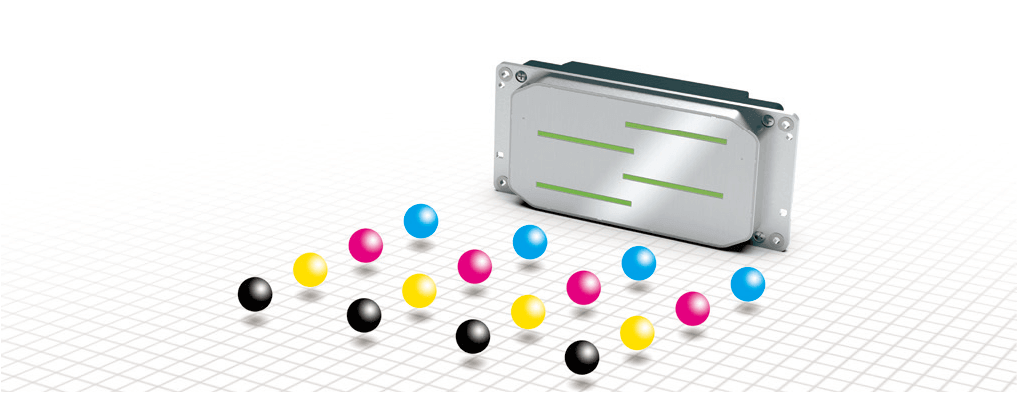
Epson T3200 follows a different approach, emphasizing high nozzle density and consistent output performance.
With 3200 nozzles and a 67.2 mm effective print width, it supports flexible configurations of four or two colors per printhead. Multiple drop volume options—including 6.2 pL, 9.5 pL, and 15.6 pL—allow the printhead to adapt to varying resolution and quality requirements.
This makes the T3200 particularly suitable for applications where stable image reproduction and medium-to-high resolution are prioritized over extreme printing speed.
Market Outlook: Parallel Paths of Specialization and Integration
Overall, the industrial printhead market is showing a clear structural trend:
established benchmarks remain dominant, while specialized solutions continue to gain traction in defined niches.
Ricoh Gen5/Gen6 are expected to remain the preferred choice for multi-application, mid-to-high-end industrial systems in the near term. Meanwhile, printheads such as Konica 9888H and Epson T3200 are steadily strengthening their positions in specific segments such as high-speed large-format printing or stable mid-range production.
Looking ahead, industry observers identify two major directions for printhead development:
Deeper application-specific optimization, with tighter coordination between printheads and ink formulations to balance speed, cost, and image quality.
Continued pursuit of improved overall performance, focusing on universality, stability, productivity, and total cost of ownership.
As industrial inkjet technology continues to evolve, competition among printhead manufacturers will intensify—ultimately expanding the range of efficient and precise printing solutions available to downstream industries.