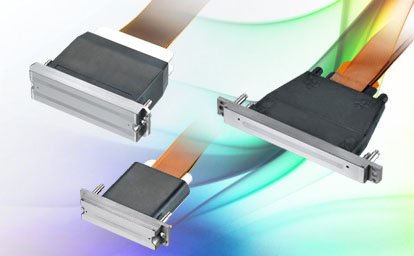
Inkjet print heads, commonly known as "print heads," are the core components of digital inkjet equipment. Digital inkjet was first used in indoor and outdoor advertising printing, but with the breakthrough of technological development in recent years, digital inkjet has long jumped out of the scope of advertising printing. It is turning to industrial applications, such as ceramic printing, digital textile printing, label printing, packaging printing, PCB inkjet application, industrial building materials printing, 3D printing, etc.
In the past, the application requirements of inkjet in large-format photography and printing were relatively low, and the printers tended to be used for workshop-style production, and the requirements for print heads were not high.
With the industrialization of inkjet applications, the demand for industrial-grade printheads has naturally arisen. Although there have been many industrial-grade printheads on the market in the past, few people can clearly explain what industrial-grade printheads are. This article will briefly talk about what industrial inkjet printheads are.
What are Industrial-Grade Products?
For most products, including electronic and electrical components, they can be roughly classified into consumer, commercial, industrial, and military grades. The main differences are product use environment, stability and reliability, production efficiency, workload, and operating life.
What is an Industrial Inkjet Printhead?
If you understand the characteristics of industrial-grade products, this question is not difficult to answer. Only printheads that meet the industrial production environment, adapt to industrial inks, can operate continuously at high loads, and have a long life can be called industrial inkjet printheads. In this regard, the author summarizes that industrial-grade printheads should at least meet the following characteristics:
1. Ultra-long service life
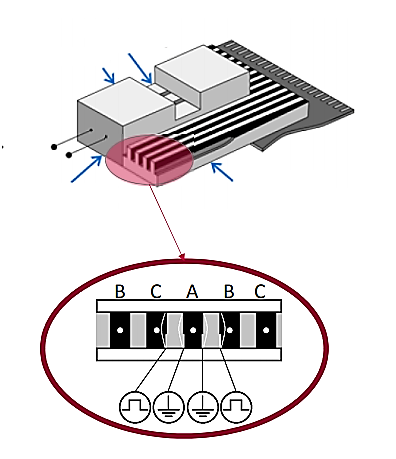
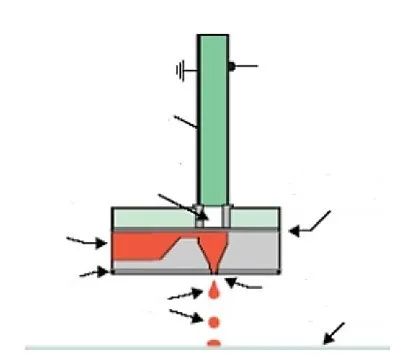
The life of the printhead is mainly reflected in the fatigue life of the piezoelectric ceramic, which refers to the number of times the printhead works when using the standard test liquid (ink) to continuously spray ink until the piezoelectric ceramic is fatigued and damaged. It is usually calculated billions of times. The working life of the printhead can be estimated by calculating according to the production workload. For example, the official data of a company's printhead states that the fatigue life of the nozzle PZT reaches 30 billion times. If the life is about 6 to 12 months according to the industrial production load, such a printhead cannot be called an industrial inkjet printhead. For industrial equipment, a minimum working life of 3 to 5 years is required, and the fatigue life of the corresponding nozzle piezoelectric ceramic is not less than 150 billion times.
2. Stable and reliable operation
Industrial equipment requires the ability to work continuously and stably. An industrial inkjet printer is often equipped with dozens of printheads. Printhead failure and maintenance suspension lead to reduced production efficiency, and even huge losses caused by production interruption and shutdown. The stability and reliability of the nozzle is not only reflected in the solid material and precise manufacturing, but also in the maintenance-free performance such as continuous printing without ink, long standby time, and immediate use.
3. Ink compatibility and evaluation and certification services
If the printhead is likened to a car engine, then the ink is like gasoline. First, in order to meet the special needs of industrial applications, the performance requirements for inks are getting higher and higher, such as high viscosity, large pigment particles, fast drying, and even special functional liquids, which also brings more challenges to the compatibility of printhead inks. For example, some printheads on the market cannot print high-viscosity inks, or are not compatible with temperature changes, which cannot be called industrial printheads.
Second, ink is the most critical factor affecting the fatigue life of piezoelectric ceramics in the nozzle, and inferior ink will directly corrode the glue and coating inside the printhead and even clog the head, causing damage. Excellent printhead manufacturers or suppliers will definitely conduct ink evaluation and certification, evaluate the compatibility of ink with printhead materials, waveform voltage matching, inkjet life evaluation, etc. The printhead's own ink compatibility, plus the factory's evaluation and certification support, can guarantee the printing quality, stability, and life.
Advantages of Industrial Inkjet Printhead with Internal Circulation
In recent years, many industrial applications have adopted the single-pass method for efficient production, and special inks or functional liquids are also needed to meet application performance. In this case, in order to meet the stable, efficient, and high-load production, higher requirements are placed on inks and printheads. Under such a background, internal circulation printheads are favored by more and more applications. In recent years, various manufacturers have been actively developing internal circulation printheads because internal circulation just solves the pain points of printheads in industrial applications. After years of application, internal circulation printheads have also been proven to have some unique advantages in practice:
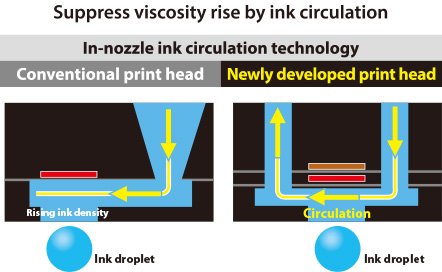
1) Stability, ink circulation takes away bubbles and impurities in the ink chamber to ensure the stability of continuous printing
2) Moisture retention, greatly extending the standby time, starting the machine, and spraying, reducing the maintenance and cleaning frequency
3) Long life, the internal circulation has a self-repairing function, greatly reducing UV reflection, oblique spraying and blocking holes caused by ink precipitation, and extending the service life of the nozzle
4) Ink adaptability, the internal circulation prevents the precipitation of large-particle color ink, and adapts to a wider range of ink applications, such as UV white ink, coating ink, ceramic/glass inorganic ink, high viscosity ink, and special functional liquids.
With the industrialization of digital inkjet, I believe that more and more printheads suitable for industrial applications will be developed, promoting more and more digital inkjet application innovations.