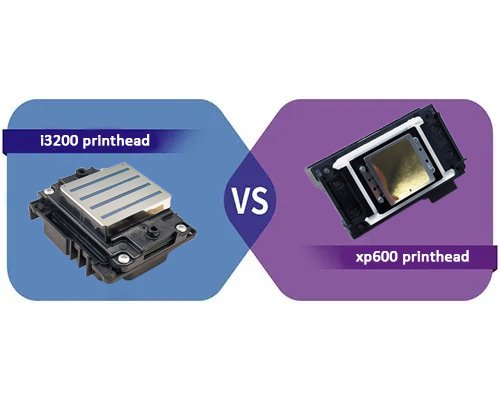
When choosing a DTF printer, one of the most important decisions is selecting the right printhead. Among the most common options on the market today, the Epson XP600 and Epson I3200 stand out as two popular choices.
The XP600 print head is widely used in entry-level DTF printers for its affordability, while the I3200 has become the preferred choice for professional and industrial DTF production for its higher speed, stability, and productivity.
So which one should you choose?
- Is the XP600 enough for a startup DTF business?
- Is the I3200 worth the higher investment?
- Which printhead is better for small-volume or large-volume orders?
- How do maintenance costs compare over time?
In this guide, we'll compare the Epson XP600 and Epson I3200 specifically for DTF printing to help you make the best decision for your business.
Epson XP600 vs. I3200: Technical Specifications
Although both printheads are manufactured by Epson, they are designed for different production environments.
Epson printheads are widely adopted in DTF printing due to their precision, durability, and stable ink control system.
For a deeper explanation, see "Why Epson printheads are preferred for DTF printers."
| Specification | Epson XP600 | Epson I3200 |
|---|---|---|
| Printhead Type | Desktop-derived / Entry-level Printhead | Industrial PrecisionCore MicroTFP Printhead |
| Nozzle Count | 1,080 | 3,200 |
| Nozzle Configuration | 6 rows × 180 nozzles | 8 rows × 400 nozzles |
| Native Nozzle Resolution | 180 npi/row, 360 dpi/2 rows | 300 npi/row, 600 npi/2 rows |
| Minimum Droplet Size | 4-6 pL* | Less than 4 pL* |
| Effective Print Width | 25.4 mm | 33.8 mm |
| Production Capacity | Small / Medium-volume Production | High-speed Industrial Production |
| Initial Cost | Lower | Higher |
The most significant difference is the nozzle count. With nearly three times as many nozzles as the XP600, the I3200 can deliver substantially higher productivity while maintaining excellent print quality.
Why Is the XP600 More Affordable?
The XP600 print head was originally designed for desktop printing applications and has become a popular choice for entry-level DTF printers due to its lower cost.
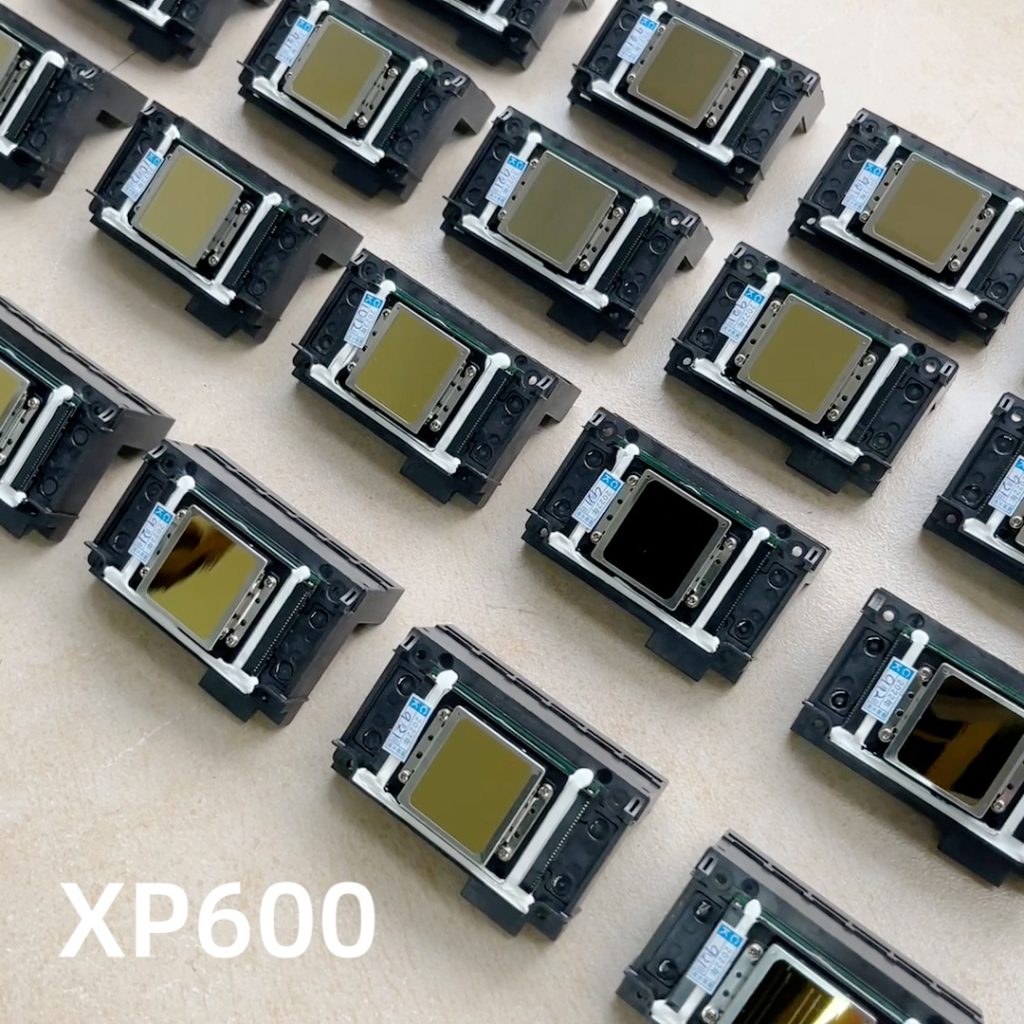
Its main advantages include:
Lower Initial Investment
For startups and small businesses, reducing upfront costs is often a priority.
An XP600-based DTF printer typically requires less capital investment, making it easier to enter the market and achieve a faster return on investment.
Suitable for Small-Volume Production
If your daily production mainly consists of:
- Custom T-shirts
- Personalized apparel
- Small online orders
- Local customization services
The XP600 print head can comfortably handle the workload.
Ideal for Testing the Market
Many entrepreneurs are still exploring the DTF business model.
If you're unsure about future order volume, starting with an XP600 printer can be a practical and low-risk option.
Why Do Professional DTF Businesses Prefer the I3200?
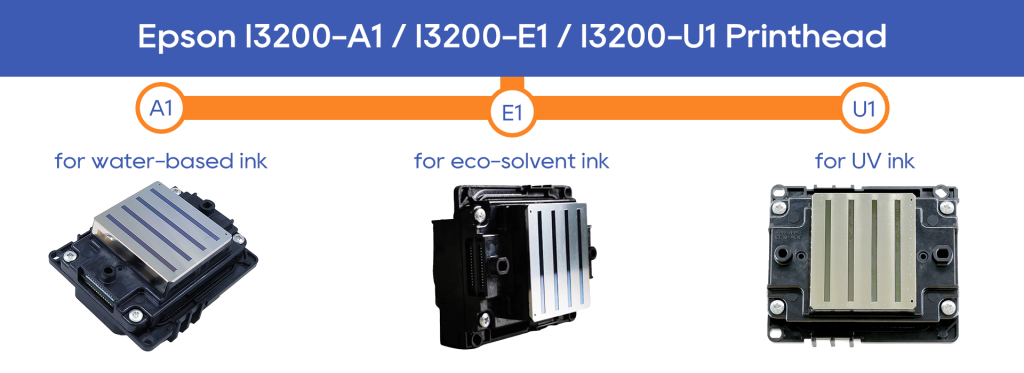
The Epson I3200 is built on Epson's PrecisionCore technology and was specifically developed for industrial printing applications.
Compared with the Epson XP600 print head, it offers significant advantages in speed, stability, and long-term productivity.
For a full explanation of Epson I3200-A1, I3200-E1, and I3200-U1, visit our Epson I3200 printhead guide.
Higher Printing Speed
With 3,200 nozzles and a wider 33.8 mm print width, the I3200 printhead can produce substantially more transfers within the same working hours.
For businesses handling multiple orders every day, increased productivity directly translates into higher revenue potential.
Better Continuous Production Performance
Many DTF production facilities operate printers for extended periods.
The industrial-grade design of the I3200 allows it to deliver:
- Better durability
- Improved ink consistency
- Reduced downtime
- Greater production stability
Superior White Ink Printing Stability
White ink is critical in DTF printing.
A stable white ink layer contributes to:
Better color vibrancy
Higher transfer quality
Improved consistency
The Epson I3200 printhead generally performs better during long production runs where white ink stability is essential.
Who Should Choose the XP600?
The XP600 is a great choice for:
- Startup DTF businesses
- Home-based printing shops
- Small customization studios
- Etsy sellers
- TikTok Shop sellers
- Businesses producing fewer than 50 garments per day
If your current production volume is relatively low, minimizing equipment investment may be the most practical approach.
Who Should Choose the I3200?
The I3200 is ideal for:
- Established DTF businesses
- Commercial print shops
- Bulk apparel manufacturers
- Uniform printing companies
- Transfer wholesale suppliers
- Businesses producing more than 100 garments per day
For companies planning long-term growth, the I3200 provides significantly greater scalability.
XP600 vs I3200: Which Is Better for Small and Large Orders?
Small-Batch Orders
Typical examples include:
- Personalized T-shirts
- Custom gifts
- Small online store orders
- Limited-run apparel production
For these applications, the XP600 is often sufficient.
The lower equipment cost can help improve short-term profitability.
Recommended Choice: XP600
Large-Volume Orders
Typical examples include:
- Corporate apparel projects
- Team uniforms
- Wholesale transfer production
- Bulk garment decoration
In these scenarios, productivity becomes a critical factor.
A faster printhead allows businesses to:
- Complete more orders daily
- Reduce labor costs per order
- Improve delivery times
- Increase overall profitability
Recommended Choice: I3200
Maintenance Cost Comparison
Many buyers focus only on the purchase price and overlook long-term operating costs.
However, total cost of ownership (TCO) often has a greater impact on profitability.
XP600 Maintenance Costs
Advantages:
- Lower replacement cost
- Lower initial investment
Considerations:
- More frequent maintenance
- Shorter service life under heavy workloads
- Less suitable for continuous production
I3200 Maintenance Costs
Advantages:
- Industrial-grade durability
- Better long-term reliability
- Reduced downtime
- Improved production stability
Considerations:
- Higher replacement cost
For businesses running daily production, the reduction in downtime often outweighs the higher cost of the printhead itself.
Which Printhead Offers Better ROI?
The answer depends largely on your production volume.
XP600 Provides Better ROI If:
- You're starting a DTF business
- Order volume is relatively low
- Budget is limited
- You're testing market demand
I3200 Provides Better ROI If:
- Orders are consistent
- Production volume continues to grow
- Fast turnaround times are important
- You plan to scale your business
Many successful DTF businesses follow a similar growth path:
XP600 for startup → Business growth → Upgrade to I3200 → Expand production capacity
Contact us for pricing and details!
Conclusion
There is no absolute winner between the Epson XP600 and the Epson I3200.
The right choice depends on your business goals, production volume, and budget.
If you are entering the DTF market and want to minimize upfront investment, the XP600 offers an affordable and reliable solution.
If you already have stable orders and need higher productivity, better stability, and long-term scalability, the I3200 is the better investment.
In simple terms:
- Choose XP600 for budget-friendly startup operations.
- Choose I3200 for higher production capacity and business growth.
- Choose XP600 for small-batch production.
- Choose I3200 for large-scale commercial printing.
For businesses planning long-term success in the DTF industry, the Epson I3200 often delivers greater efficiency, reliability, and overall return on investment.
FAQs
XP600 is better for startups or small-volume printing due to its lower cost, while I3200 is better for high-volume production because of its higher speed, stability, and industrial-grade performance.
Yes, the XP600 supports the CMYK + white ink configuration and is widely used in entry-level DTF printers. However, white ink stability and long-term consistency are generally better with the I3200.
The I3200 has significantly more nozzles (3200 vs 1080) and a wider print width, allowing it to produce much higher output in the same working time, especially for bulk production.
XP600 has a lower replacement cost but may require more frequent maintenance under heavy use. I3200 has a higher upfront cost but offers better stability and less downtime in long-term production.
Yes, many DTF businesses start with XP600 to reduce initial investment and later upgrade to I3200 once order volume increases and production needs become more demanding.