In real-world production—whether you're running eco-solvent printers, large-format machines, or UV printers—many users encounter the same issue:
Two machines use printheads with identical resolution and similar settings, yet the final print quality looks completely different.
Some outputs appear sharp and vibrant, while others look blurry, grainy, or even show banding and color inconsistency.
So what’s going on?
The truth is: printhead resolution is only a baseline specification—not the final determinant of print quality.
What really matters is the performance of the entire printing system.
1. Resolution Defines Potential—Not Final Output
Printhead resolution (e.g., 720 dpi, 1440 dpi) indicates how many droplets can theoretically be placed within a given area.
However, actual print quality depends on how well the system controls and utilizes those droplets, including:
- Ink behavior
- Media compatibility
- Mechanical precision
- Print settings
- File quality
- Ink delivery stability
In short:
Resolution sets the ceiling, but system integration determines the result.
2. Ink Quality: The Foundation of Droplet Performance
Even with identical printheads, different inks can produce drastically different outcomes.
Particle Size & Dispersion
High-quality inks feature:
- Uniform pigment particles
- Stable dispersion
- Consistent droplet formation
This leads to:
- Cleaner edges
- Accurate dot placement
- Smooth gradients
Lower-quality inks may cause:
- Overspray or feathering
- Blurry details
- Uneven color output
Viscosity & Surface Tension
Ink flow characteristics are critical:
- High viscosity → poor jetting, possible clogging
- Low viscosity → excessive spreading, loss of detail
Even if the droplet size is identical, the ink behavior determines how that droplet actually looks on the substrate.
3. Media Matters: Where Droplets Land
The printhead controls how ink is ejected—but the media controls how ink behaves after impact.
Key Media Factors:
- Surface smoothness
- Coating uniformity
- Ink absorption rate
Example:
- Coated photo paper → sharp edges, high detail retention
- Rough or uncoated media → ink spread, muted colors
This explains why:
The same printer produces different results on vinyl, film, fabric, or paper.
4. Machine Condition: Hidden but Critical
Even with perfect specs, hardware condition plays a major role.
Printhead Status
Minor issues can have major effects:
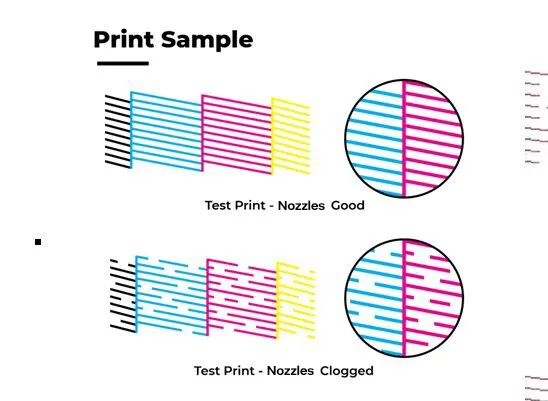
- Partial clogging
- Nozzle misalignment
- Jetting angle deviation
These lead to:
- Banding
- Ghosting
- Uneven fills
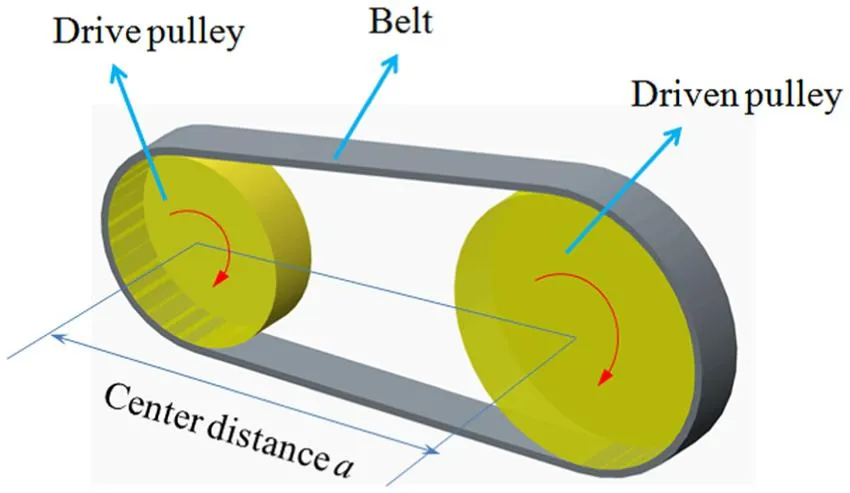
Mechanical Stability
Precision movement ensures accurate dot placement:
- Rail smoothness
- Belt tension
- Encoder accuracy
Any instability can shift droplet positioning and degrade image clarity.
5. Print Settings: How Droplets Are Applied
Resolution alone doesn’t define output—it must work with optimized parameters.
Key Parameters:
- Ink limit
Too high → ink bleeding and muddiness
- Print speed
Too fast → insufficient curing or spreading time
- Pass count
Too low → visible grain and poor coverage
The same printhead can produce vastly different results depending on parameter combinations.
6. File Quality: The Input Determines the Output
Even the best hardware cannot compensate for poor input files.
Common Issues:
- Low image resolution → loss of fine detail
- Over-compression → artifacts and noise
Color Management
Mismatch between file and printer profiles can result in:
- Color shifts
- Reduced saturation
- Missing tones
Garbage in, garbage out applies strongly in digital printing.
7. Ink Delivery System: Stability Behind the Scenes
A stable ink supply system is essential for consistent output.
Key components include:
- Dampers
- Ink tubes
- Filters
- Ink pumps
Problems in this system can cause:
- Ink starvation → missing lines
- Air bubbles → unstable jetting
- Contamination → printhead damage
These issues don’t show up in specifications—but directly affect print quality.
8. Why “Same Resolution” ≠ “Same Quality”
Let’s summarize the real factors behind print differences:
| Factor | Impact Level |
|---|---|
| Printhead Resolution | Basic |
| Ink Quality | Critical |
| Media Compatibility | Critical |
| Machine Condition | High |
| Print Parameters | Critical |
| File Quality | High |
| Ink Supply System | Critical |
Print quality is the result of system synergy—not a single parameter.
9. How to Improve Your Print Results
To achieve consistent, high-quality output:
- Use high-quality, compatible inks
- Match print settings to media type
- Maintain printhead and mechanical systems regularly
- Optimize ink delivery components (dampers, filters, pumps)
- Work with high-resolution, properly profiled files
Conclusion
Printhead resolution is just the starting point—not the finish line.
If your prints are underperforming, don’t focus solely on specs. Instead, evaluate the entire workflow—from ink and media to hardware and settings.
In professional printing, consistency and system balance matter far more than headline specifications.