Many users believe that the printhead is the only factor determining the image quality of an inkjet printer. However, the reality is much more complex.
Even when two machines use the same printhead model, their output quality can vary significantly. Differences in position detection accuracy, motion control, mechanical structure, ink performance, and printhead driving technology all directly affect the final printing result.
A high-quality printhead provides the foundation for accurate ink ejection, but it is the entire printing system—including the encoder system, motion mechanism, and ink delivery process—that determines whether the printer can fully achieve its designed performance.
This article explains the key factors behind inkjet printing accuracy and why the same printhead can deliver completely different results on different machines.
Printhead: The Foundation of Ink Droplet Precision
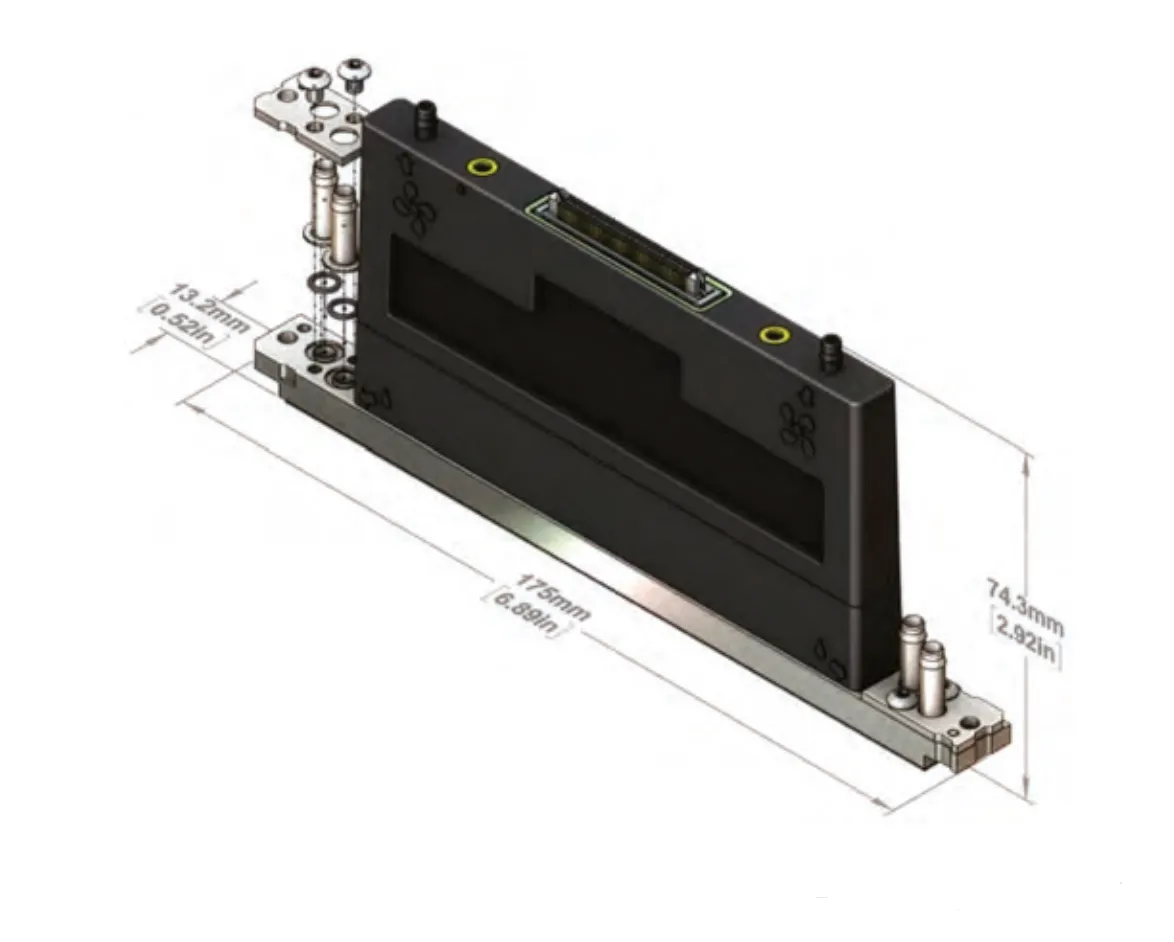
The printhead is the component that directly creates the image. Its performance determines the physical limits of printing accuracy.
Nozzle Density Determines Resolution Capability
The arrangement density of nozzles defines how finely a printhead can place ink droplets.
Industrial printheads may contain thousands of nozzles within a small area, allowing printers to achieve high-resolution output for:
- Fine text
- Detailed graphics
- Barcodes
- High-precision patterns
A higher nozzle density provides more printing points, but the final image quality also depends on how accurately each nozzle performs.
Ink Droplet Control Affects Image Sharpness
Modern industrial printheads, especially piezoelectric types, use precisely controlled voltage waveforms to regulate ink ejection.
The waveform controls:
- Droplet size
- Droplet speed
- Ejection stability
- Placement accuracy
Small-volume droplets measured in picoliters help reduce graininess and improve:
- Image smoothness
- Edge definition
- Fine detail reproduction
However, if droplets vary in size, speed, or flight direction, even a highly accurate positioning system cannot prevent defects such as:
- Blurred edges
- Uneven lines
- Image distortion
- Color misalignment
Encoder Strip: The Hidden Factor Behind Printing Accuracy
While the printhead controls where ink is created, the encoder system determines where the printhead is positioned.
The encoder strip is one of the most important components in the printer’s motion control system.
How Does an Encoder Strip Achieve Precise Position Detection?
Inkjet printers commonly use optical encoder technology based on the Moire fringe principle.
The encoder system consists mainly of:
- Encoder scale (grating strip)
- Optical sensor
- Signal processing system
The encoder strip contains thousands of precisely engraved lines.
When the printer’s moving carriage travels:
- The encoder scale and optical sensor generate changing optical patterns.
- Overlapping gratings create Moire fringe signals.
- The sensor counts these changes.
- The control system calculates the exact carriage position.
The finer the grating pitch, the higher the position sampling resolution.
This enables the printer to perform precise movement control at a microscopic level.
Why Does Encoder Accuracy Affect Print Quality?
The printer relies on encoder feedback to control:
- Printhead carriage position
- Printing timing
- Droplet placement
- Multi-pass alignment
If the encoder strip has:
- Ink contamination
- Dust accumulation
- Scratches
- Wear damage
the optical signal becomes unstable.
This can result in:
- Double images
- Horizontal banding
- Color registration errors
- Misaligned graphics
A high-performance printhead cannot compensate for inaccurate positioning feedback.
Mechanical Motion System: The Hardware Behind Stability
The encoder system provides position information, but mechanical components are responsible for executing the movement.
A professional inkjet printer depends on the cooperation of:
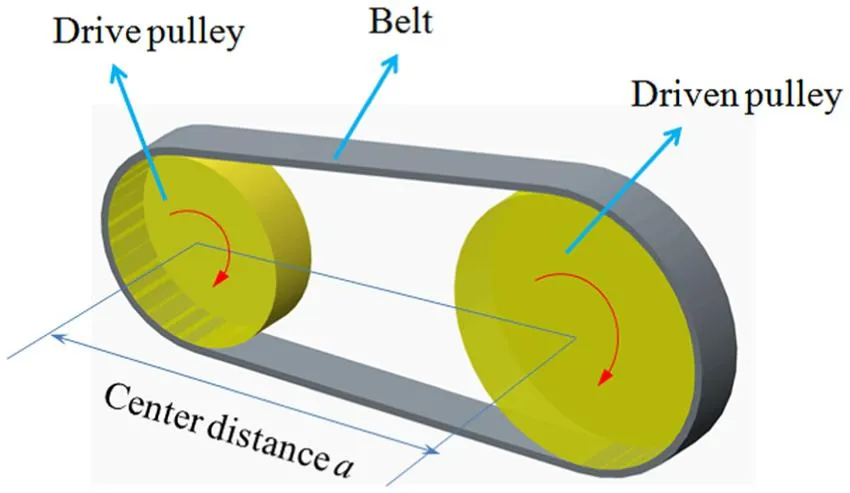
- Timing belts
- Linear guides
- Motors
- Servo systems
- Carriage structure
Belt and Guide Rail Accuracy
The carriage must move smoothly and consistently during printing.
Problems such as:
- Incorrect belt tension
- Guide rail deviation
- Mechanical vibration
- Carriage instability
can cause positioning errors.
Even a small movement deviation can create visible defects when printing high-resolution images.
Servo Feedback Improves Motion Control
In advanced printing systems, servo motors use encoder feedback to continuously adjust movement.
The control loop works as follows:
- The motor drives the carriage movement.
- The encoder detects the actual position.
- The control system compares the target and actual position.
- Motor adjusts speed and position.
This closed-loop control improves:
- Movement stability
- Printing consistency
- Long-term production reliability
Ink Performance: The Material Factor Behind Print Quality
Ink is not just a consumable; it is part of the printing system.
The interaction between ink and printhead directly affects droplet formation and image quality.
Important ink characteristics include:
Ink Viscosity
Ink viscosity must match the printhead design.
If viscosity is too high:
- Ink flow becomes unstable
- Nozzles may struggle to eject droplets
If viscosity is too low:
- Droplet formation becomes inconsistent
- Printing edges may become less sharp
Surface Tension
Surface tension affects:
- Droplet formation
- Ink spreading on the substrate
- Dot shape after landing
Proper surface tension ensures droplets remain controlled after reaching the printing surface.
Ink Degassing and Air Bubble Control
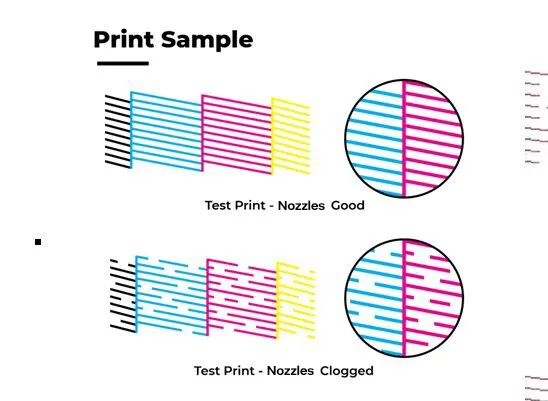
Poorly degassed ink may contain air bubbles.
During printing, bubbles can cause:
- Missing nozzles
- Ink interruption
- Uneven lines
- Image defects
Stable ink supply and proper filtration are essential for maintaining print quality.
Why the Same Printhead Produces Different Results
Two printers using the same printhead can still show completely different output quality because the printhead is only one part of a larger system.
The final printing accuracy depends on the cooperation of:
| Component | Main Function | Impact on Quality |
|---|---|---|
| Printhead | Controls ink ejection | Droplet size, resolution, sharpness |
| Encoder system | Detects position | Alignment accuracy, registration |
| Motion system | Executes movement | Stability and repeatability |
| Ink system | Supplies ink | Nozzle reliability and consistency |
| Software & waveform control | Drives printing process | Color accuracy and image quality |
A premium printhead installed on a poorly designed machine may not achieve its full potential.
How Manufacturers Improve Inkjet Printing Accuracy
To achieve stable high-quality output, printer manufacturers need to optimize the entire system.
Key improvement areas include:
Selecting the Right Printhead
Different applications require different printhead characteristics:
- High-speed production
- Fine image printing
- Large-gap printing
- Industrial coding
The printhead must match the application requirements.
Improving Encoder Accuracy
High-quality encoder strips and sensors provide:
- More accurate positioning
- Better repeatability
- Reduced image distortion
Regular cleaning and maintenance are also essential.
Optimizing Mechanical Design
A stable mechanical platform ensures:
- Smooth carriage movement
- Reduced vibration
- Accurate positioning
Matching Ink and Printhead Parameters
Ink formulation should match:
- Printhead structure
- Droplet requirements
- Printing speed
- Substrate characteristics
Conclusion: Printing Accuracy Is a Complete System, Not Just a Printhead
The printhead is undoubtedly one of the most important components in an inkjet printer, but it is not the only factor determining print quality.
High-precision inkjet printing requires a complete system where:
- The printhead controls droplet formation
- The encoder system provides accurate positioning
- The mechanical structure ensures stable movement
- The ink system maintains reliable operation
The combination of precise printhead technology and accurate motion control is what allows industrial inkjet printers to achieve sharp images, consistent colors, and reliable production performance.
This is why two printers using the same printhead can deliver completely different printing results—because true printing accuracy comes from the entire machine working together.