In the previous article, we introduced the two most common ink supply methods used in printers. Some readers mentioned that “peristaltic pumps are also part of the ink supply system.” Strictly speaking, however, a peristaltic pump is not an ink supply method—it is more accurately classified as one of the ink extraction mechanisms within the supply process.
Therefore, in this article, we will focus on the printer ink pump types that truly play key roles in ink delivery systems—the ink supply pump, the ink pressurizing pump, and the air (negative pressure) pump. By understanding how each pump works and what role it plays in the system, you will gain a clearer picture of its functions, differences, and how to choose the right ink pump for printing machine.
1. Ink Supply Pumps
An ink supply pump is used to transfer ink from the main ink bottle to the sub-ink bottle. There are mainly two types of ink supply pumps: diaphragm pumps and peristaltic pumps.
1) Diaphragm Pump
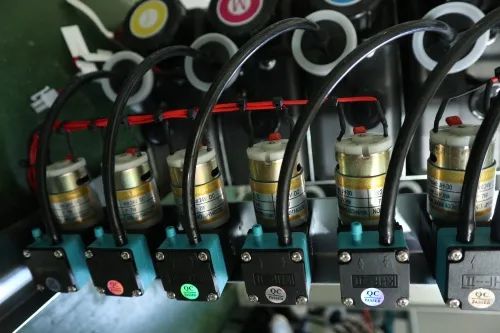
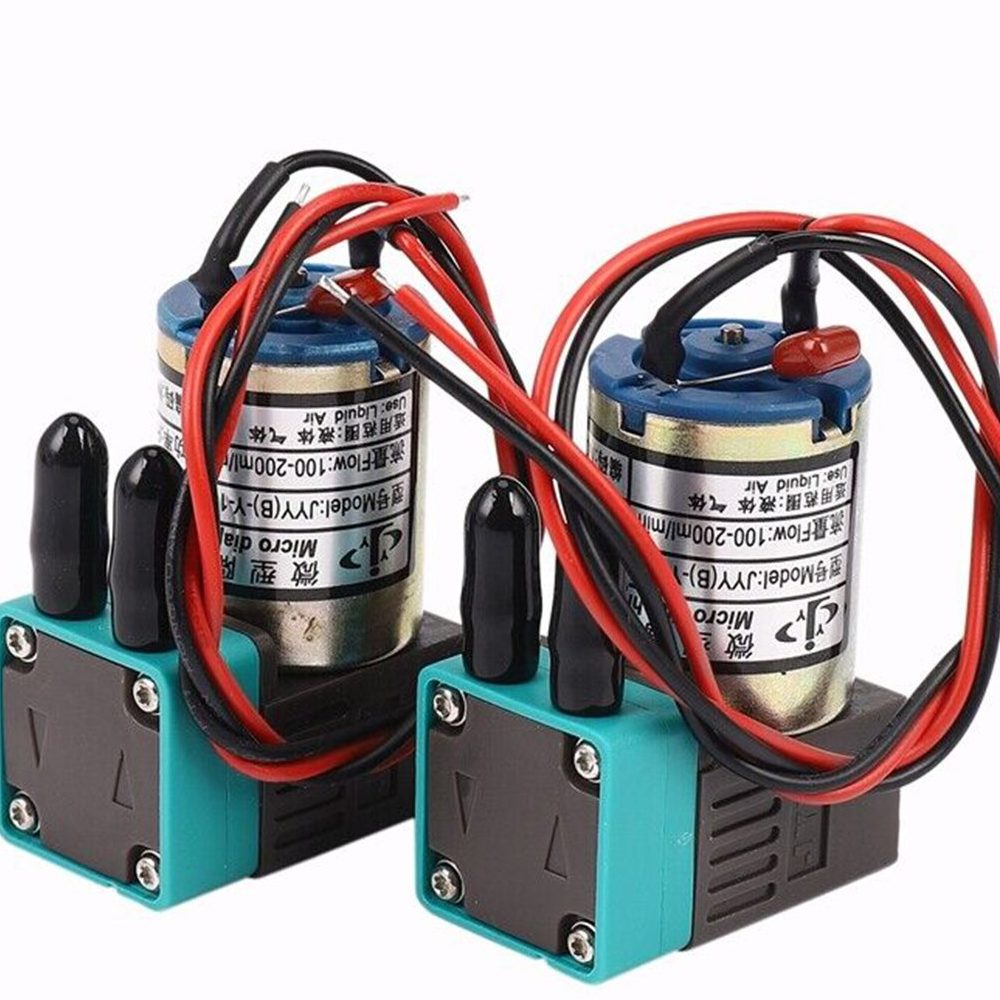
As the name suggests, a diaphragm pump separates the liquid from the pump body using a diaphragm. During operation, it draws ink and supplies it to the sub-ink bottle. In the printing industry, micro diaphragm pumps are commonly used and typically available in two voltage specifications: 12V and 24V. Different printer models require pumps of different power ratings. The commonly used power ranges from about 3W to 7W.
Flow rate is directly related to pump power, which determines how much ink is delivered. Common flow rates range from 100 ml/min to 400 ml/min. For example, typical large-format printers usually use diaphragm pumps of 4–5 W, with flow rates between 250 and 350 ml/min. UV inks are more viscous, so higher-power pumps are required.
Why do we need pumps of different power and flow rates, and what happens if the wrong pump is chosen?
In the previous article, we introduced a siphon-based ink supply, where the ink in the sub-ink bottle is supplied based on the float sensor signals. During printing, ink may need to be supplied at any moment. Different printheads have different ink output rates, so when selecting a diaphragm pump, the flow rate must match the printhead’s ink consumption. Choosing the correct ink pump for the printer ensures a stable ink supply during printing.
Some might think, “Why not just choose a bigger pump?” It’s not that simple. The pump’s power must also consider the sub-ink bottle volume. If the pump is too powerful, sudden ink supply can cause large pressure changes in the sub-ink bottle, which may push ink out of the printhead nozzles—commonly seen as dripping. Conversely, even if the flow rate is sufficient, a pump that is too weak may cause prolonged supply periods, affecting the sub-ink bottle pressure and leading to dripping or interrupted ink supply.
Some manufacturers have addressed this by implementing progressive or ramped supply curves, ensuring stable ink flow without pressure fluctuations affecting the printhead.
2) Peristaltic Pump
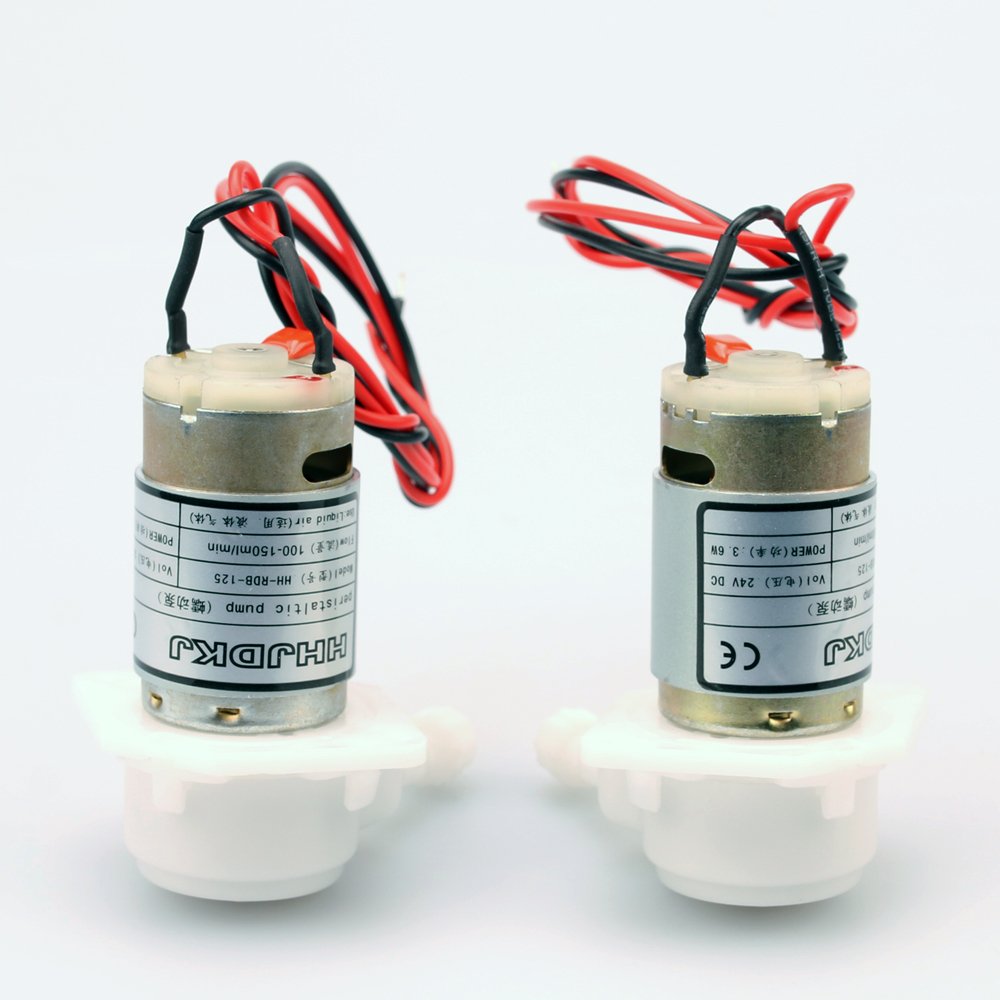
A peristaltic pump works by squeezing a silicone ink tube to move the ink.
Water-based inks are prone to air bubbles, which can be difficult to remove once they enter the printhead, causing clogs. Peristaltic pumps are less likely to generate bubbles during the ink supply. Therefore, printers using water-based inks, such as sublimation banner printers and reactive textile printers, often use peristaltic pumps.
The drawback of peristaltic pumps is their limited flow rate, typically ranging from 15 mL/min to 150 mL/min. This limits their use for high-flow printheads. However, with recent developments, some manufacturers are working on peristaltic pumps with higher flow rates.
2. Ink Pressurizing Pump
The ink pressurizing pump is primarily used during printhead cleaning and maintenance, using air pressure to push ink or cleaning fluid through the printhead and ensure internal passages remain clear. Most current printer models use diaphragm pumps as pressurizing pumps. Since the pressurizing process only involves air and does not require pumping liquid, the pump selection mainly depends on gas compatibility.
When selecting a pressurizing pump, it is important to consider the air pressure generated during operation. The internal components of the printhead are typically secured with adhesive, and the ink chamber is bonded to the nozzles using adhesive. If the pressure is too high, the adhesive may fail, causing ink leakage. If the pressure is too low, the cleaning effect will be insufficient, making it difficult for users to clean the printhead. Therefore, manufacturers generally avoid pumps with too low pressure and recommend users avoid continuous pressurization, typically operating in cycles of 3 seconds on and 5–6 seconds off.
The typical pressurizing pressure for most industrial printheads is in the range of 30–50 kPa. For relatively fragile Epson printheads, manufacturers usually use a suction-based method rather than direct pressurization to clean the printhead, preventing potential damage.
3. Negative Pressure Pump
Also commonly called an air pump, its main function is to provide a stable negative-pressure environment for the printhead within the ink supply system. It works by continuously extracting air from the reservoir, keeping the chamber within a specific negative pressure range.
The negative pressure required for most printheads to operate normally is actually quite low, typically between –1.5 kPa and –4.0 kPa. This is sufficient to maintain stable ink flow and prevent ink leakage or interruptions.
Although it is called a vacuum device, printers do not demand a high “suction capacity” from the negative pressure pump. Many manufacturers have found that inverting or reversing a diaphragm pump can achieve a similar vacuum effect. Therefore, in many large-format, UV flatbed, and industrial printers, the so-called “negative pressure pump” is often simply a higher-power, better-sealed diaphragm pump.
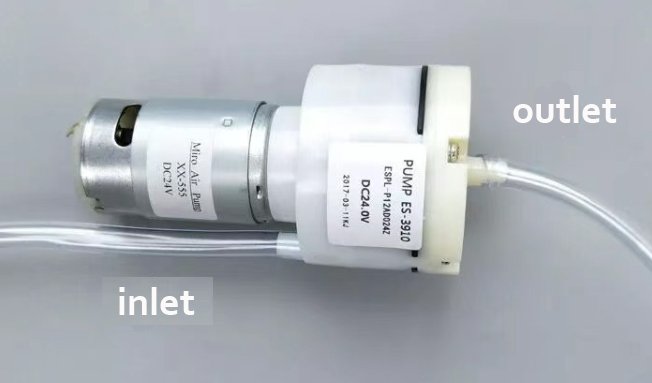
Because of its simple structure, controllable cost, and easy maintenance, this type of negative pressure pump has become the mainstream configuration in the printing industry.
By properly configuring these three types of inkjet pumps, the ink flow in a wide-format printer can be kept stable and the printhead maintained clean, ensuring high-quality and reliable printing performance.