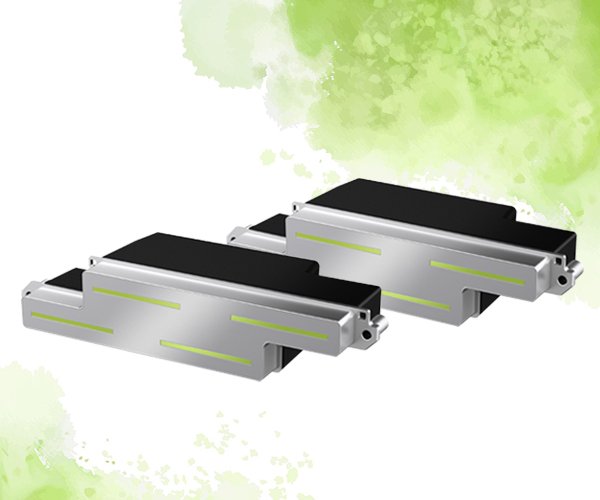
As inkjet technology expands beyond graphics into advanced manufacturing, conventional printheads often struggle with durability and stability in strong solvent environments. To address this, Epson has introduced the S3200-S1 solvent-compatible printhead, engineered for industrial-scale applications requiring both chemical resistance and high-precision deposition.
This article provides a comprehensive breakdown of its core technologies, structural innovations, and application potential.
1. Engineered for Strong Solvent Compatibility
One of the most significant upgrades of the S3200-S1 lies in its ability to handle aggressive solvent systems.
By utilizing corrosion-resistant materials and optimized internal structures, the printhead can operate reliably with solvents such as:
- NMP (N-Methyl-2-pyrrolidone)
- DMSO (Dimethyl sulfoxide)
- DMF (Dimethylformamide)
- DMI (1,3-Dimethyl-2-imidazolidinone)
These solvents are widely used in functional material deposition, particularly in perovskite solar cell manufacturing, where chemical stability is critical.
Despite these enhancements, the S3200-S1 remains fully compatible with Epson’s PrecisionCore platform, ensuring consistent droplet control even under harsh conditions.
2. Wide Print Width with High Precision Output
The S3200-S1 is designed for both scalability and precision:
- 4 PrecisionCore chips (S-shaped layout)
- 3,200 nozzles in high-density configuration
- Effective print width: 120.2 mm (4.73 inches)
Compared to previous models, this significantly reduces the need for multi-head stitching, simplifying machine design and improving throughput.
Resolution modes include:
- 600 dpi (single-channel mode) for high precision
- 300 dpi (dual-channel mode) for higher productivity
This flexibility allows manufacturers to balance accuracy and speed depending on process requirements.
3. PrecisionCore MicroTFP Technology Advantages
At the heart of the S3200-S1 is Epson’s PrecisionCore MicroTFP piezoelectric technology, delivering:
- High firing frequency (up to 50,000 droplets per second)
- Fine droplet control (minimum ~4.4 pL)
- Accurate waveform modulation for consistent jetting
Additionally, piezoelectric printing is a heat-free (cold) process, offering:
- Reduced thermal stress on materials
- Longer printhead lifespan
- Suitability for continuous industrial operation
4. Common Ink Channel Recirculation System
A key innovation in the S3200-S1 is its common ink channel recirculation system, which enhances stability in demanding environments.
Working Principle
- A shared ink channel is integrated behind the nozzle plate
- Ink flows in a closed loop: supply → nozzle chamber → return
- Controlled negative pressure stabilizes the meniscus
- Flow restrictors minimize pressure fluctuation
Typically, recirculation flow is maintained at a small percentage (~10%) of the jetting volume, ensuring fresh ink near the nozzles without affecting output.
Key Benefits
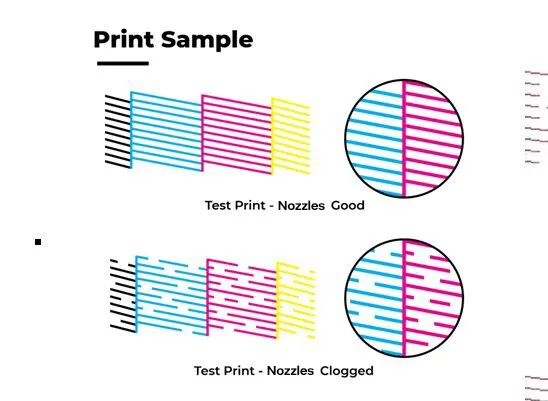
1) Prevents drying and clogging
Continuous circulation reduces solvent evaporation and particle buildup
2) Stabilizes ink properties
Maintains consistent viscosity, temperature, and gas content
3) Enables fast ink switching and degassing
Improves production flexibility and reduces downtime
4) Supports uniform large-area coating
Ensures consistent film thickness across wide substrates
5. Target Applications in Advanced Manufacturing
The S3200-S1 is designed not only for traditional printing but also for next-generation industrial applications, including:
- Perovskite solar cell layer deposition
- Semiconductor packaging and coating
- Functional material printing
These applications demand:
- Strong solvent compatibility
- High-precision deposition
- Multi-layer uniformity
The S3200-S1 meets these requirements with advanced engineering and process stability.
6. Market Outlook and Availability
The S3200-S1 is expected to launch in Q1 2026 and is currently undergoing early validation with selected OEM partners in Asia.
With the rapid growth of the perovskite solar market, inkjet deposition is emerging as a key manufacturing method—and the S3200-S1 is positioned to play a critical role in this transition.
7. Conclusion
The Epson S3200-S1 represents a significant step forward in industrial inkjet technology:
- Enhanced solvent compatibility
- Wide-format, high-precision output
- Advanced ink recirculation system
- Strong potential in advanced manufacturing
It is not just a printhead upgrade, but a platform enabling inkjet to move deeper into high-tech production.