What is A Printhead FFC Cable?
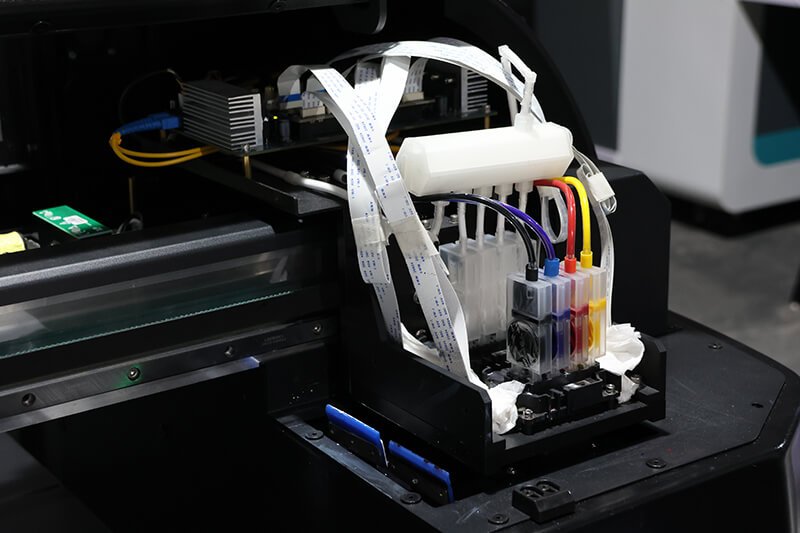
The printhead FFC cable, short for Flexible Flat Cable, is a soft, flat-structured connection cable. It serves as a vital signal pathway between the printhead and the mainboard, transmitting control commands and data to ensure stable printhead operation.
Made from flexible materials with excellent conductivity and bending resistance, it is one of the most essential yet often overlooked parts of the printing system.
Printhead FFC Cable Functions and Roles
1. Data Transmission
The primary function of the printhead FFC cable is to transmit printing data. It delivers the print commands sent from the mainboard—such as nozzle position, ink volume, and color information—accurately to the printhead, ensuring image clarity and color precision.
2. Signal Control
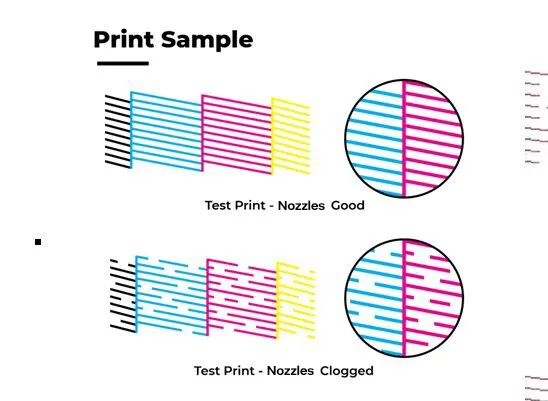
The flat cable also provides stable electrical signals for controlling inkjet timing, frequency, and intensity. High-quality cables reduce signal loss, improving print sharpness and consistency while minimizing defects such as banding or broken lines.
3. Adaptability to Moving Parts
Since the printhead moves back and forth at high speed, the flat cable must withstand frequent bending and movement. Made from flexible materials such as polyester (PET) or polyimide (PI), it maintains excellent conductivity and connection integrity even under continuous motion, preventing signal interruption or cable damage.
4. Anti-Interference and Protection
The outer layer of the printhead FFC cable typically features shielding or EMI (Electromagnetic Interference) resistance. This helps:
a. Resist external signal interference (e.g., electromagnetic waves)
b. Prevent static discharge or voltage spikes that could harm the printhead
5. Compatibility and Maintainability
Different printer models require varying cable lengths, pin arrangements, and connector specifications. High-quality cables not only support standard models but can also be customized for compatibility and easy replacement.
Printhead FFC Cable Structural Features
Typical structural characteristics of printhead FFC cables include:
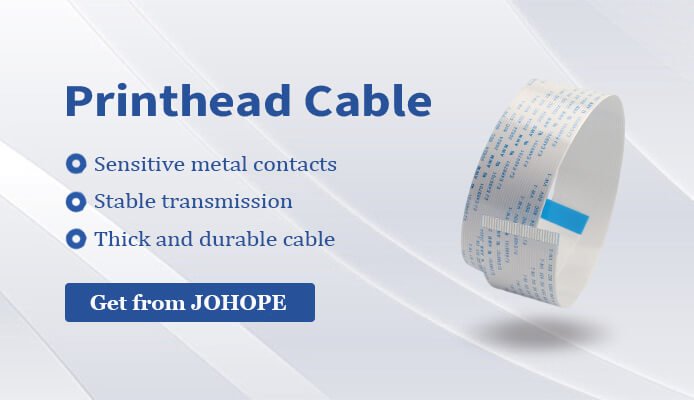
Flexible materials: Usually made of PET or PI for superior bending resistance.
Parallel conductor layout: Ensures precise signal transmission for each nozzle.
Shielding layer: High-end models feature EMI shielding for signal stability.
Standardized terminals: Gold-plated connectors at both ends for stable plug-in connection.
High-temperature and corrosion resistance: Designed to withstand solvent and heat in industrial printing environments.
Printhead Cable Applications
Printhead flat cables are widely used across various inkjet systems, including:
Eco-solvent / Photo printers: Using Epson DX5, DX7, XP600, i3200, or 5113 printheads.
UV printers: Using Ricoh G5/G6/GH2220, Kyocera, and other high-end printheads.
DTF, sublimation, and textile printers
Label, barcode, and small industrial coding machines
Selection and Maintenance Tips
Confirm printer and cable compatibility before purchase.
Prefer original or trusted-brand compatible cables.
Avoid excessive bending, stretching, or knotting during installation.
Check connectors regularly for oxidation or looseness.
Contact us today for pricing and compatibility support.
Conclusion
Though small in size, the printhead flat cable is the data lifeline of a printer. A high-quality cable not only enhances printing accuracy and image quality but also extends the printhead’s lifespan and reduces maintenance risks.