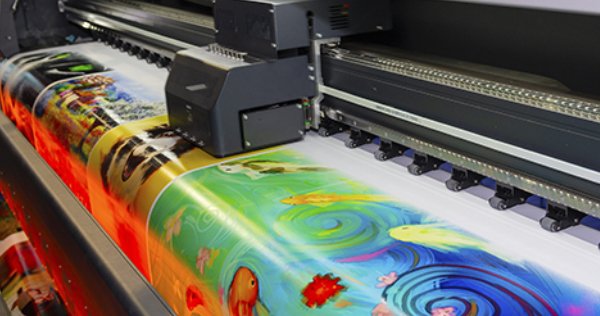
In large-format printers, the ink supply system is a core component that directly affects the stability of the entire machine. Although large-format ink systems may seem complex, they mainly fall into two common ink supply methods: gravity-feed (siphon) systems and negative-pressure ink supply systems.
Both methods have their own advantages and are suitable for different printheads and printing scenarios. This article provides a systematic explanation of their working principles, structural features, usage guidelines, and important precautions.
1. Ink Supply System: Gravity-Feed (Siphon)
1) Working Principle
Gravity-feed is the most common and economical ink delivery method. It relies on the height difference between the ink surface and the printhead to produce pressure that moves the ink into the damper or sub-tank.
The pressure difference can be expressed as
ΔP = ρ × g × Δh
However, even with a formula, it’s difficult to calculate an exact ideal pressure difference. Therefore, the industry commonly uses secondary or tertiary ink cartridges/dampers to stabilize ink pressure.
2) Typical Structure
A “secondary ink cartridge” refers to an additional ink reservoir placed between the main ink bottle and the printhead.
- In Epson-based printers, this is usually a damper.
- Industrial printheads often have sub-tanks located behind the carriage.
- Some printheads (such as the Seiko series) even integrate a small damper inside the head.
- For printheads without internal dampers, a tertiary cartridge may be added.
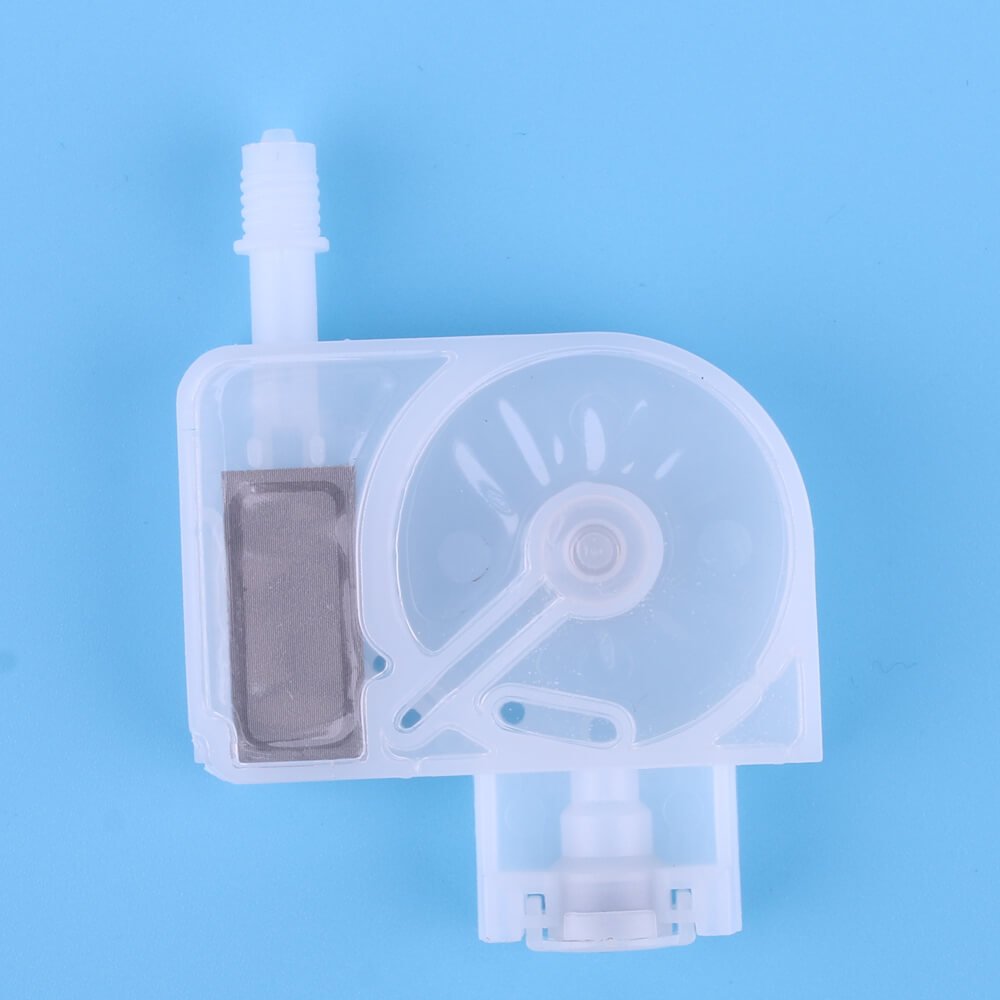
Epson ink damper
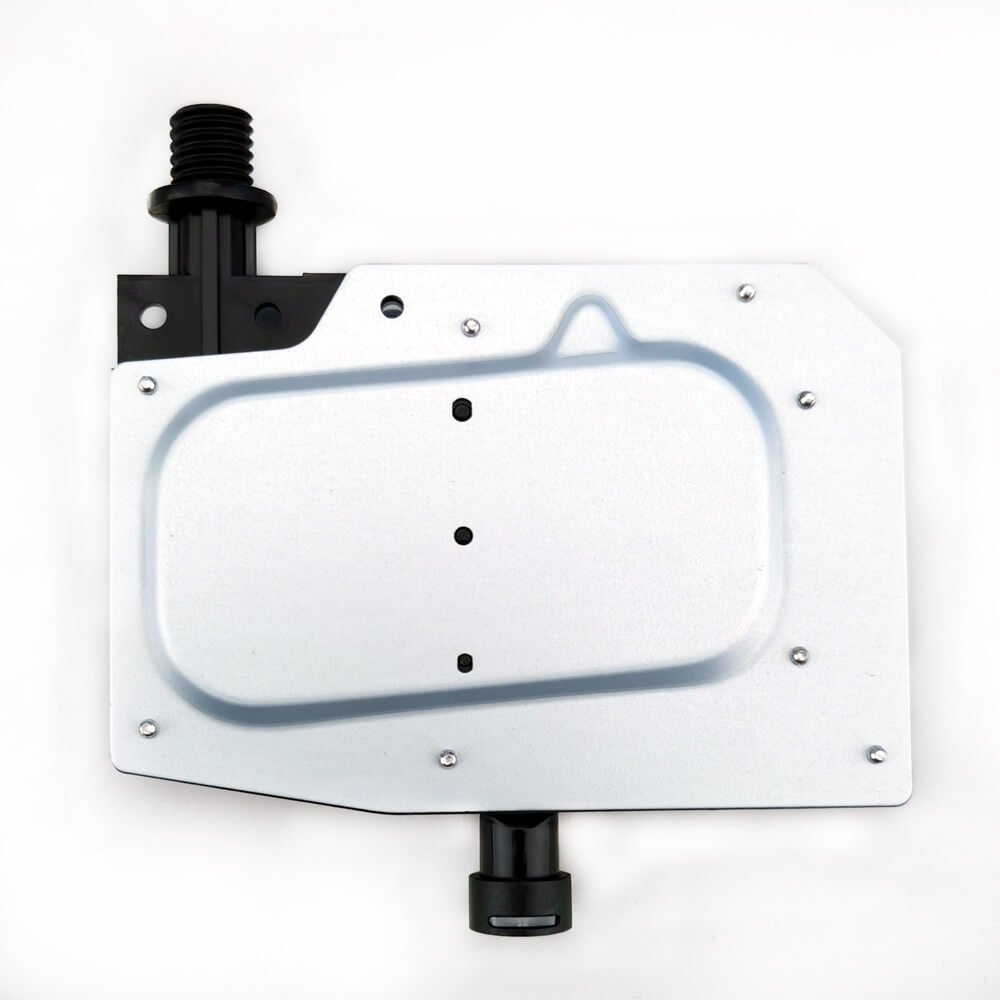
Seiko ink damper
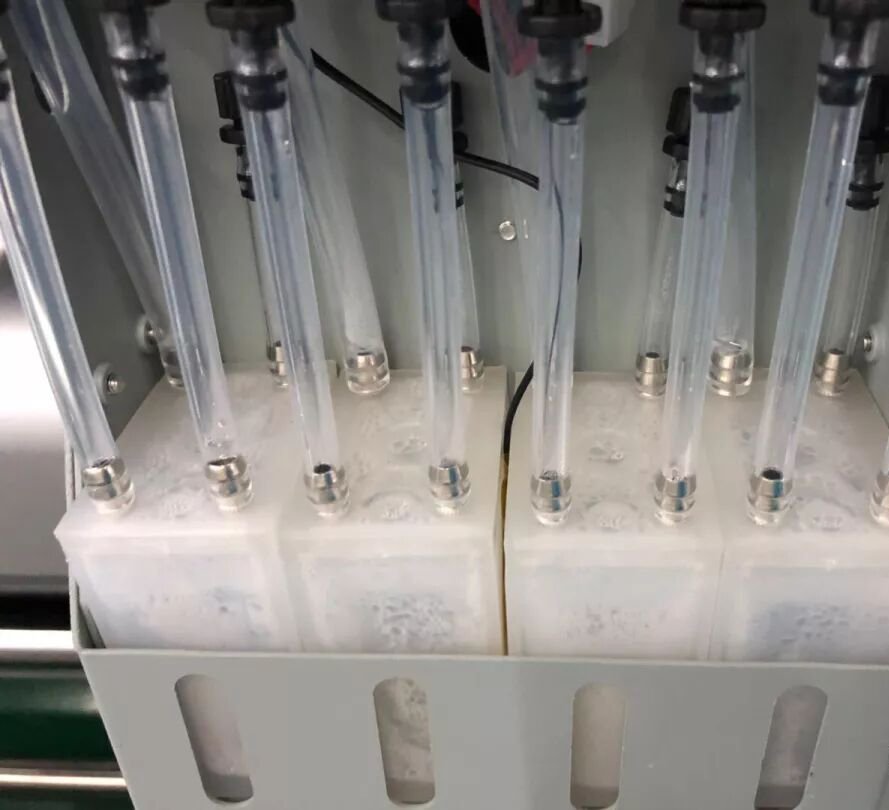
Sub tanks
With these secondary/tertiary reservoirs, the gravity pressure becomes far more controllable. Matching the right sub-tank/damper size to the printhead’s ink flow requirement greatly simplifies ink pressure tuning.
(Some brands use the concept of “water head value,” but since it varies widely, we will not discuss it here.)
3) How to Determine Gravity-Feed Stability?
During testing, optimal pressure is reached when the ink meniscus inside the nozzle forms a crescent shape. Although this is impossible to observe directly, manufacturers verify pressure through fluidity tests that simulate real printing.
4) Cleaning Methods and Machine Differences
- Epson-style printers: Use suction-based cleaning, where the capping station seals against the printhead and a pump draws ink out to clean the nozzles.
- Industrial printheads: Use positive-pressure cleaning. An air pump applies pressure to the sub-tank, forcing ink out through the nozzles for cleaning.
5) Where Does the Siphon Effect Start?
- Eco-solvent/photo printers:
The siphon effect typically begins at the main ink bottle. - Industrial printers:
Siphon action usually starts from the secondary ink tank. Ink is transferred from the main bottles to the sub-tank using a diaphragm ink pump.
The sub-tank contains a float sensor that triggers ink refill or stop signals based on ink level. A safety tank is also added to avoid overflow or malfunction and to stop the system with an alarm.
6) Characteristics of Gravity-Feed Systems
Advantages:
- Simple structure
- Low cost
- Good stability in low-flow and non-demanding environments
Limitations:
As printing speed increases and printheads become more advanced with higher flow requirements, gravity-feed systems become insufficient—especially in UV printers where carriage height is adjustable.
7) Precautions for Gravity-Feed Systems
- Ensure ink tube connectors are fully inserted to prevent air leaks or tube detachment.
- When replacing sub-tanks/dampers, always use the same size and structure as the original. Differences impact ink pressure.
- When switching ink brands, request compatibility test data. Viscosity and surface tension vary significantly.
- Replace filters and dampers regularly. Old filters restrict flow and cause ink shortages.
2. Negative-Pressure Ink Supply Systems
Negative-pressure systems first emerged to solve issues related to adjustable printhead height. Although many believe UV printers popularized negative pressure, early hybrid machines that printed PVC or board materials had already adopted it.
Early systems were complex because they required compressors and vacuum generators. Without an air tank, pressure fluctuated frequently despite being regulated by a vacuum gauge.
1) Working Principle
A negative-pressure system consists of a:
- Negative-pressure pump
- Air storage tank
- Vacuum gauge
- Sub-tank (connected similarly to gravity-feed systems)
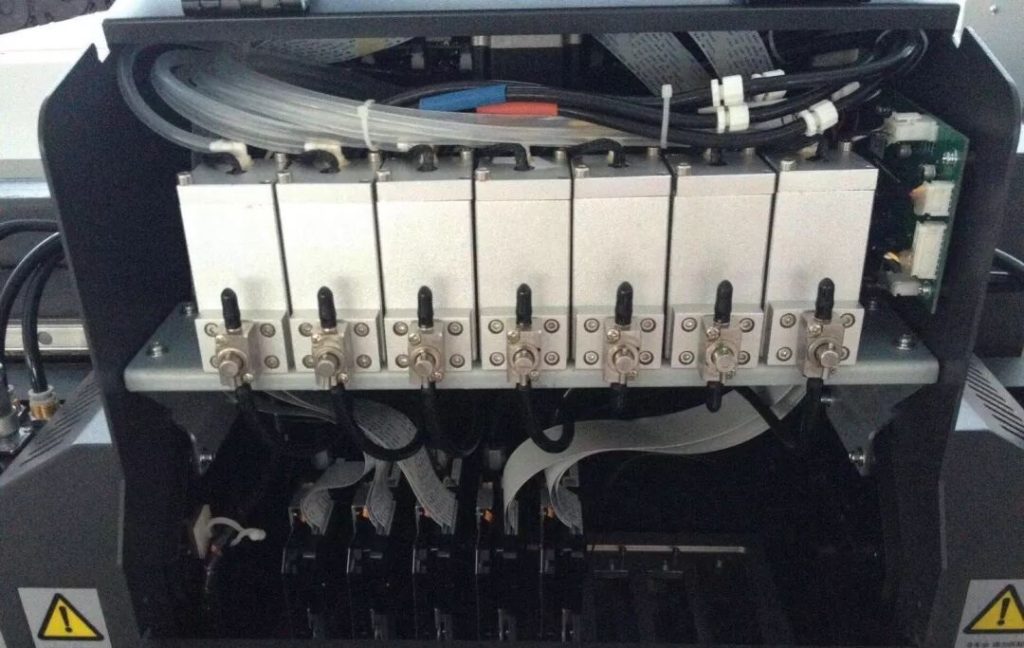
Unlike gravity-feed, the sub-tank in a negative-pressure system is placed above the printhead, allowing ink to naturally flow downward. The vacuum then creates negative pressure inside the tank, effectively “holding” the ink inside instead of letting it drip.
2) Workflow:
- The vacuum pump draws air to create negative pressure in the air tank.
- The vacuum gauge controls the pressure range.
- The negative pressure is applied to the sub-tank.
3) Negative Pressure Calculation
Basic reference value:
Negative Pressure = Distance between ink level and nozzles (cm) × 0.1
Example:
If the ink level is 15 cm above the nozzles → –1.5 kPa.
More precise values require flow tests because different ink viscosities affect performance. Ideally, the system should allow a margin of ±0.2–0.3 kPa to prevent fluctuations during printing.
A well-sealed ink system greatly improves stability.
4) Precautions for Negative-Pressure Systems
- The entire ink circuit must be airtight. Any air leak will cause unstable or failed negative pressure.
- Install check valves to prevent ink backflow under vacuum conditions.
- If the carriage height changes more than 3 cm, slight adjustments to the vacuum level may be necessary.
3. Comparison of the Two Ink Supply Systems
| Item | Gravity-Feed (Siphon) | Negative Pressure |
|---|---|---|
| Suitable for | Photo printers, small equipment | Industrial, UV, high-speed printers |
| Cost | Low | High |
| Structural complexity | Simple | More complex |
| Stability | Sensitive to environment | More stable |
| Height influence | Strongly affected | Height adjustable |
| Ink demand | Low flow | Sensitive to the environment |
4. Conclusion
Both ink supply methods serve different needs:
Gravity-Feed Ink Supply
- Simple, low-cost, widely used in eco-solvent/photo printers
- Suitable for low-flow printheads
Negative-Pressure Ink Supply
- Ideal for high-speed, high-flow industrial applications
- Necessary for UV printers with adjustable carriage height
With proper system selection, good airtightness, and regular maintenance, large-format printers can achieve stable operation and consistently high print quality.