At the Shanghai Advertising Exhibition in March 2019, Japan's Ricoh Company launched their new GEN6 printhead (Ricoh G6 printhead for short). To make the new printhead have the three advantages of high precision, high speed, and wide compatibility with ink, it must be able to fully exert its performance. This is not easy to achieve. In this article, we will share some applications and ideas that must be faced to achieve these three advantages.
1. High Precision
This time, the newly released G6 printhead model is named MH5320, as shown in Table 1. The previously unseen "3" character appears in the second Arabic numeral in its name. As shown in Table 1, this is a designation for a printhead with a 5pl ink droplet. This also indicates that the ink droplets of the Ricoh G6 printhead have changed from 7pl of the G5 to 5pl, and the smaller ink droplets indicate that finer printing patterns can be reflected, which is an obvious improvement in improving pattern details. However, everything is divided into two parts, so the basic ink droplets become smaller, and the large ink droplets will also become smaller in the same gray level (from the original 21pl to 15pl), which will cause new problems for the printing of color blocks, that is, under the same pass conditions, its coverage depth and uniformity will be inferior.
1: Color block influence
Take UV ink printing as an example. When printing, it will be cured by a UV lamp immediately, so the ink droplets on the medium do not spread very much. Therefore, the corresponding relationship between the dot diameter of different ink droplets on the actual medium can be obtained.
For the Ricoh G5 printhead, the relationship between 7, 14, and 21pl ink droplets and actual dot diameter is about 45-50, 55-60, and 60-70 microns. From this, it can be estimated that if 5, 15, and 15pl ink droplets are used for printing, the actual dot diameter will be in the range of 40-45, 50-55, and 58-63 microns. For the maximum ink droplet diameter of the Ricoh G6 printhead, the value is calculated to be 60 microns. If it is interpolated to a color block with 300 dpi accuracy for analysis, at least 6 passes of printing are required to achieve full coverage under normal mechanical accuracy, and 4 passes of printing are also required when the machine accuracy is good. In actual use, not all the nozzles on the printhead are fully open. Under certain redundant conditions, at least 6 passes are usually required on equipment with better machine precision to meet customer delivery requirements. Of course, most equipment with average mechanical precision requires 8 passes of printing to meet customer delivery standards.
| Resolution (dpi) | Ink Droplet Volume | Model | Remark |
| 600 | 2.5-9 | MH5220 | The smallest ink drop volume in the current series |
| 5-15 | MH5320/5340 | New product. Maximum firing frequency of 50kHz when printing in four-level grayscale | |
| 7-21 | MH5420 | Also known as GEN5 | |
| MH5421F/5421MF | |||
| MH5421 | |||
| 300 | 3-21 | GH2220 | Ink circulation inside the printhead |
| 7-21 | MH2420 | ||
| 150 | 15-45 | MH2620 | GEN5 improved version, can adapt to a wider range of inks |
| 27-54 | MH2820 |
Therefore, after using the Ricoh G6 print head, if you want to achieve the depth of the color block printed by the original G5 print head with 6 Pass (21pl*6=126pl ink volume on one dot), you need to use 8 Pass to achieve it (15pl*8=120pl ink volume). Therefore, the output will be affected to a certain extent. Fortunately, the ignition frequency of the new printhead is relatively improved, which will make up for this deficiency, and the overall output is still improved.
When using the G6 printhead for printing, the details of the pattern will also be improved, so the overall pattern quality will be improved. However, in actual applications, it is found that some printing equipment cannot achieve a uniform color block effect for color block patterns even with multiple Passes. Therefore, simply using multiple passes to solve the problem of uniformity of large color blocks is not very effective, or the key to solving this problem is to improve the equipment hardware and software to achieve the desired effect.
2: Influence of small ink droplets
Compared with large ink droplet printing, the speed loss rate of small ink droplets flying in the air will increase. That is to say, under the same spacing printing, the small ink droplet positioning effect of the Ricoh G5 print head is better than that of the Ricoh G6 print head. Therefore, in terms of the three-dimensional feeling of the pattern, the G5 will be better than the G6 print head. Therefore, when using G6, in order to print a good and exquisite pattern, the distance between the print head and the medium needs to be smaller. At the exhibition, some patterns printed by small ink droplet nozzles were observed, and there were different degrees of ink floating problems. Therefore, after enabling small ink droplets, the airflow around the print head will also increase the impact on the ink droplet placement, which needs to be paid attention to.
Because the G6 print head has a small ink droplet volume, it is more likely to have uneven printing when printing color blocks than the G5. If this is to be solved, the mechanical accuracy and the control accuracy of the driving waveform need to be improved to match the printhead, which requires time, energy, and cost to solve.
2. High Speed
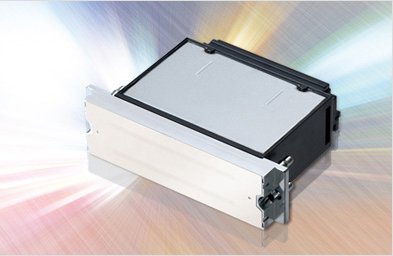
Figure 1 shows the basic appearance and wiring of the Ricoh G6 print head and its basic technical parameters.
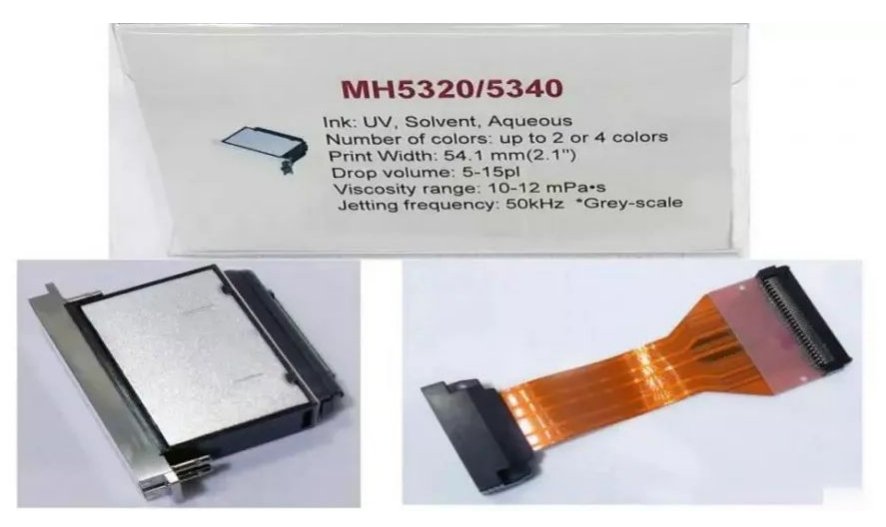
The firing frequency of the new G6 print head has been significantly improved. The market initially thought that the use of thin-film technology made the piezoelectric film thinner and vibrate faster. However, after communicating with some technical personnel from Ricoh at the exhibition, their reply was: that solid piezoelectric films are still in use, but they have been specially processed to make them vibrate faster.
At present, Ricoh's promotional page indicates that it has an ignition frequency of 50kHz under grayscale conditions, which is also a relatively high level of vibration of solid piezoelectric sheets in the current market-oriented printheads. According to this calculation, if 5pl ink droplets are used for printing, wouldn't the ignition frequency be higher than 100kHz? At present, most of the printheads with an ignition frequency exceeding 100kHz are made of thin film technology, and the minimum ink droplet volume is no more than 5pl. The piezoelectric sheet of the G6 printhead is not made of thin film technology, but it has achieved the effect of thin film technology. This also shows that Ricoh's technology in this regard is particularly powerful. At the same time, at the exhibition, I also talked to Ricoh's technicians about the highest ignition frequency at this minimum ink droplet. He only said that he had done experiments and could print 5pl ink droplets normally under 120kHz conditions, but could he achieve stable printing at such a high frequency? It is estimated that not all standards were met during the test, so it was not publicly reflected on the external promotional page.
At present, there is no actual machine that can print at a 50kHz firing frequency under grayscale conditions. At the exhibition, most manufacturers still print at a firing frequency of about 35kHz. Why can't they print at a frequency of 50kHz? It is estimated that there are still many different types of problems that need to be solved one by one to achieve the highest output indicators provided by the printhead manufacturers.
1. Ink Supply
For the G5 print head, when working at the maximum firing frequency, the maximum ink volume per minute is about 33 ml, and the G6 print head increases to 57 ml, indicating that the maximum flow rate of the new G6 print head has increased to more than 88%. Therefore, it is necessary to check and verify whether the original ink supply system is still within the reasonable range of this flow requirement and pressure loss. Otherwise, the firing frequency will increase, the ink supply system will be inappropriate, and it will be easy to get clogged. However, at present, many domestic equipment companies only pay attention to the driver card or ink when using new print heads, so the ink supply system also underestimates the important business content that needs to be changed accordingly. Of course, in order to protect the service life of the print head, the selection of the head filter is also an important experimental content. However, due to this low pressure, there are few filters with small flow rates, which need to be developed by powerful filter manufacturers who can cooperate with the development.
2. Printhead
When the jetting frequency of the piezoelectric chip is increased, the heating problem of the printhead itself will become more obvious. Therefore, it is not bad when used for UV ink, but when used for other non-heating inks, the temperature rise in the printhead will affect the normal printing quality. At the same time, the heat dissipation problem around the printhead should also be considered. Because many devices have not yet fully used their jetting frequency, the problem of temperature rise inside the printhead has not attracted much attention, and this needs to be paid attention to later.
3. Ink
The jetting frequency of the Ricoh G6 print head has been greatly improved, so its high-frequency physical and chemical properties should be taken seriously. The main question is whether its shear rate still has Newtonian fluid characteristics at high frequencies. If there are any changes, it is still necessary to verify whether the print head can work properly.
Some ink factories we have learned about have found that most ink factories only focus on static viscosity and surface tension, and do not do much research and testing on the changes in dynamic physical and chemical parameters under high-frequency conditions. Therefore, to develop inks suitable for the new G6 print heads, if conditions permit, it is necessary to test these characteristics, hoping that they can all pass the environmental test normally.
At the same time, for print heads with smaller ink droplets, the diameter of the nozzles and the volume of the piezoelectric cavity will also be reduced accordingly, which requires the viscosity of the ink to be reduced accordingly. Therefore, for the ink of the G6 print head, it is best to be different from the ink of the G5 at least in viscosity to meet the high-frequency printing requirements of the G6 print head.
4. Mechanical
To achieve an ignition frequency of 50 kHz, if the accuracy of the moving direction of the cart is 600 dpi, the moving speed of the trolley will reach 2.1m/s. When moving at such a high speed, it will bring more problems and increase the cost of the machine. If the accuracy of the moving direction is 720dpi, the moving speed of the cart can reach 1.76m/s. As we all know, when the pattern quality is required to be general, the ratio of the cart moving speed to the falling speed should be at least 1: 4, and the actual falling speed of the G6 printhead at 1mm away from the printhead is usually about 6-7m/s. To meet this requirement, only the horizontal moving speed can be selected for printing with an accuracy of 720dpi, and if 600dpi is selected, the ratio of the horizontal speed to the vertical speed should be less than 1: 4. Of course, at this time, when customers do not have high requirements for the pattern, or when they are concerned about the output, they can use this option. At the same time, for the cart with a higher moving speed, its acceleration area should not be too large, and the acceleration can only be increased. When the acceleration exceeds 1G, it will challenge the stability of the ink supply system. Therefore, in order to increase the speed of the cart without excessive pressure fluctuations in the ink supply path, a pressure fluctuation absorber should be added to the ink supply system to reduce excessive pressure mutations on the ink supply path, and the accuracy and anti-fluctuation ability of the negative pressure system should be further improved.
| Customers | Ink | Color | Method | Performance |
| A | UV | CMYK | FB+R2R | Cart scanning speed: 1.5m/s Resolution: 600*600dpiNumber of passes: 4Pass Jetting frequency: 35.4kHz |
| B | UV | CMYK+LcLm | FB | Cart scanning speed: 1.2m/s Resolution: 720*1200dpiNumber of passes: 4Pass Jetting frequency: 34.0kHz |
| C | UV | CMYK+LcLm+W | FB | Cart scanning speed: 1.4m/s Resolution: 600*1200dpiNumber of passes: 4Pass Jetting frequency: 34.3kHz |
5. Optimal jetting frequency select
Table 2 shows some actual cases collected by Ricoh that Chinese customers have used for G6 printheads. The inks used in the three cases are all UV inks, but the ignition frequencies on each company's equipment are different (34kHz, 34.3kHz, 35.4kHz). Perhaps the ignition frequency range of this point is within the range of the best ignition frequency and ink droplet speed of the printhead, but usually, the range of this optimal working frequency point will not be accommodated within such a large range, that is say, at least one or two of the three cases are not selected at a suitable and stable ignition frequency point. If you want the printhead to work stably and efficiently, you must find the ignition frequency point that suits it. This is the best way to use the printhead well.
Usually, ink manufacturers will first find the lowest stable jetting frequency to conduct basic ink tests and pass them. This frequency is usually before the piezoelectric piece resonates, and in most cases, it is found at about 2.5 times the maximum operating frequency. Taking the Ricoh G6 print head as an example, this point is about 20kHz (grayscale printing). In other words, if you want to use a certain ink on the G6, it must be stably printed at least at the 20kHz jetting frequency. After that, when the ignition frequency increases, the speed of the ink droplets will show oscillations and fluctuations, and it can usually be set as a stable operating frequency point within the second resonance wave platform range.
As shown in existing application cases, the ignition frequency point of about 35kHz may only be a stable printing frequency. Of course, if this frequency point is finally used as the actual ignition frequency of Ricoh G6, it will be very different from the 50kHz frequency advertised by G6. At this time, compared with the G5 printhead, the actual output has not increased by more than 80%, but only increased by about 30%. Please pay attention to this. Since the width of the third resonance platform on the ignition frequency and ink droplet velocity curve is usually smaller than that of the second resonance platform, the stability of inkjet printing is worse than the working state of the second resonance platform, so the ignition frequency of the third resonance platform is usually used as the highest printing frequency point.
It is still difficult to regard this point as the ignition frequency point for long-term stable printing. On the one hand, it needs to be adjusted repeatedly and carefully by the ink droplet observer, and on the other hand, it can make efforts in ink, ink supply, and mechanics.
At the exhibition after the second half of 2019, we found that Ricoh added the application condition of 50 kHz to the ignition frequency parameters of grayscale printing, that is, 50 kHz for two-point printing and 40 kHz for three-point printing. It was also found that after a period of trials, it was still difficult to achieve stable printing at a frequency of 50kHz in the four-level grayscale printing mode. Therefore, the printing requirements at different ignition frequencies are indicated on its promotional page. In actual interviews with some customers, it was found that the Ricoh G6 print head can still work stably if printing is carried out following this requirement.