About inkjet
Inkjet technology utilizes tiny droplets of ink to facilitate direct printing without the device coming into contact with the printing surface. Because this technology supports non-contact printing, it can be applied to various media and is now being introduced into a wide range of fields from general to industrial. A simple structure that combines an inkjet printhead with a scanning mechanism has the advantage of reducing equipment costs. Additionally, because they do not require printing plates, inkjet printers have the advantage of saving print setup time compared to traditional printing systems (such as screen printing) that require fixed printing blocks or printing plates, etc.
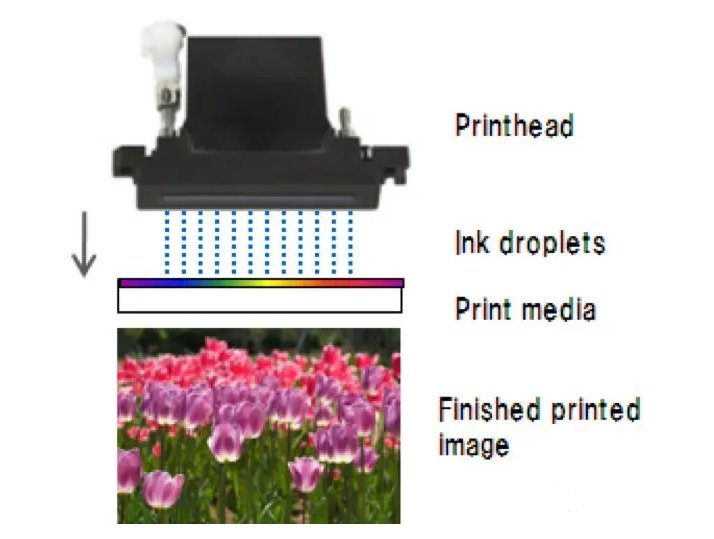
Inkjet Printing Principle
There are two main methods of inkjet printing, namely continuous inkjet printing (CIJ, continuous ink flow) and drop-on-demand inkjet (DOD, ink droplets are only formed when needed); drop-on-demand inkjet is divided into three different types Category: Valve inkjet (using needle valve and solenoid to control the flow of ink), thermal foam inkjet (the flow is rapidly heated by a micro-heating element, causing the ink to evaporate in the print head to form bubbles, forcing the print Ink is ejected from the nozzle), and there is piezoelectric inkjet.
Piezoelectric Inkjet Print Heads
Piezoelectric printing technology uses piezoelectric materials as the main active element inside the printhead. The material produces a phenomenon known as the piezoelectric effect, in which an electric charge is generated when a (natural) substance is acted upon by an external force. Another effect, the inverse piezoelectric effect, also occurs when electric charges act on the material, causing the material to deform (move). Piezoelectric printheads contain PZT, a piezoelectric material that has been electrically polarized. All piezoelectric printheads work in this same way, deforming materials to eject ink droplets.
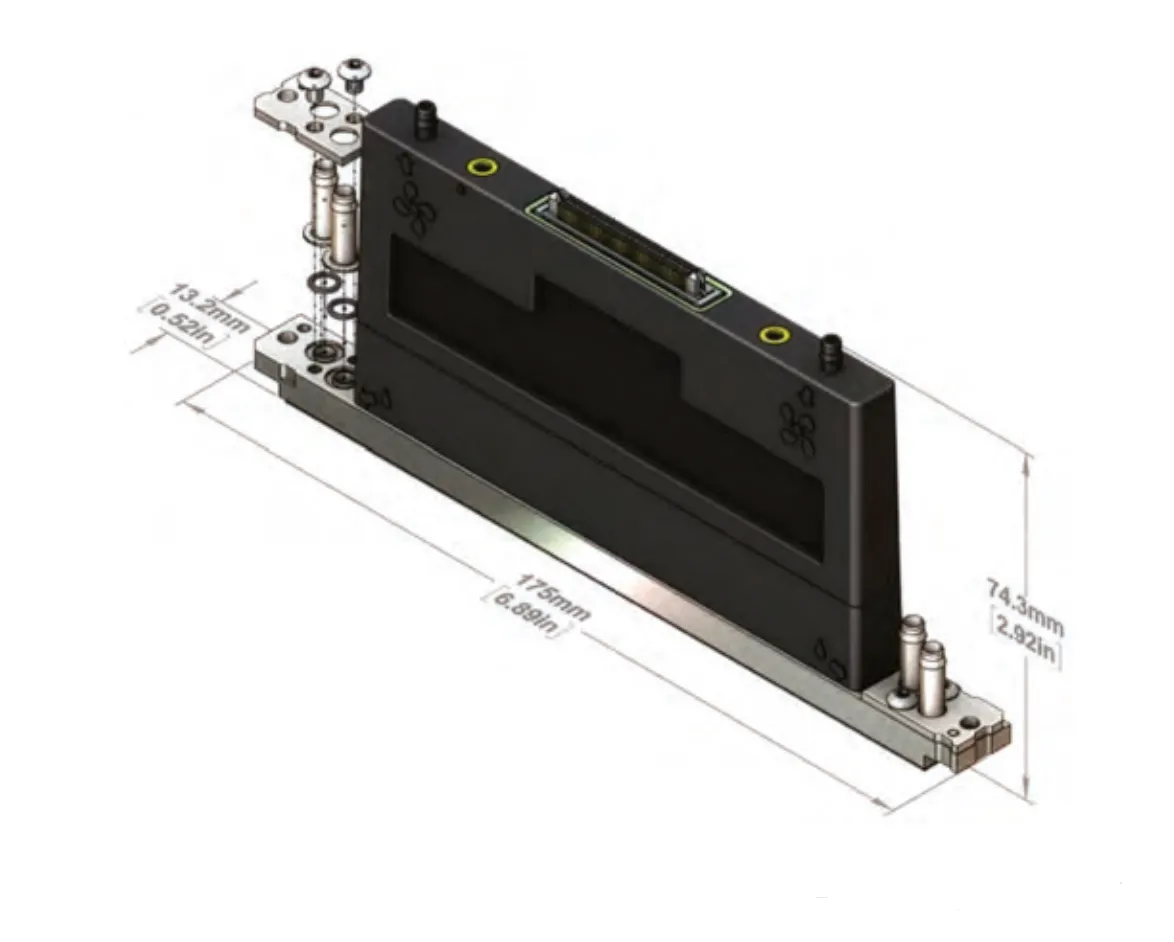
A print head is a component of a printing system with nozzles that eject printing ink. A piezoelectric printhead consists of an active component called an actuator, with a series of lines and channels forming a so-called "fluid path", and electronic components to control the individual channels. The driver contains several parallel walls made of PZT material, forming channels. Electric current acts on the ink channel, causing the channel walls to move. The movement of the walls of the ink channels generates acoustic pressure waves, which force the ink to eject from the nozzles at the end of each channel.
Printhead Manufacturers
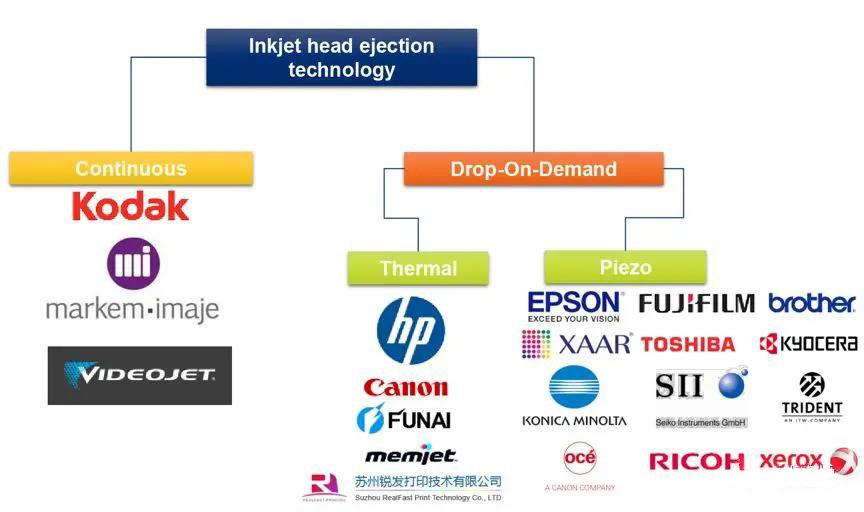
Technical Classification of Major Inkjet Print Heads Manufacturers
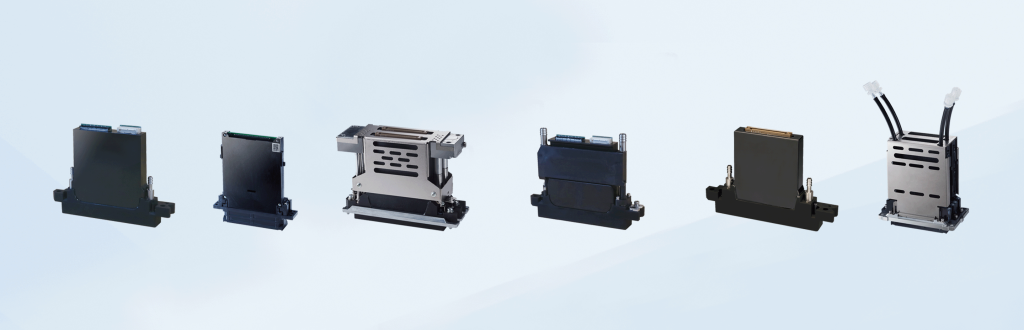
The mainstream print heads currently used in the UV inkjet printing market are GEN5/GEN6 from Ricoh Company of Japan, KM1024I/KM1024A from Konica Minolta Company of Japan, Kyocera KJ4A series of Kyocera Company of Japan, Seiko Electronics 1024GS, Starfire SG1024 of the United States, and Toshiba CE4M of Japan. Epson Japan. There are others but they are not introduced as mainstream printheads.
| Brand | Ricoh | Kyocera | Konica | Starfire | Seiko | Toshiba | ||
| Printhead | GEN5 | GEN6 | KJ4A | 1024i | 1024A | SG1024 | 1024GS | CA4 |
| Nozzle Number | 1280 | 1280 | 2656 | 1024 | 1024 | 1024 | 1024 | 318 |
| Ink Droplet Size | 7-14-21PL | 5-15PL | 4-6-10PL | 6/13PL | 6/12PL | 10PL | 7PL | 6PL |
| Print Width | 54MM | 54MM | 112MM | 72MM | 72MM | 65MM | 72MM | 54MM |
| Jetting Frequency | 20-30KHZ | 50KHZ | 30KHZ | 45KHZ | 60KHZ | 45KHZ | 30KHZ | 6-13KHZ |
| Resolution | 600 dpi | 600 dpi | 600 dpi | 360 dpi | 360 dpi | 400 dpi | 360 dpi | 150 dpi |
Kyocera Print heads
In the field of UV printing, Kyocera print heads are now evaluated as the fastest and most expensive printheads. Currently, domestic manufacturers equipped with this nozzle include Hantop, Dongchuan, JHF, and Flora. Judging from the performance of the market, there are mixed reviews. In terms of accuracy, it has indeed reached a new level. In terms of color performance, it is not very good. Ink matching is available. There are not many inks currently available. Speed requires smoothness of the ink, and precision requires finer ink droplets, the technical requirements are higher, and the cost is higher. In addition, the cost of the printhead itself is also high, and there are few manufacturers and players, which pushes up the price of the whole machine. This printhead performs better in textile printing applications. Is it because of the different properties of the ink?
Ricoh Print heads
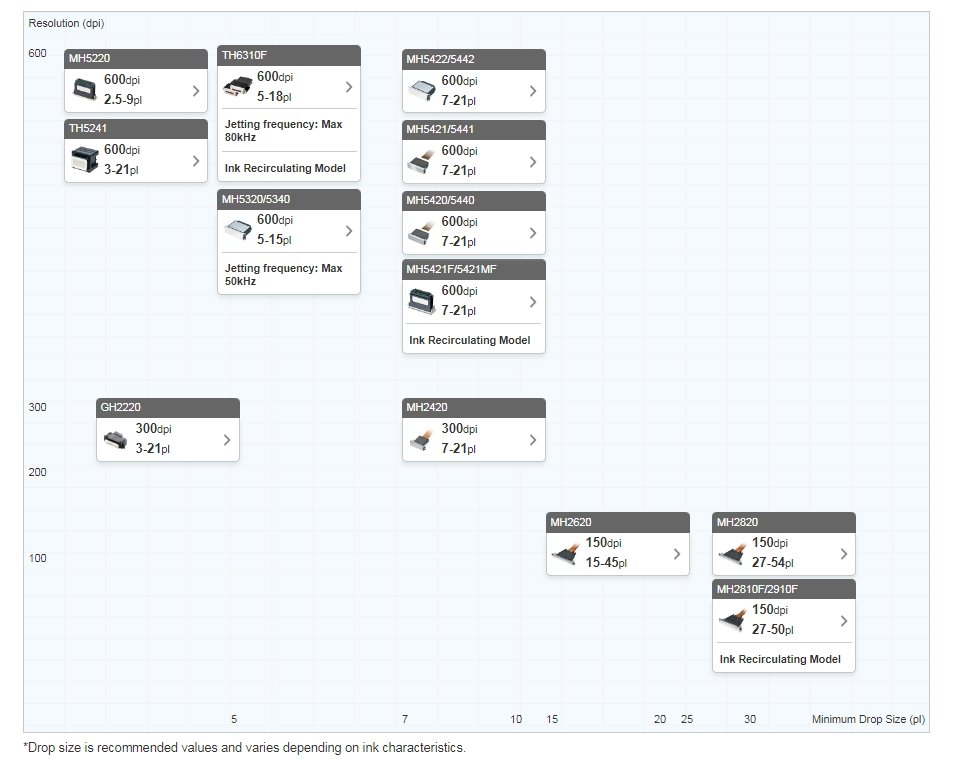
The other parameters of the GEN5/6 series, commonly known in China, are the same. The main differences are in two aspects. First, the smallest 5pl ink drop size and improved ejection accuracy can produce excellent print quality without feeling grainy. This printhead enables high-resolution 600 dpi printing with 1,280 nozzles configured in 4 x 150 dpi rows. Second, Greyscale’s maximum frequency is 50kHz, which increases productivity. Another small change is that the cables are separated. According to the manufacturer's technician, this change was caused by some people on the Internet attacking this cable defect. It seems that Ricoh still cares about the opinions of the market! In the current UV market, Ricoh print heads should have the highest share. The representation is accurate, the colors are good, and the overall supporting facilities are complete, making it the most cost-effective!
Konica Print Heads
An inkjet printhead with a multi-nozzle structure and a full-nozzle independent drive system that is capable of discharging from all 1024 nozzles simultaneously. The high-density structure features high-precision alignment of 256 nozzles in 4 rows to improve positioning accuracy for high-definition print quality. The maximum drive frequency (45kHz) is approximately 3 times that of the KM1024 series. By using an independent drive system, a drive frequency that is approximately 3 times higher than the KM1024 series (45kHz) can be achieved. This is the ideal inkjet printhead for developing single-channel system inkjet printers capable of high-speed printing. The newly launched KM1024A series, up to 60 kHz, with a minimum accuracy of 6PL, has greatly improved both speed and accuracy.
Seiko Print Heads
The Seiko series print heads have always been controlled at the extreme system and were very successful in their application in inkjet printers. However, when they switched to the UV market, they were not so smooth and were completely overshadowed by Ricoh's limelight. The 508GS/1024GS currently being promoted is a good printhead, with improved accuracy and speed that can compete with Ricoh series printheads. Few manufacturers are using this printhead, so there are not many players in the market, and the information consumers can receive is limited. They do not know enough about the performance and performance of this printhead, which also affects customers' choices.
Starfire (Fuji) Print Head
This printhead is rugged and built to withstand harsh industrial textiles and other applications. It uses field-proven materials with continuous ink recirculation and single-color operation, engineered on a replaceable metal nozzle plate to deliver 1024 channels at 8 dots/inch per in. 400-point speed continuous output, providing consistent output over a long service life. This unit is compatible with solvent, UV-curable, and water-based ink formulations. It's just that this printhead was buried due to some market reasons, but it just faded out of the UV market and is still shining in other fields.
Toshiba Print Head
The unique technology of ejecting multiple ink droplets onto a single dot creates a wide range of grayscales, with a minimum of 6 pl to a maximum of 90 pl (15 drops) per dot. Compared with conventional binary inkjet heads, it is more suitable for showing smooth density gradations from light to dark in various industrial printing. CA4 achieves 28KHz in 1drop (6pL) mode, which is twice that of the existing CA3 using the same interface. 7drop mode (42pL) is 6.2KHz, 30% faster than CA3. Its line speed is 35 m/min in (6pl, 1200dpi) mode and 31m/min in (42pl, 300dpi) mode, suitable for high-productivity industrial applications. Excellent piezoelectric process and jet control technology enable precise dot placement. The CA printhead is equipped with a chassis with water channels and water ports. Circulating thermally controlled water in the chassis produces a uniform temperature distribution in the print head. It makes the jetting performance more stable. The advantages of the official website are clear, and the single-point printing 6PL accuracy and speed are guaranteed. At present, the domestic UV market is still mainly promoted by one system. From the perspective of cost and effect, it still has advantages. There should still be a market for small desktop UV equipment.
Epson Print Head
Epson is the most widely used and well-known printhead, but it has been used in the photo market before. The UV market is only used by some manufacturers who modify machines. It is more used in small desktop machines with precision, but the mismatch of ink leads to a greatly reduced service life. It has not formed a mainstream influence in the UV market. However, in 2019, Epson developed a lot of printhead permissions and released new printheads. The UV printing market belonging to Epson is about to start!
The choice of print heads is a key strategic planning for equipment manufacturers. You reap what you sow, and it will affect the development trajectory of the company in the next few years. For customers, it does not have such a big impact. No matter whether the cat is black or white, it is a good cat as long as it catches the mouse. The nozzle also depends on the equipment manufacturer's mastery of the development of this nozzle. At the same time, he also needs to consider the cost of use, nozzle cost, and consumables cost. In general, the good and expensive ones are not necessarily suitable for me. I must jump out of the various marketing of various manufacturers, think about my business plan, the overall development needs, and choose the right one for myself!
Uv equipment itself is a production equipment, that is, a large-scale production tool. Production tools should be stable and easy to use, low cost of use and fast and complete after-sales maintenance. The pursuit is cost-effectiveness.