When you are buying a new UV inkjet printer, you should ask some basic questions about its printer heads.
1. What brand and model of printer head does the printer use?
Most sellers usually tell you the brand of the print head when you ask about the print head, rather than the detailed model of the print head.
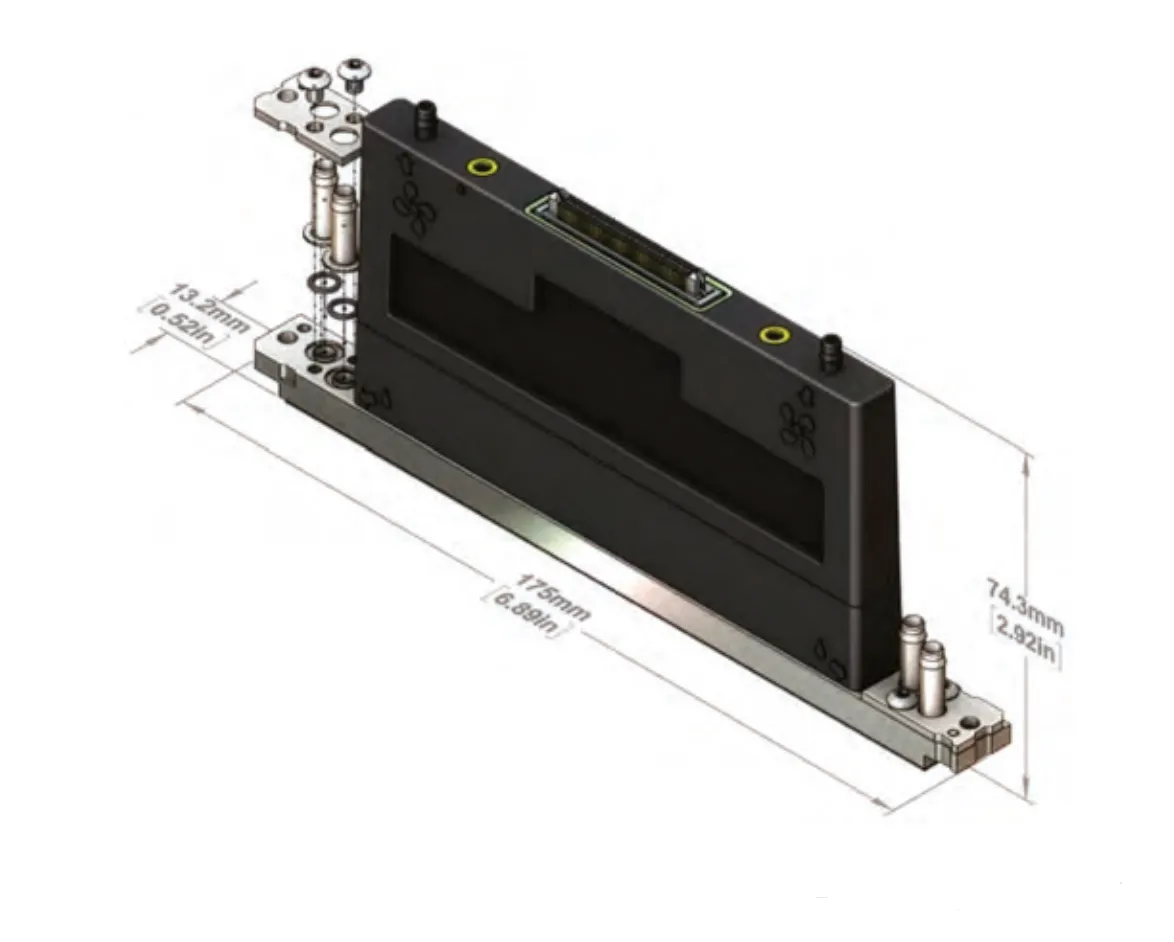
For example, the common Ricoh printheads on the market include the Ricoh G5 print head and the latest generation of Ricoh G6 print heads. Among them, the Ricoh GEN5 print head is divided into water-based and oil-based, long-line and short-line, two-channel and four-channel.
2. Is this printhead designed for solvent inks or specifically designed for UV inks?
Some printheads were not originally made to print UV inks.
An example is the early model Epson printheads, when Epson itself did not produce UV-curable printers, Epson only produced water-based and solvent-based printers for photo printers and artwork. This does not mean that they cannot jet UV-curable inks, it just means that the printhead may require special inks.
Therefore, this question helps you understand whether the printhead is designed from the beginning to print UV inks.
3. How many other printers use the same printer heads? Do they have any problems?
Konica Minolta print heads, Ricoh print heads, Kyocera print heads, Xaar print heads and Starlight print heads are all piezo print heads. Compared with Epson piezo print heads, these are industrial-grade piezo print heads.
4. How many nozzles does each printer head have?
This can help you understand the speed or velocity of your printer.
5. How many printer heads does the printer have?
There are single-color print heads that can only print one color, and there are multi-color print heads that can print multiple colors. Take the Ricoh GEN5 print head as an example. It has two-channel and four-channel models. When used on the machine, one print head can print only one color, or one print head can print two colors (both two-channel and four-channel are available), and one print head can print four colors (four-channel print head is available).
6. How many printer heads are there for each color?
This will tell more about how slowly or quickly your printer can jet ink.
7. How many picoliters are the ink droplets in the printhead? Is there a variable droplet capacity?
The smaller the droplet, the better the print quality. However, smaller droplet sizes will reduce the speed of the printhead system. Similarly, printheads that produce larger droplet sizes do not provide the same print quality, but the print speed is often better.
8. Are there special heads for white ink or varnish? Are they the same model as the CMYK heads?
Since white ink works better with larger nozzles, some printers have a "white drop size advantage" for white ink only. Other printers use the same head for any and all colors. For varnish, it's best to ask an experienced printer operator and printer designer which head is best for varnish. Dealing with varnish is not as easy as dealing with ink. On a comparable basis, make sure you have a recirculation system for your white ink (otherwise the white particles will settle and clog the nozzles).
9. Who is responsible for printhead replacement?
If this piezo head fails, who is responsible for paying for the replacement head? What are the most common causes of print head failure? Which failure causes are covered by the warranty? Which print head failure causes are not covered by the warranty? Is there a limit to the number of print head failures covered per unit time? If the failure is caused by user error, most manufacturers will require the user to pay for the replacement print head. Most failures are indeed user error, with the most common cause being head impact.
10. What is the print height of the print head? Can print head collision be avoided?
Collisions are the most common cause of premature print head failure (improper media loading, which causes bending, media rubbing against the fragile nozzle plate, or not passing through the printer correctly). A head collision may damage only a few nozzles or the entire print head. Another cause is continuous flushing, which can damage the nozzle system.