In UV printing applications, ink droplet size (droplet volume) and printing speed are always two core parameters that must be balanced against each other. They not only have a direct impact on image resolution and visual quality but also determine overall productivity and cost per print. Understanding the relationship between these two factors helps users make more informed decisions when configuring equipment and selecting printing modes for different application scenarios.
In simple terms:
- Pursuing ultimate image quality usually means smaller droplets, higher resolution, and more passes, resulting in relatively slower printing speeds.
- Pursuing high efficiency and mass production typically relies on larger droplets, fewer passes, and higher scanning speeds, with some compromise in fine detail.
Below, we systematically analyze the relationship between ink droplet size and printing speed from multiple perspectives, including droplet characteristics, printhead technology, printing modes, and substrate factors.
1. Characteristics and Applications of Small Droplets
Small droplets (typically ≤ 7 pl)
1) Clear advantages in image quality
Small droplets allow for denser pixel placement within the same area. Their finer edges help reduce jaggedness, producing sharper image contours and crisper text edges. In gradient areas, smaller droplets also enable smoother tonal transitions, resulting in better depth and overall image refinement.
2) Relatively lower printing efficiency
Because each droplet covers a smaller area, more droplets are required to print the same image size. This is usually combined with a higher number of passes to build up sufficient ink density. As a result, printhead scanning cycles and total printing time increase, reducing overall output speed.
3) Typical application scenarios
- Phone cases and digital accessories viewed at a close distance
- Cosmetic packaging and gift packaging
- High-end customized products with high added value and strict detail requirements
In these applications, image precision and surface quality are often more important than production speed. Small-droplet solutions can significantly enhance perceived product value.
2. Characteristics and Applications of Large Droplets
Large droplets (typically ≥ 10 pl)
1) Outstanding efficiency advantages
Larger droplets cover a wider area with each firing. With the same number of passes, images can be filled more quickly, making this approach ideal for large, solid areas or graphics viewed from a distance. When combined with high-speed scanning, overall machine productivity can be greatly improved.
2) Limited fine-detail performance
Due to their larger volume, individual droplets are more noticeable in high-resolution images or small text. This may result in slight graininess or loss of fine detail, especially when viewed at close range.
3) Typical application scenarios
- Outdoor advertising graphics
- Large display boards and backdrops
- Corrugated cartons, industrial markings, and other cost- and efficiency-oriented applications
For these uses, viewing distance is usually greater, and extreme detail is less critical. Large-droplet solutions maintain acceptable color performance while significantly improving production efficiency.
3. How to Balance Speed and Quality
1) The printhead is the decisive factor
The physical structure and technical parameters of the printhead form the foundation for both droplet size control and printing speed.
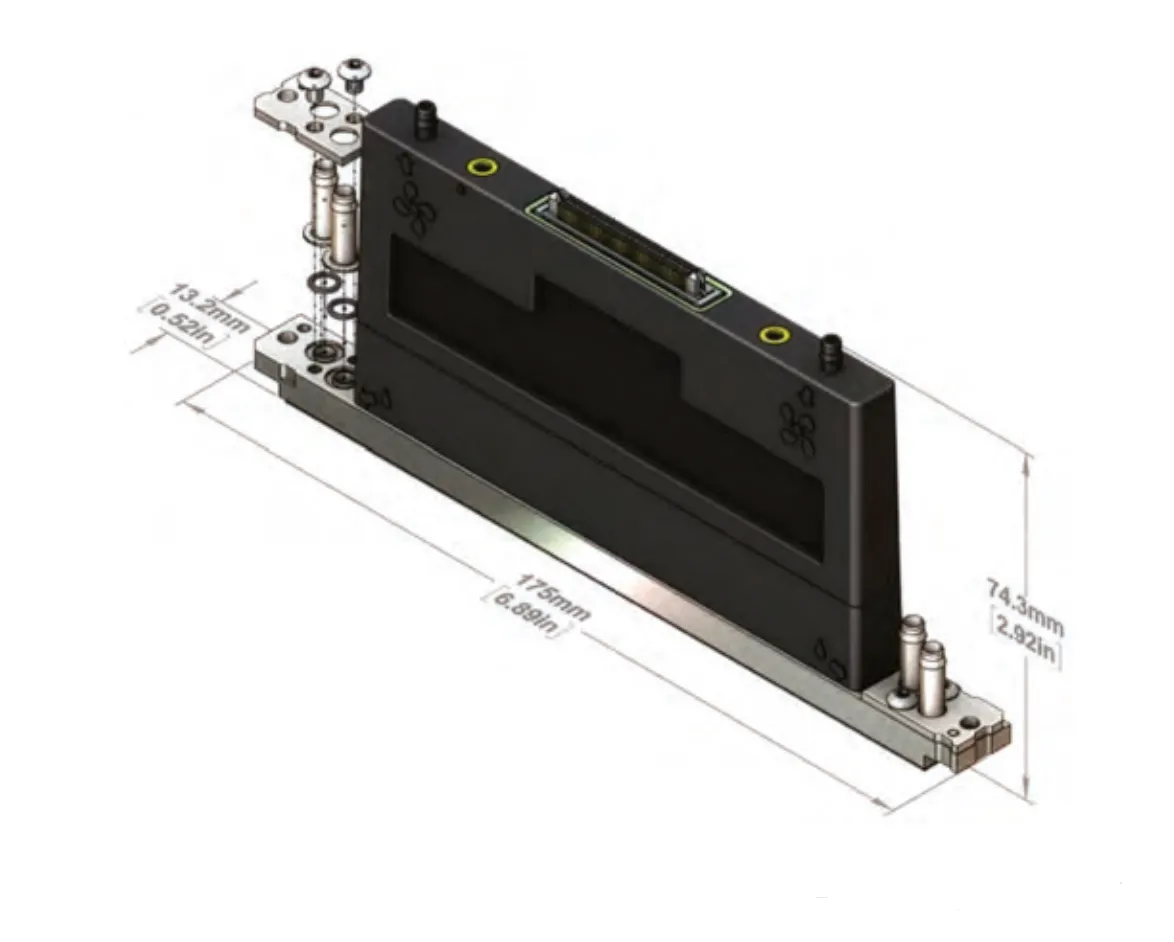
- High-precision printheads (such as certain Epson models): Minimum droplet sizes can be as low as 3.5 pl, making them suitable for high-resolution output. However, nozzle count and industrial durability are relatively limited, so they are more commonly used in detail-oriented applications.
- Industrial-grade printheads (such as Seiko and Konica): Individual droplet volumes are larger, but these heads feature more nozzles and higher firing frequencies. This allows them to maintain stability while achieving high-speed output.
Therefore, printing speed cannot be judged by droplet size alone. Nozzle count, firing frequency, and long-term stability are equally critical.
2) Variable droplet (grayscale) printing technology
To overcome the traditional trade-off between speed and quality, more UV printers now adopt variable droplet technology, also known as grayscale printing.
This technology allows a single printhead to dynamically combine large, medium, and small droplets depending on image requirements:
- Areas with uniform color and low detail requirements use larger droplets for fast filling and higher efficiency.
- Areas with rich detail or smooth gradients switch to smaller droplets for precise rendering and improved image quality.
With this approach, speed and precision can coexist within the same print, delivering higher overall efficiency.
3) Selection of printing modes
In practical operation, the different printing modes available in RIP software or printer control panels are essentially preset combinations of:
- Droplet size or droplet combination strategy
- Number of passes
- Printhead movement speed
Common mode characteristics include:
- High-speed/production mode: Fewer passes, a preference for larger droplets, and fast output—ideal for large-volume orders.
- High-quality/fine mode: More passes and smaller or more complex droplet combinations, sacrificing speed to achieve higher resolution.
- Balanced mode: A compromise between speed and quality, suitable for most commercial printing jobs.
Choosing the right printing mode is crucial for improving overall efficiency without compromising image quality unnecessarily.
4) Influence of substrates
Substrate properties can amplify or reduce the visual impact of droplet size differences.
- Smooth, high-density surfaces (such as glass, acrylic, and coated metal): Ink spread is minimal, making the advantages of small droplets more apparent and enabling higher precision.
- Porous or rough surfaces (such as fabrics and uncoated paper): Ink spreads more easily, which can reduce the effectiveness of small droplets. In such cases, increasing the ink volume or adjusting the printing mode may be necessary for compensation.
As a result, droplet size and printing mode often need to be optimized through real-world testing on different materials.
4. How to Choose the Most Suitable Solution
1) Image-quality-driven businesses
If your primary customers are in high-end, high-value sectors—such as premium packaging, cosmetics, or precision electronic panels—it is recommended to prioritize equipment that supports small droplets or advanced grayscale printing technology to ensure stable, repeatable, high-quality output.
2) Productivity- and efficiency-driven businesses
For outdoor advertising, large-format graphics, or industrial mass production where viewing distance is greater, UV printers equipped with industrial printheads featuring higher nozzle counts and firing frequencies are better suited to reducing cost per print and improving delivery efficiency.
3) Businesses with diverse application needs
For users who need to handle both fine-detail products and high-volume orders, UV printers with high-quality variable droplet technology are particularly valuable. They can flexibly adjust output strategies based on job requirements, dynamically balancing speed and quality to maximize overall business performance.
Conclusion
There is no absolute advantage or disadvantage when it comes to ink droplet size versus printing speed. The key lies in matching these parameters to the application scenario, substrate characteristics, and business model. By selecting the appropriate printhead type, printing mode, and droplet control technology, UV printers can maintain excellent image quality while fully unlocking their production potential—delivering greater long-term value to users.