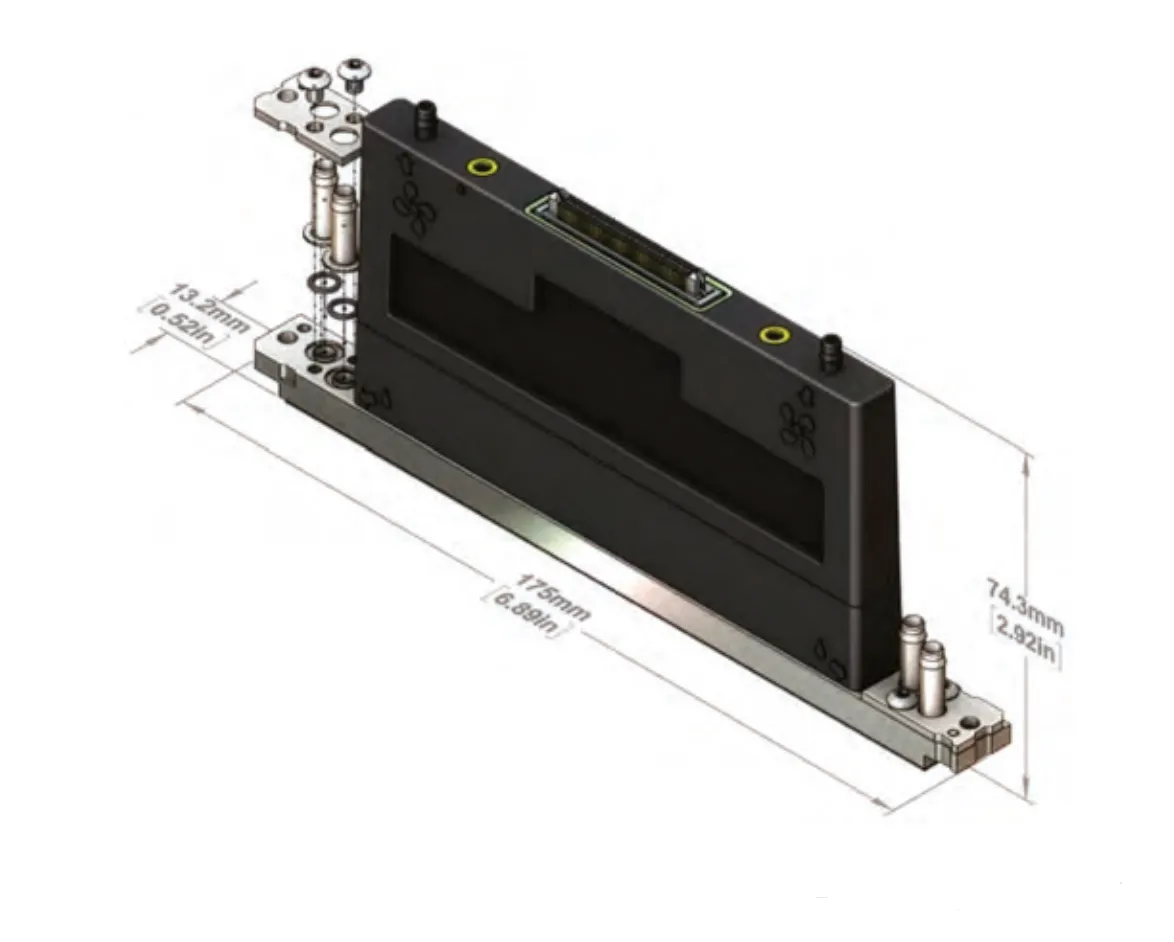
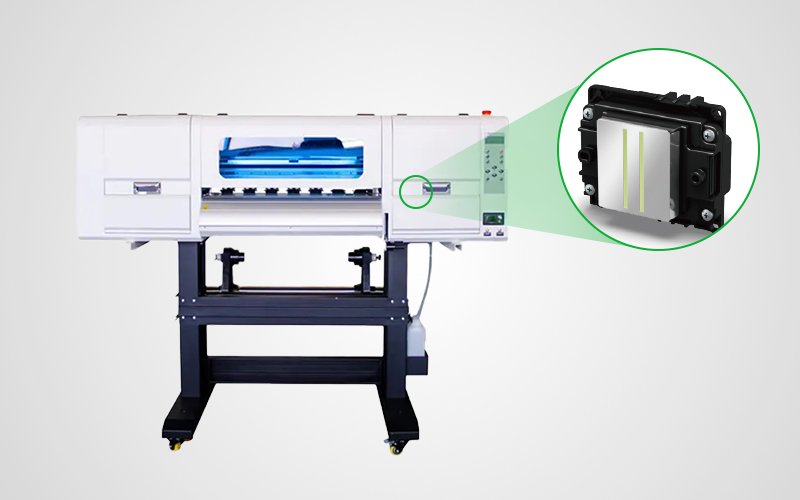
Many, if not most, DTF printer manufacturers use Epson printheads. What is it related to? DTF printers are used for direct-to-transfer film printing, such as T-shirt printing. The core of a DTF printer is the printhead. The number of printheads and ink cartridges basically determines the quality of the print. Printing accuracy, speed, color, and ink dot size all depend on the printhead. Therefore, the level of the printhead directly determines the level of the printer. Once the print head fails, it will directly affect the final printing effect.
Epson Printhead Characteristics
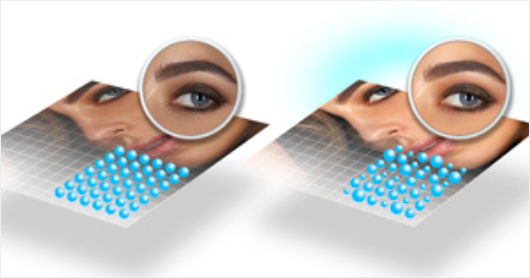
High-Precision Printing
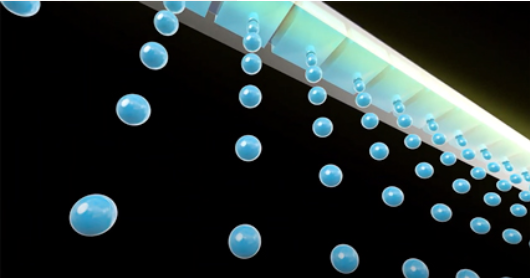
Epson micro-piezoelectric printheads provide superior positioning accuracy by controlling the drop shape of each nozzle and using Variable Dot Size Technology (VSDT), which can rapidly eject up to 50,000 ink droplets per second, ensuring both large droplets and small ink droplets are almost always perfectly spherical, ejected in straight lines, and land with remarkable precision.
Flexible Drop Management and Fast Printing
VSDT technology controls droplet volume by precisely controlling the voltage waveform of a piezoelectric control element. By precisely controlling the voltage waveform that drives the piezoelectric element, the VSDT can control the amount of ink in the ejected droplets, so droplets as small as 1.5 picoliters can be precisely deposited. Because each nozzle can selectively eject ink droplets of different sizes, users can enjoy fast output and excellent image quality with virtually no graininess.
High Durability and Performance
The EPSON printhead provides good performance and stability to meet the production requirements of high resolution, durability, and fast printing, achieving high quality and efficient DTF printing. Printheads based on micro piezoelectric elements are extremely durable, as they do not suffer functional degradation due to heat. Piezoelectric printers can use a variety of inks, including pigmented inks.
Commonly Used Epson Printheads for DTF Printers
Epson i3200-A1 Printhead
Epson i3200-A1 is an economical print head with excellent quality and fast and stable printing speed. The Epson i3200 printhead A1 for DTF has 3,200 nozzles (up to 600 dpi/2 lines), supports 4 water-based ink channels, and variable droplet technology for grayscale printing. According to Epson's official data, the printhead can operate after 106 billion piezoelectric pulses. The test also showed that after repeated cleaning 1500 times at 40kPa pressure, the printhead does not leak ink and can be used normally.
For a complete model selection guide, read our Epson I3200 model selection guide.
Epson i1600-A1 Printhead
The Epson i1600-A1 printhead is a new printhead released by EPSON in 2023 in response to the changing application needs of the terminal market. Usually used for small 30-40 cm DTF printers. It has the same specifications as the i3200-A1 in terms of size, printhead resolution, and droplet ejection performance. The difference is that the i1600-A1 has 1,600 nozzles (half that of the i3200-A1), resulting in relatively slower printing speeds, but the price is also lower.
Epson XP600/F1080 Printhead
The Epson XP600 printhead provides 6-channel printing (the conventional solution is CMYK+CM or CMYK+LCLM). It is typically used on small desktop DTF printers that can print 7 colors. The print resolution, print speed, and durability of the F1080 will be lower than those of the i-Series printheads. Its maximum resolution is 360 dpi (2 rows of nozzles), the printing speed is 10-12 square meters/hour, and the print head life starts at about 9 months. However, they are cheaper and quite stable, and therefore widely distributed in the market.
| Printhead Name | I3200-A1 | I1600-A1 | XP600 | |
| Ink Type | Aqueous | |||
| Width * Depth * Height | 69.1*59.5*35.6 mm | 84.9*57.2*42.6 mm | ||
| Weight | 80 g | 60 g | ||
| Number of Nozzle | 3200 | 1600 | 1080 | |
| Nozzle Pitch/Nozzle Row | 1/300 inch | 1/180 inch | ||
| Nozzle Rows | 8 rows | 4 rows | 6 rows | |
| Nozzle Resolution | 300 npi/row, 600 npi/2 rows | 180 npi/row, 360 npi/2 rows | ||
| Max. Number of Colour Inks | 4 colours | 6 colours | ||
| Effective Print Width | 33.8 mm | 25.4 mm | ||
| Droplet Ejection Performance | Binary | 6 pl at 43.2 kHz | 4.5~9~20~40 pl46 kHz (single point), 11.52 kHz (multipoint) | |
| 3 levels of grayscale | 6.3, 12.3 pl at 21.6 kHz | |||
| 4 levels of grayscale | 3.8, 6.1, 9.4 pl at 21.6 kHz | |||
| Viscosity Range | 2.2-4.5 mPa.s | 3-5 mPa.s | ||
| Durability | 1~2 years | 3~9 months | ||
| Applicable DTF Printer | All DTF printers 330/450/600/1200 mm | Small and medium DTF printers 330/450 mm | Small and medium DTF printers 330/450 mm | |
Not sure whether to choose the Epson I3200 or XP600 for your DTF printer?
Read our detailed comparison guide: Epson i3200 vs. XP600 Printhead to compare print speed, durability, print quality, lifespan, and cost.
Get a quote for Epson I3200, I1600, and XP600 printheads today!
Factors to Consider When Selecting an Epson Printhead for DTF Printers
Production Volume
For low to moderate production needs, cost-effective printheads such as the Epson F1080 or XP600 deliver sufficient printing speed and acceptable output quality. However, if your business frequently handles bulk orders or operates under tight deadlines, advanced models like the I3200-A1 or TFP series are more suitable — they provide faster throughput, enhanced precision, and superior durability for long-term, continuous printing tasks.
Budget Considerations
Businesses with limited startup budgets may prefer entry-level printheads like the F1080 or XP600, which offer a good balance between affordability and functionality. Conversely, if your operation requires greater productivity and consistency, investing in premium heads such as the I3200-A1 or TFP can be more cost-effective in the long run, thanks to their speed, stability, and extended lifespan.
Printer Compatibility
Before purchasing, verify that the selected printhead is compatible with your specific printer model. Each Epson printhead is engineered for particular machine configurations and ink systems. Using an incompatible head can lead to installation issues, printing errors, or reduced performance.
Resolution and Print Quality Needs
For basic designs or large-scale production, models like the F1080 or XP600 deliver adequate resolution and satisfactory results. However, if your business focuses on fine details, photographic gradients, or high-definition prints, consider using I3200-A1 or TFP printheads, which support higher DPI levels and ensure cleaner, more accurate color reproduction.
Speed Requirements
If your workflow doesn’t demand extremely high printing speed, the F1080 or I1600-A1 can efficiently meet standard production goals. For industrial-grade environments where output speed and consistency are crucial, the I3200-A1 or TFP models are more suitable, as they deliver high-speed performance without sacrificing image clarity.
Maintenance and Durability
Printheads like the F1080 and XP600 are relatively low-maintenance, making them ideal for small to mid-size operations. In contrast, I3200-A1 and TFP printheads are built for heavy-duty use and longer service life, though they still require periodic cleaning and maintenance to prevent clogging and maintain stable ink flow.
What Is a Clogged Printhead? Why Is the Printhead Clogged?
A clogged printhead means that the nozzles are clogged with air, dry ink, or dust, blocking the flow of ink in the cartridge or on the printed material. The image below clearly shows the difference in printing between a clogged printhead and a good, non-clogged printhead.
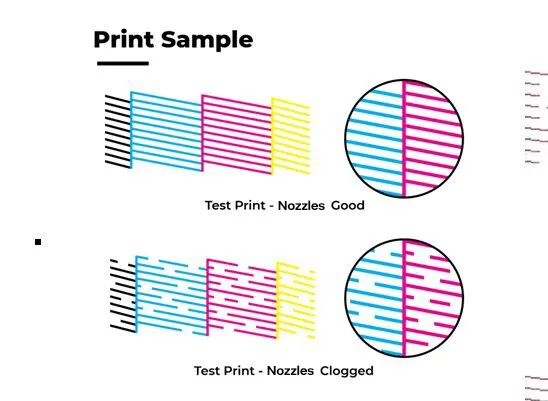
The clogged print head causes the ink droplets to break, as shown in the print results above. After cleaning the print head, the DTF printer should print good results, as shown in the "Good" result.
The four main causes of clogged printheads or nozzles are:
Ink drying
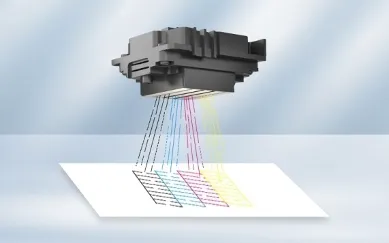
A clogged DTF printhead may occur if the printer has not been used frequently for a long time, or if the ink cartridges are open to components. Dried ink on the surface of the printhead can cause clogs that prevent ink from flowing through the nozzles.
Impurities in DTF ink (ink quality)
The quality of the ink is very important. Inkjet printers require clean ink to flow through the printhead. Impurities or particles in the ink may clog the nozzles and cause clogging. This can happen if the ink cartridges are stored incorrectly or if the printer uses poor-quality or expired ink (high-quality DTF ink is recommended).
Printhead maintenance issues
Inkjet printers require routine maintenance to keep the printhead clean and free of clogging. If you don't clean your printer regularly or run maintenance cycles as directed, ink can build up and cause clogs.
Excessive use causes damage to the printhead
Over time, inkjet printer printheads can become damaged due to wear or improper use of the printer. This can cause ink clogs or uneven ink flow, resulting in poor print quality or even damage to the printer.
If you are choosing between the Epson I3200-A1, E1, and U1, read our Epson I3200 printhead guide.