At recent digital printing exhibitions, Epson printheads remained the dominant choice across many printer manufacturers. Among them, the Epson S3200, Epson I3200, and Epson 4720 were the most widely used models.
In this article, we'll explore the key differences between these three popular Epson printheads, including their design, specifications, performance, and typical applications.
Epson S3200, I3200, and 4720: Appearance Comparison
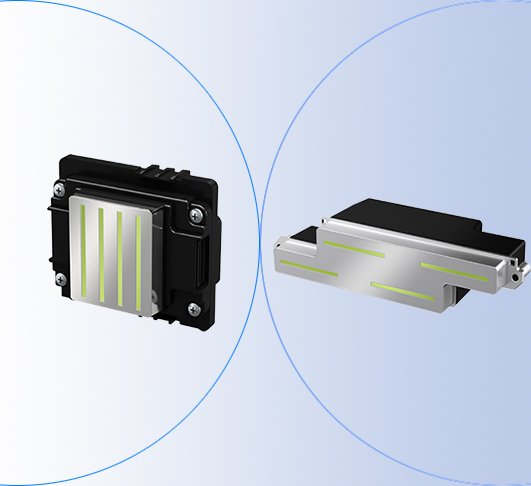
Many users, especially those new to the industry, often confuse the Epson S3200 and I3200 printheads. Although both are industrial-grade printheads, they differ significantly in size and positioning.
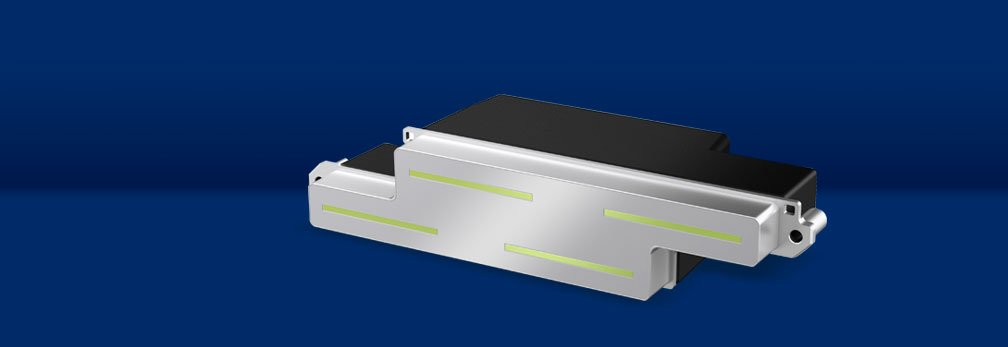
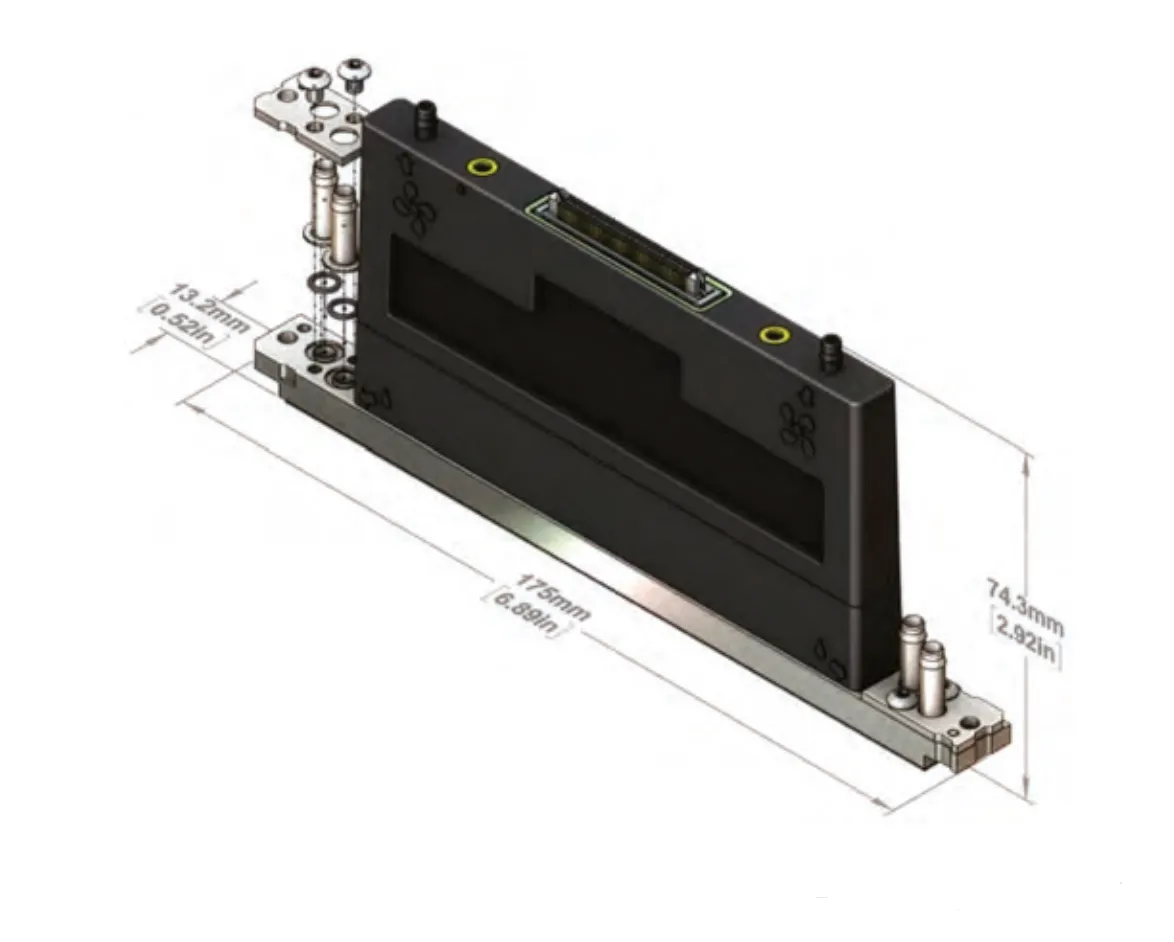
Epson S3200 print head
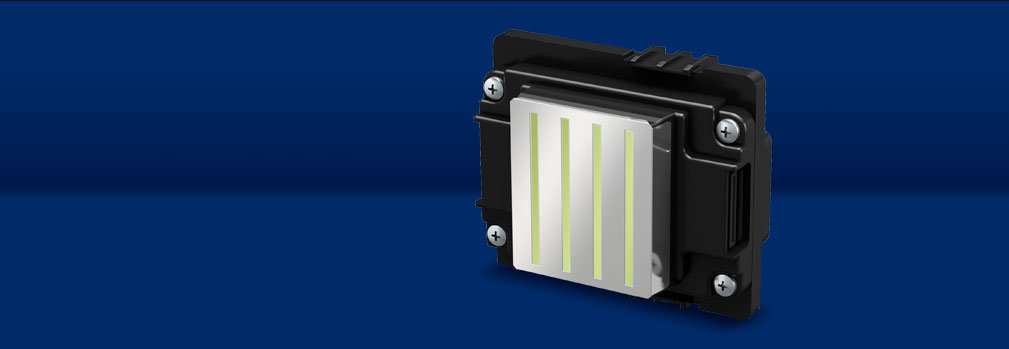
Epson I3200 print head
When comparing their physical appearance, the difference is immediately noticeable. The S3200 is considerably larger than the I3200, reflecting its positioning as a higher-end industrial solution. As a result, the S3200 is typically more expensive and targeted at customers requiring higher productivity and precision.
For a deeper technical breakdown, see: Epson S3200 printhead analysis
At first glance, the Epson I3200 and Epson 4720 look almost identical. This is because they share a very similar nozzle architecture and overall design.
However, there is an important distinction:
- The Epson I3200 is an official industrial printhead manufactured and supported by Epson.
- Epson 4720 generally refers to printheads originally used in Epson desktop printers and later adapted for industrial printing applications through unofficial channels.
In simple terms, the I3200 is the official industrial version, while the 4720 is commonly a converted desktop printhead solution.
For detailed selection guidance, see: Epson I3200 printhead guide
Specifications of Epson I3200, S3200, and 4720 Print Heads
Just now, we distinguished them from the most direct appearance. After looking at the appearance, let's look at the connotation. Then let's look at the specific parameter differences of these three Epson print heads.
| Product name | S3200-U1 | S3200-U3 | S3200-A1 |
| Ink type | UV / Eco Solvent | UV / Eco Solvent | Aqueous |
| Type | PrecisionCore MicroTFP printhead | ||
| Width × Depth × Height | 150.4 × 30 × 52 mm | ||
| Weight | 235 g | ||
| Number of nozzle | 3200 (Net: 2840) | ||
| Nozzle pitch / nozzle row | 1/300 inch | ||
| Nozzle rows | 2 rows | ||
| Nozzle Resolution | 300 npi/row, 600 npi/2 rows | ||
| Max. number of color inks | 2 colours | ||
| Effective print width | 120.2 mm (4.73 inches) | ||
| Jetting frequency | 48 kHz (Single); 24 kHz (Multi) | ||
| Droplet volumes | 3.2, 5, 10 pl | 4.8, 9, 15 pl | 3.3, 7, 13 pl |
| Viscosity range | 8–11 mPa·s | 8–9 mPa·s | 3–4 mPa·s |
| Positioning Mechanism | Reference hole | ||
Epson S3200 print head specifications
| Product name | I3200-U1 | I3200-E1 | I3200-A1 |
| Ink type | UV | Eco Solvent | Aqueous |
| Type | PrecisionCore Micro TFP printhead | ||
| Width x Depth x Height | 69.1 x 59.4 x 35.6 mm | ||
| Weight | 82 g | ||
| Number of nozzle | 3200 | ||
| Nozzle pitch / nozzle row | 1/300 inch | ||
| Nozzle rows | 8 rows | ||
| Nozzle Resolution | 300 npi / row, 600 npi / 2 rows | ||
| Max. number of colour inks | 4 colours | ||
| Effective print width | 33.8 mm / 1.33 inches | ||
| Droplet ejection performance | 5 pl at 43.2 kHz | 6 pl at 43.2 kHz | |
| Droplet ejection performance | 6, 12.5 pl at 21.6 kHz | 6.3, 12.3 pl at 21.6 kHz | |
| Droplet ejection performance | 3.8, 6.2, 9.3 pl at 21.6 kHz | 3.8, 5.5, 8.7 pl at 21.6 kHz | 3.8, 6.1, 9.4 pl at 21.6 kHz |
| Viscosity range | 5–7 mPa·s | 3–4 mPa·s | |
| Positioning Mechanism | Reference hole | ||
Epson I3200 print head specifications
I3200 vs 4720 Performance
Although the specifications appear very similar, the Epson I3200 offers several practical advantages:
- Finer droplet control
- Higher firing frequency
- Faster printing speed
- Better compatibility with industrial control boards
- More consistent quality control
In daily production, the print quality difference between the two may not always be obvious. However, the I3200 generally provides better long-term reliability and stability.
Many users have experienced issues such as frequent printhead failures or burnout when using 4720 printheads. For this reason, printer manufacturers are increasingly shifting toward the official I3200 platform.
S3200 vs I3200 Performance
The most significant differences between the S3200 and I3200 are size, speed, and productivity.
The Epson S3200 features:
- A larger 4-inch print width
- Higher firing frequency
- Smaller minimum droplet size
- Higher production efficiency
These advantages allow the S3200 to deliver greater throughput while maintaining excellent image quality, making it particularly suitable for industrial-scale production environments.
Let's focus on the performance difference between the Epson S3200 and I3200 printheads. First of all, the printhead size. The S3200 printhead is 4 inches, and the I3200 printhead is 1 inch. In addition, in terms of color, the Epson S3200 is two-color, and the Epson I3200 is four-color. The injection frequency of the S3200 is also faster, and the minimum ink droplet volume is smaller. From the perspective of printhead size and speed accuracy, the S3200 printhead has more advantages than the I3200 printhead.
Market Applications
Epson 4720
The Epson 4720 remains widely used due to its affordability and large installed base. It is commonly found in:
- Textile printing
- Sublimation printing
- Advertising graphics
- Entry-level digital printing equipment
Epson I3200
The Epson I3200 has become the preferred choice for many new printer manufacturers because it offers:
- Official Epson support
- Better stability
- Longer service life
- Competitive overall operating costs
Today, the i3200 is widely used in:
- DTF printers
- DTG printers
- UV printers
- Sublimation printers
- Eco-solvent printers
Epson S3200
The Epson S3200 targets medium- to high-end industrial users who require maximum productivity.
It is increasingly being adopted in:
- High-speed textile printing systems
- Industrial digital printing lines
- Multi-head production equipment
- Four-head and eight-head high-volume printer configurations
Despite its higher initial investment, the S3200 offers superior production efficiency and is becoming an attractive option for businesses seeking greater output capacity.
| Printhead | Positioning | Key Advantage | Typical Applications |
|---|---|---|---|
| Epson 4720 | Legacy / transitional solution | Lower initial cost | Sublimation, entry-level textile printing |
| Epson I3200 | Mainstream industrial solution | Balance of speed, quality, and reliability | DTF, DTG, UV, eco-solvent, textile printing |
| Epson S3200 | High-end industrial solution | Higher productivity and finer droplet control | Industrial textile printing, high-volume production, packaging |
Send your inquiry to get the latest product pricing and availability.
Conclusion
Each of these Epson printheads serves a different market segment:
- Choose the Epson 4720 if low upfront cost is your primary concern.
- Choose the Epson I3200 if you want a balance of performance, stability, and long-term reliability.
- Choose the Epson S3200 if your focus is maximum productivity, industrial-scale output, and premium print quality.
As the digital printing industry continues to evolve, the Epson I3200 is rapidly replacing the 4720 in many new machines, while the S3200 is emerging as the preferred solution for high-end production environments.
FAQs
No. The I3200 is an official Epson industrial printhead, while the 4720 is a converted desktop printhead used through third-party channels. They look similar but differ in stability and support.
Because the I3200 offers better stability, longer lifespan, higher precision, and official Epson support, making it more reliable for modern industrial printers.
Yes, if you need high-speed, high-volume production. It is designed for industrial-scale output. For smaller setups, the I3200 is usually more cost-effective.
The Epson S3200 is the best option for high-speed textile printing due to its wider format and higher production efficiency.
Both can last a long time with proper maintenance. Lifespan depends on usage, ink quality, and cleaning habits rather than a fixed time period.