Japanese brands have long held a commanding position in core technology in the global inkjet printing sector. Companies such as Seiko, Konica, Epson, and Ricoh have leveraged their respective technological expertise to launch a variety of printhead products tailored to different market needs.
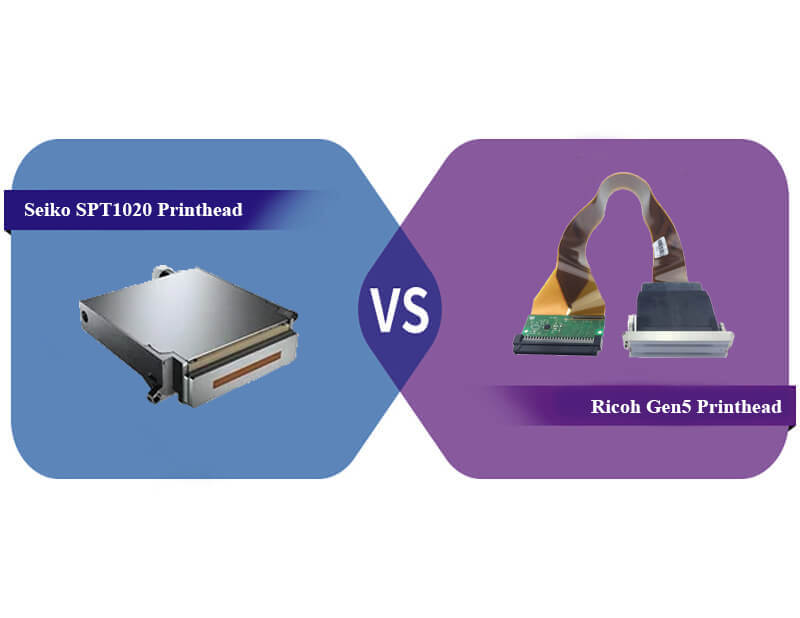
The Ricoh G5 printhead, with its outstanding stability and balanced performance, is considered by many industry experts to be the most cost-effective choice among current industrial-grade inkjet heads. Seiko's SPT1020 model, on the other hand, is widely used in domestic large-format printers due to its affordable price and high market share.
This article will systematically compare the Ricoh G5 and Seiko SPT1020 printheads from the perspectives of core performance parameters, structural design and durability, printing results and practical applications, cost analysis and market positioning, and industry development trends.
I. Ricoh G5 vs. Seiko SPT1020: Core Performance Parameters
The key performance of industrial-grade printheads is typically reflected in parameters such as nozzle count, physical resolution, droplet volume, and ejection frequency.
Ricoh Gen5: The printhead features 1280 nozzles with a pitch of only 42 microns, a physical resolution of 600 dpi, a minimum droplet size of 7 pl, and a maximum ejection frequency of 30 kHz. This combination of parameters enables exceptionally smooth and detailed image transitions in grayscale printing.
Seiko's SPT1020 features 1020 nozzles with a 70-micron pitch, a resolution of 360 dpi, a fixed droplet volume of 12/35 pl, and a firing frequency of 10/8 kHz. While this printhead boasts a robust and adaptable structure, it has limitations in producing high-precision images.
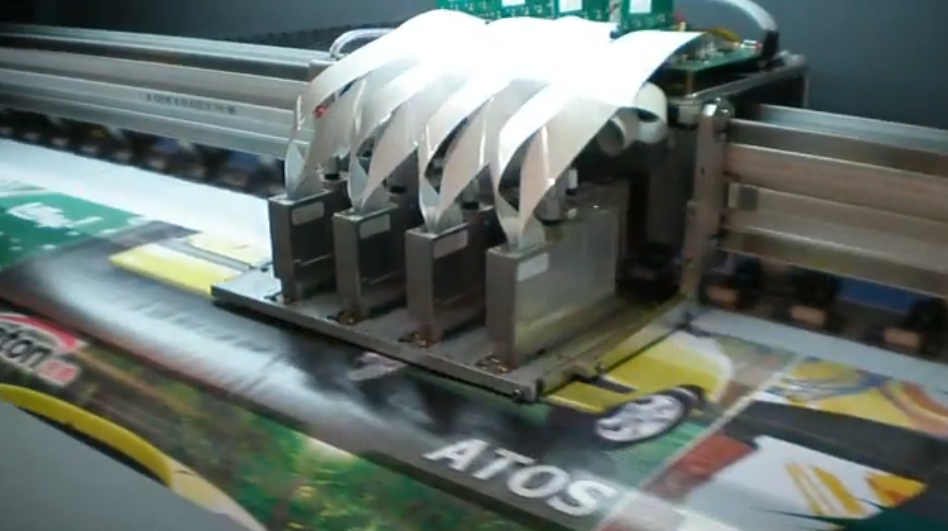
In terms of specifications, the Ricoh Gen5 surpasses the Seiko SPT1020 in terms of printing accuracy, output speed, and droplet control capabilities.
II. Structural Design and Durability
The Ricoh G5 features a fully enclosed metal structure, offering excellent resistance to dust, moisture, and chemical corrosion. Its built-in intelligent temperature control system dynamically adjusts operating voltage based on environmental changes, ensuring highly stable printing. Under standard industrial conditions, this printhead typically lasts 3–4 years.
In contrast, the Seiko SPT1020's printed circuit board is partially exposed, making it susceptible to corrosion from moisture, dust, and ink during actual use, potentially causing circuit failure. Its nozzle resistance to clogging is average, with a typical service life of approximately 1.5–2 years. This makes its failure rate relatively high in high-intensity production environments.
III. Printing Results and Practical Applications
The Ricoh Gen5 supports variable dot matrix technology (grayscale printing). By precisely controlling the piezoelectric element, it can mix ink droplets of different sizes within a pixel, significantly improving image reproduction quality. This printhead also supports multi-printhead splicing. For example, with 12 printheads, printing speeds can reach 60 square meters per hour, making it suitable for high-speed industrial production scenarios.
The Seiko SPT1020, due to its fixed and relatively large droplet size, is more commonly used in applications with lower detail requirements, such as advertising printing and banner production. However, its performance is limited in high-resolution applications such as high-end UV printing and art reproduction.
IV. Cost Analysis and Market Positioning
From an initial purchase perspective, the Seiko SPT1020 typically costs around 10,000 yuan, making it more affordable than the Ricoh G5. However, considering lifespan, print efficiency, and ink loss (Ricoh's minimum droplet is 7 pl, and Seiko's is 35 pl), the Ricoh printhead significantly reduces overall operating costs over the long term.
According to industry data, the Ricoh G5's ink cost is manageable at approximately 5 yuan per square meter, making it more economically competitive from a total cost of ownership (TCO) perspective.
Therefore, the Ricoh G5 is more suitable for users who prioritize long-term stable production and high print quality, while the Seiko SPT1020 is primarily targeted at the mid-to-low-end market with limited budgets and less demanding print precision.
V. Industry Development Trends
With the continued penetration of UV printing technology in industries such as advertising, packaging, building materials, and textiles, market demands for printing accuracy, reliability, and adaptability are constantly increasing. The Ricoh G5, with its grayscale printing capabilities, high resolution, excellent corrosion resistance, and long service life, is gradually becoming a mainstream choice for industrial UV printing. In contrast, while the Seiko series printheads still maintain a certain market share, their application scope is gradually narrowing, focusing more on cost-sensitive and mid-to-low-end demand areas.