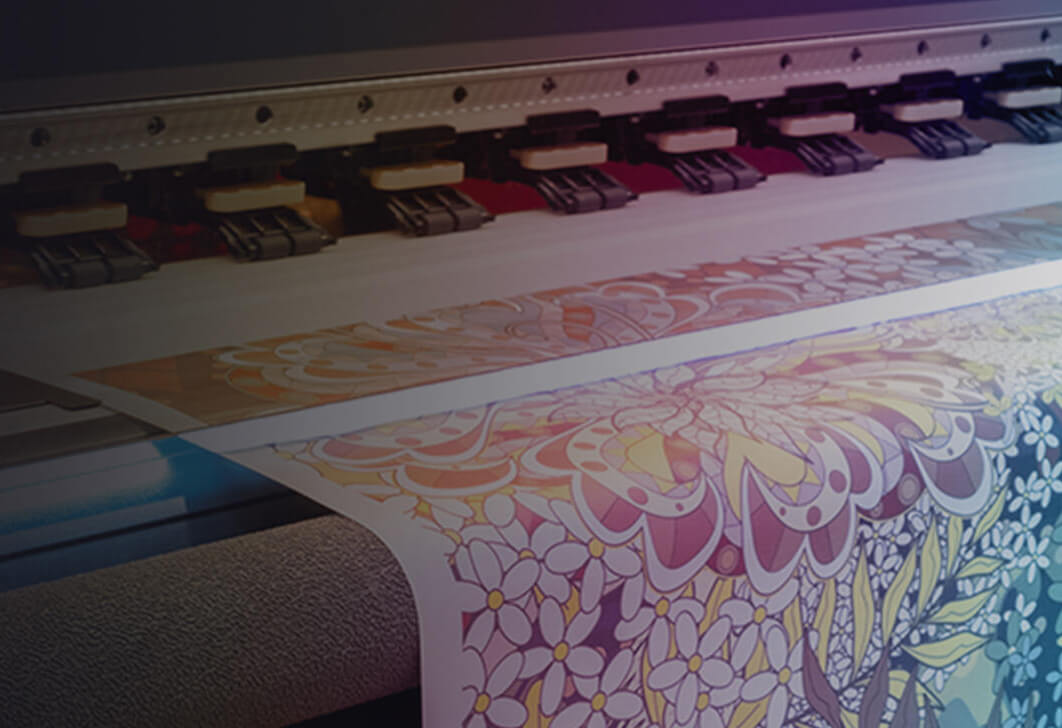
In the inkjet printing industry, whether using scanning printers or single-pass systems, media movement—also known as stepping or media feeding—is essential for completing the printing process. Different feeding systems directly affect print accuracy, speed, material compatibility, and overall equipment stability. Understanding their working principles and strengths/weaknesses is crucial for equipment selection and workflow optimization.
Media-feeding systems can generally be categorized into three major types:
- Roll-to-roll feeding systems
- Flatbed feeding systems
- Specialized feeding systems (e.g., belt and mesh belt systems)
Let’s break them down one by one.
I. Feeding Systems for Roll-to-Roll Printers
Roll-to-roll devices mainly use two feeding methods:
Pinch-roller feeding
Rubber-roller feeding
1. Pinch Roller Feeding (Most Common)
This is the most widely used feeding mechanism in eco-solvent printers, photo printers, and traditional roll-to-roll equipment. Although the structure looks simple, the underlying engineering details are quite complex.
How It Works
The media is gripped by pinch rollers and a central drive shaft. With the help of components like grit rollers, encoders, and tension rollers, the media advances precisely.
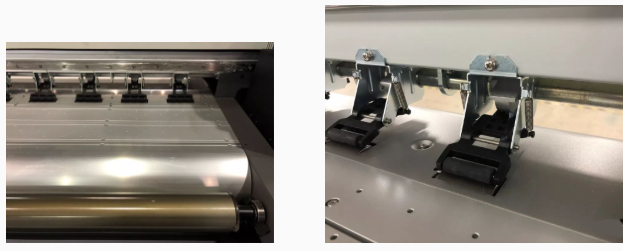
Factors that Affect Stability
- Spring pressure of pinch rollers
Too heavy → visible roller marks
Too light → inaccurate feeding
- Roller material & surface finish
Rubber → may build up static electricity, causing print artifacts
Smooth plastic → easier media slippage
- Roller distribution density
Too dense → higher cost and increased risk of skew
Too sparse → insufficient traction for thicker materials
Advantages
- Highly compatible with non-elastic roll materials
- Mature technology with low manufacturing cost
- Suitable for both small and large printers
Disadvantages
- Poor performance with soft film, elastic fabrics
- More likely to slip on thin or glossy materials
- Long print runs may accumulate stepping errors
Typical Applications
Photo paper, vinyl, banner materials, and common advertising media.
II. Rubber Roller Feeding Systems (For Soft or Stretchy Materials)
Seen as an advanced variation of pinch-roller feeding, rubber-roller systems are ideal for soft film, backlit soft signage, and mildly elastic textiles.
How It Works
The front and rear rubber rollers clamp the media while the control system maintains a precise tension balance—tight enough to flatten the media, but not so tight that it stretches.
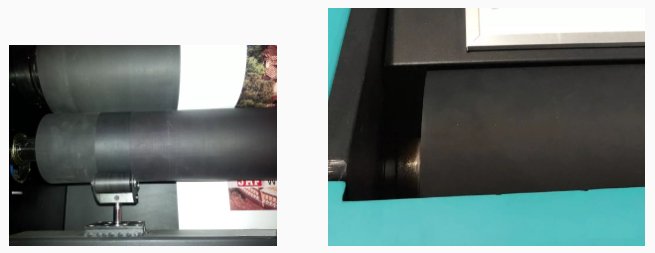
Advantages
Superior stability for soft film and stretchy fabrics
Minimized warping and wrinkling during printing
Excellent accuracy in long-length printing
Disadvantages
Higher cost
More complex structure requiring precise calibration
Less universal than pinch rollers
Typical Equipment
UV roll-to-roll printers, premium soft film printers, and sublimation textile printers.
II. Feeding Systems for Flatbed Printers
Flatbed printers mainly use two feeding types:
- Ball screw feeding
- Belt-and-rail (belt-driven) feeding
1. Ball Screw Feeding (High Precision)
Widely used in high-end industrial flatbed printers due to its accuracy and stability.
Features
- Often requires dual motors to drive both left and right screws
- High demand for motion control synchronization
- Earlier designs risked left-right misalignment (now largely solved)
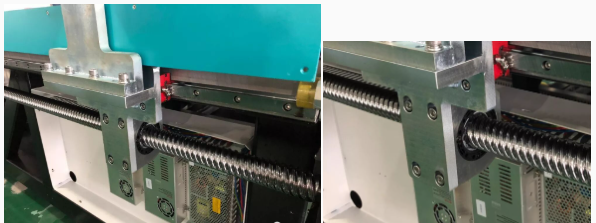
Advantages
- Highest feeding precision
- Excellent stability
Disadvantages
- Higher cost
- Slower movement speed (though not a concern for most flatbed printers)
- More complex mechanical structure
Applications
Industrial-grade UV flatbed printers, high-precision printing platforms.
2. Belt-and-Rail Feeding (High Cost-Performance)
Contrary to misconceptions, belt-driven systems can achieve very high precision when manufactured properly. Many international brands use this structure.
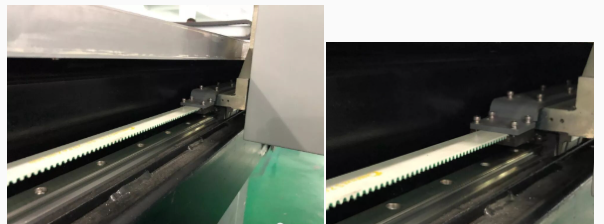
Advantages
More affordable than ball screws
High precision with mature manufacturing
Quieter, lighter, and capable of faster movement
Disadvantages
Requires strict manufacturing tolerances
Belt wear means periodic replacement
Applications
Mid to high-end UV flatbed printers.
III. Specialized Feeding Systems
Some professional applications require even more advanced media-feeding systems:
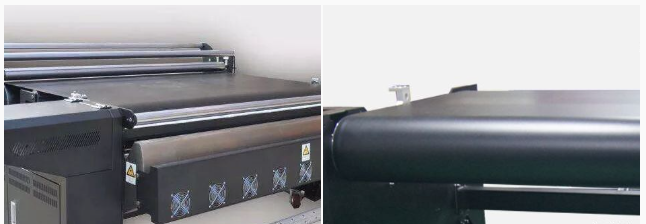
1. Belt (Conveyor Belt) Feeding – For Textile Printing
This is one of the most complex and expensive feeding systems, designed specifically for textile printing.
Why is a belt Necessary?
Textile substrates vary greatly—cotton, silk, polyester, mesh, and extremely light or stretchy fabrics.
These materials deform easily and cannot be printed reliably without stabilization.
A textile belt system allows the substrate to adhere tightly and evenly to the belt surface during printing.
Why Is It Expensive?
The belt must be strong, stable, and seamlessly welded into a loop
Drive rollers require extremely high concentricity and micron-level flatness
Needs auto-centering, fabric spreading, and belt cleaning systems
Advantages
Perfect for highly deformable fabrics
Exceptional feeding stability
Disadvantages
Very high cost
Complex structure and maintenance
Applications
Digital textile printing machines.
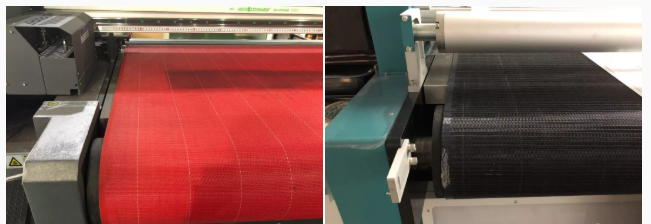
2. Mesh Belt Feeding—Hybrid for Roll Media & Flat Substrates
The mesh belt system sits between flatbed and belt systems.
Characteristics
Can feed both roll media and rigid substrates
Rigid materials can be printed in theoretically unlimited lengths.
Vacuum suction through the mesh holds substrates firmly
Advantages
Extremely versatile
Ideal for long, rigid materials
Disadvantages
Not suitable for very heavy materials (thick glass, large metal sheets)
Requires a high-precision support table
Cost higher than standard flatbeds, but lower than textile belts
Applications
Hybrid UV printers, industrial conveyor-based printers.
Summary: How to Choose the Right Feeding System?
| Feeding Method | Advantages | Disadvantages | Typical Use |
|---|---|---|---|
| Pinch Roller | Mature, low cost, wide material compatibility | Poor for soft film & elastic fabrics | Photo, signage, roll media |
| Rubber Roller | Excellent tension control, ideal for soft film | Higher cost, specialized materials | UV roll-to-roll, soft film |
| Ball Screw | Highest precision, extremely stable | High cost, slower | High-end UV flatbeds |
| Belt & Rail | High precision, good value, low noise | Tolerance sensitive | Mid-/high-end flatbeds |
| Textile Belt | Best for stretchy & thin fabrics | Highest cost | Digital textile printers |
| Mesh Belt | Flexible for roll and rigid media | Not for very heavy boards | Hybrid UV printers |
Conclusion
Media-feeding systems are not just mechanical differences—they directly influence:
- Printing quality
- Material compatibility
- Long-run stability
- Production efficiency
- Lifetime cost of ownership
Choosing the right feeding mechanism requires understanding your materials, production goals, and budget. The “best” system isn’t necessarily the most expensive—it’s the one that fits your workflow.