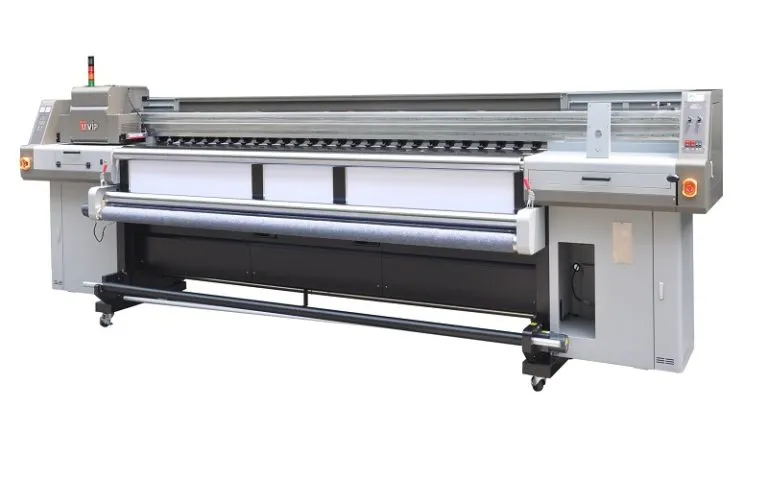
Is it true that the more print heads of a large format printer, the faster it is? The number of print heads is not directly related to the speed; the machine trolley is moved laterally for printing, the firing frequency of the print head determines the printing speed, and the increase of print heads will only increase the color and picture effect; and adding a print head requires a redesign of the board Cards, reinstalling programs, operating software, etc.; the selling price calculated from cost, labor, etc., compared with the previous selling price, will make it difficult for customers to accept, so generally there is technology, and manufacturers who understand the machine will not say to increase the print head, will increase the speed.
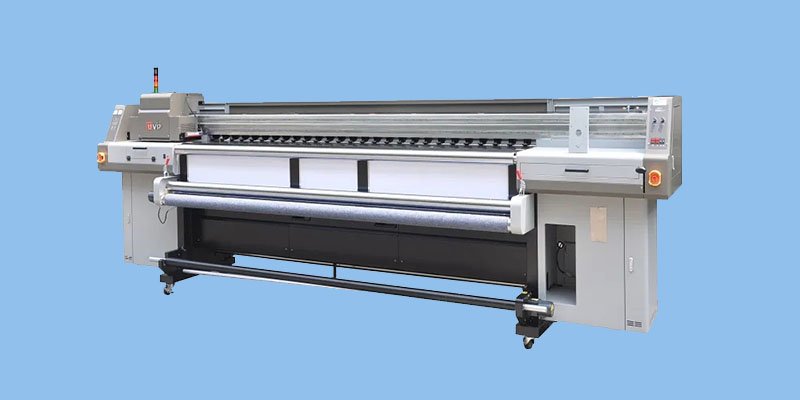
The Factor Related to the Speed of Large-Format Printers
The number of rows of the print head is linked to the speed. Let's take an example: For example, when comparing the speed of Konica Minolta's 512 print head and 1024 print head, the Konica print head 1024 multi-nozzle greatly improves productivity and achieves 72 mm wide printing. With twice the number of nozzles on the head, the speed is also twice as fast; but the speed of the 512 print head can reach the same speed as 1024 with two rows of the print head. In this way, they can achieve a similar speed; the same 1024 increase the number of rows, and the speed can also be doubled. It's like having one more hand and one more finger.At present, the fastest printing UV flatbed printer in the industry is the Kyocera print head, but the price is not cheap. Relatively speaking, the Ricoh G5 print head is relatively cost-effective and stable. Here we have sorted out the advantages and disadvantages of each brand of print head for your reference only.